Turpan is the hottest place in China and it’s known also as Huo Zhou (a place as hot as fire).
The area around Turpan, the Turpan Depression is the lowest point in China and the second-lowest on Earth (after the Dead Sea) at 154 meters below sea level. In July and August temperatures soar to 40 ° C.
Turpan ( 吐鲁番, Tǔlǔfān ) is located in the east of Xinjiang. Turpan has long been the center of a fertile oasis (with water provided by the karez canal system) and an important trade center. It was historically located along the Silk Road, at which time it was adjacent to the kingdoms of Kroran and Yanqi. The name Turfan itself however was not used until the end of the Middle Ages – its use became widespread only in the post-Mongol period.
Turpan is located about 150 km (93 mi) southeast of Ürümqi, Xinjiang’s capital, in a mountain basin, on the northern side of the Turpan Depression, at an elevation of 30 m (98 ft) above sea level. Outside of Turpan is a small volcanic cone, the Turfan volcano, that is said to have erupted in 1120 as described in the Song Dynasty.
Yangshuo (阳朔) is one of the most popular tourist destinations in China among both foreign and domestic travelers for a reason.
If you are looking for an exotic and colorful place surrounded by nature and history, this is the place.
Yangshuo County (阳朔,Yángshuò) is located in Guangxi, China, not far from Guilin City. Surrounded by karst peaks and bordered on one side by the Li River it is easily accessible by bus or by boat from nearby Guilin. Today, the town has become a resort destination for both domestic and foreign travelers. [Wikipedia]
Originating in the Mao’er Mountains in Xing’an County, the Lijiang River flows southeast through Guilin City and Yangshuo to the Gongcheng Estuary in Pingle County. With 437 kilometers of scenic beauty, the Lijiang River is a popular destination for travelers from around the world. An attractive hiking route is from Yangdi wharf in Yangshuo to Xingping County. The walk is only about 10 kilometers but you can spend the whole day strolling along the riverbank and experiencing the local culture. (Source:China.org.cn)
Situated in the northern region of Hunan Province in the People’s Republic of China, this national park forms a part of the Wulingyuan Scenic Area and is positioned within the boundaries of Zhangjiajie City. It stands as one among the multiple national parks encompassed by the scenic area.
History & Culture
Zhangjiajie, an area steeped in history and legend, traces its origins back to the Neolithic Age when it was known as “Dayong”. This region, once considered remote and inaccessible, has human traces dating back approximately 100,000 years. Ancient local narratives tell of Zhang Liang, a renowned strategist from the Western Han Dynasty (206 BC-24 AD), who sought refuge in the area, then known as Qingyan Mountain, now Zhangjiajie. Fearing execution by Liu Bang, the first emperor of the Han Dynasty, Zhang Liang chose this location for its serene beauty and seclusion, becoming a hermit and allegedly planting seven ginkgo trees. He was eventually buried beneath the same mountain. The name ‘Zhangjiajie’ is believed to derive from his lineage, with “Zhang” referring to his surname, “Jia” meaning family, and “Jie” signifying homeland or border.
Geographical and Natural Features
The park’s most distinguished geographic feature is its array of towering pillar-like formations. Contrary to appearances, these structures are not a result of limestone karst processes but are formed through extensive physical erosion over many years. The weathering of these pillars largely owes to winter ice expansion and the growth of plant life on them. The region experiences moist weather throughout the year, leading to dense vegetation. Streams primarily carry away the weathered material from these formations, which have become iconic in the Chinese landscape, often depicted in ancient paintings.
Park officials note that the stunning visuals of Zhangjiajie, particularly these unique formations, served as inspiration for the floating Hallelujah Mountains in the film “Avatar.
Kanas Lake is a very popular photography tour destination for Chinese amateur photographers.
Kanas Lake (喀纳斯湖; Kānàsī Hú) is a lake in Altay Prefecture, Xinjiang, China. The lake is located in a valley in the Altai Mountains, near the very northern tip of Xinjiang, and the province’s borders with Kazakhstan, Mongolia, and Russia.
There is a large population of ethnic Tuvans and Kazakhs in the Kanas valley.
Map of Kanas Lake
Images of Kanas Lake, Xinjiang, China
Kanas Lake and surroinding area photos
Please check more images on the Mafengwo site here.
The documentary focuses primarily on the lives of contemporary working-class Chinese people.
A documentary on China, concentrating mainly on the faces of the people, filmed in the areas they were allowed to visit. The 220-minute version consists of three parts. The first part, taken around Beijing, includes a cotton factory, older sections of the city, and a clinic where a Cesarean operation is performed, using acupuncture. The middle part visits the Red Flag canal and a collective farm in Henan, as well as the old city of Suzhou. The final part shows the port and industries of Shanghai and ends with a stage presentation by Chinese acrobats. [Will Gilbert]
According to cinematographer Luciano Tovoli, this documentary was shot mostly handheld with an ‘Eclair NPR’ 16mm camera using available light. In 1972, during Mao’s Cultural Revolution, Michelangelo Antonioni was invited by the People’s Republic of China to direct a documentary about New China. The result was a three-and-a-half-hour long film, divided into three parts. Mao disliked it so much that Michelangelo Antonioni was consequently charged with being anti-Chinese as well as counterrevolutionary. The movie was finally shown at Beijing’s Cinema Institute 30 years later.”
The Underground City (Chinese: 地下城; pinyin: Dìxià Chéng), also known as Dixia Cheng, is a bomb shelter comprising a network of tunnels located beneath Beijing, China, which has since been transformed into a tourist attraction.
It has been called the Underground Great Wall because it was built for the purpose of military defense. (Wikipedia) Video: editing and shooting: abelvideo/dmsl.co music: Felix L’Amour
The Milkshake Murder: Nancy Kissel (born Nancy Keeshin circa 1964 in Adrian, Michigan) was convicted of the murder of her husband, Robert Kissel in their … Read more
Back in 2001, a group of musicians – Matteo Damiani, Daisuke Tanaka, Massimiliano Carponi, and Xiao Ou (AK47) – who shared a love for psychedelic music, got together in a small studio in Beijing. They decided to have an impromptu jam session, which was recorded by Dominique Musorrafiti, an experimental videographer. At the time, the band didn’t have a name, but their music spoke for itself. They recorded two songs during that session – “Beijing 01” and “Chico de la noche”. The accompanying video for “Beijing 01” was shot during a significant time in Beijing’s history, as the city was undergoing significant social, economic and cultural changes. The recording studio where they jammed was located in an area that was due to be demolished as part of the redevelopment that was happening in the city.
Some religious people are forbidden to eat any portion that is cut from animals that are still alive. On the contrary, the practice of eating … Read more
Donaldina Cameron, a presbyterian missionary, social worker, and youth advocate in San Francisco’s Chinatown, was born on 26 July 1869 in New Zealand. She moved … Read more
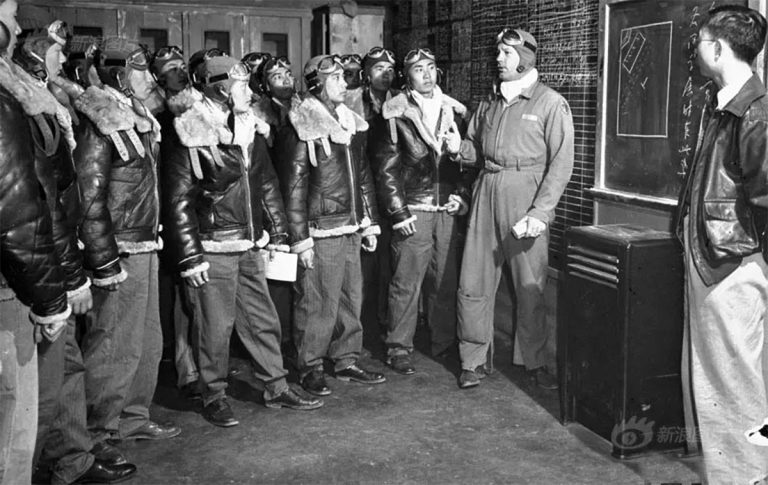
Images of The Flying Tigers The Flying Tigers, officially known as the American Volunteer Group (AVG), were a crucial yet temporary aerial combat unit during … Read more
Last July 2014 in Shenyang, Liaoning province, rice field paintings attracted great attention.
453,000 square meters of fields are embodied and feature simple and abstract patterns, characters, human figures, animals, and plants. Nezha Conquers the Dragon King is one of the most attractive pictures featured; Nezha is a deity from ancient Chinese mythology and literature.
Shenyang started creating rice field art in 2012 and hosted it annually. “Qixinglongteng”, “Seven stars and one dragon” created in 2012, created in Shenbei New Area, is considered one of the largest rice paddy artwork in the world. The city because of its 100000 square meters of rice paddy art, received the certification of the biggest rice field painting in the world from WRA.
World Record Association (abbreviated as WRA) formally registered in 2010, was established through approval from the Hong Kong Government and is a commercial record organization to list non-sports civilian world records. Now northeast China’s Shenyang city is becoming a hot tourist attraction thanks to its rice fields.
Rice paddy art is an art form originating in Japan in 1993. The people of Inakadate, Aomori were looking for a way to revitalize their village. To honor the 2000 years of growing rice area, they decided to use the paddy as a canvas and cultivate four different types and colors of rice to create giant pictures. To allow viewing of the whole picture, they erected a high castle tower.
This website uses cookies to improve your experience. We'll assume you're ok with this, but you can opt-out if you wish.AcceptRejectRead More
Privacy & Cookies Policy
Privacy Overview
This website uses cookies to improve your experience while you navigate through the website. Out of these, the cookies that are categorized as necessary are stored on your browser as they are essential for the working of basic functionalities of the website. We also use third-party cookies that help us analyze and understand how you use this website. These cookies will be stored in your browser only with your consent. You also have the option to opt-out of these cookies. But opting out of some of these cookies may affect your browsing experience.
Necessary cookies are absolutely essential for the website to function properly. This category only includes cookies that ensures basic functionalities and security features of the website. These cookies do not store any personal information.
Any cookies that may not be particularly necessary for the website to function and is used specifically to collect user personal data via analytics, ads, other embedded contents are termed as non-necessary cookies. It is mandatory to procure user consent prior to running these cookies on your website.