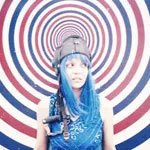
Christine Chen on Quiet Thunder, Awakening, and the Geometry of Language
Dr. Christine Chen (Hon.) is a transpacific poet, translator, and editor, and scholar whose work interrogates language, power, and the politics of embodiment. Her writing is known for its experimentation, intellectual intensity, and refusal of easy resolution. Through fragmented syntax and charged lyricism, she explores gender, labor, and the conditions of visibility. Her artwork insists on the complexity of women’s lives beyond celebration or cliché. Her poetry confronts systems of power while holding space for ambiguity, rage, vulnerability, and resistance. Her writing contributes significantly to contemporary conversations since her poetry is formally innovative.Through rigorous language and bold choices, Chen asks what it means to inhabit a body shaped by history—and how poetry might reclaim agency within that terrain.
Her writing often dances between languages, geographies, and the visceral sensations of the body, since she requires a delicate balance between exploring the technical craft of her verse and the cultural/personal identity that informs it. She won the 30th Italian Ossi di Seppia Award for Best Foreign Writer (2023) and was named Outstanding Poet at the 2025 Sydney International Poetry Festival. Her work has been translated into more than twenty languages and is held in major international collections. For four consecutive years, her poems have appeared in ‘Chinese Language and Literature ‘(Taiwan), a respected reference publication for educators. Her latest bilingual collection, ‘Before Blossoming ‘(Chinese–Italian), was published in Italy in January 2025.; ‘Once upon a time’ was published in India 2026 February. In 2024, Chen represented Oceania at the Medellín International Poetry Festival. Since 2023, she has served as a Committee Member and Oceania Continent Coordinator of the World Poetry Movement, and she currently serves as Editor-in-Chief of the New Zealand poetry magazine Global Muse. She is currently based in New Zealand.
You are a healthcare professional, a columnist of a New Zealand newspaper and also a poet. Can you tell us more about these parallel careers? What motivated you to start writing? How do you create a balance between all of them?
I have always believed that writing and professional work are not separate realms, but two parallel rivers that nourish one another. As a healthcare professional, witnessing birth, aging, illness, and death on a daily basis—moving between hospital wards and operating theatres—I confront both the fragility and the dignity of life. These first-hand experiences have given me a deeper and more authentic understanding of human existence. They allow my writing to carry an innate sense of compassion and warmth. It is not born of imagination alone, but grows out of real breaths and heartbeats.
In the beginning, writing was simply an impulsive, almost casual act—like speaking to myself, except that the whispers of the heart were placed onto paper. Yet through continuous recording and reflection, I gradually realized that writing was more than emotional release; it had become a conscious aesthetic practice and an exploration. Words began to assume a deeper responsibility: to question, to deconstruct, and to rebuild.
Life itself is a long journey of exploration and healing. The gains, losses, and wounds of youth may seem gently wrapped by time, yet they are not always truly healed. To me, the pen is like a surgical scalpel—it reopens wounds that were merely given first aid and performs a complete, lucid operation. The difference is that this surgery is not upon the body, but upon the mind, the spirit, and the emotional self. As a healthcare professional, I practice compassion; as a writer, I become my own doctor.
Now, I am gradually stepping away from full-time work, allowing myself more time to travel and to write. In movement and in words, I continue to observe, to reflect, and to heal—healing others, and healing myself.
When did you understand your passion for poetry? Who influenced you as a person and poet? Which poets or thinkers have shaped your writing approach?
I was born in an ancient city in southern China—a place where one of China’s greatest poets, Su Shi (Su Dongpo), was once exiled. For over a thousand years, a living literary tradition has flowed through that city. Poetry was never distant or elitist; even ordinary people—young and old—were familiar with classical verses. It was something woven into daily life.
At the age of three, I was required to recite classical poems before the clan elder. During the Lunar New Year, under my mother’s guidance, I would read the couplets pasted on doors throughout the city streets, studying their rhythm, imagery, and subtle artistry. Poetry, therefore, was never something I “discovered”—it was already in my bones. Reading and chanting verses felt as natural as eating and drinking.
It was not until university, when I moved to the provincial capital, that I encountered modern Chinese poetry and Western poets in a systematic way. I still vividly remember the sonnets of Elizabeth Barrett Browning. The passion and direct emotional intensity of Western poetry stood in striking contrast to the restraint and subtlety of Eastern traditions. This contrast broadened my understanding of what poetry could be.
Motivated by this awakening, I returned to the classics with renewed attention—from China’s earliest anthology, the Book of Songs, to the lyrical beauty of Buddhist scriptures such as the Śūraṅgama Sūtra. Beyond their aesthetic elegance, I was deeply moved by their profound inquiries into life, the universe, and human existence.
Later, I immersed myself in Western intellectual history, especially the Renaissance and its philosophical and religious developments. Bertrand Russell’s A History of Western Philosophy left a lasting impression on me, while Yuval Noah Harari’s Sapiens: A Brief History of Humankind led me into deep reflection on civilization and the destiny of humankind. I have also long cherished the works of the Indian poet Rabindranath Tagore, especially Stray Birds, as well as the luminous prose poems of Khalil Gibran.
All these diverse and layered readings gradually converged into a personal philosophy of life and the cosmos. They do not exist separately in my mind; rather, they permeate my poetry organically. My writing has thus become a natural expression of the ongoing dialogue between thought, emotion, and spirit.
When you’re drafting, do you begin with sound, image, concept, or something less definable? What are your sources of inspiration?
In my early years, my writing was often inspired by songs—by beautiful melodies and moving lyrics that quietly guided the flow of emotion and allowed words to grow naturally. Later, my inspiration gradually shifted toward painting and photography. The interplay of light and shadow, composition, and the frozen beauty of a captured moment taught me to construct my lines with a stronger visual sensibility. Today, however, the deepest impulses behind my work come from sustained and extensive reading. Many poems are not born at the very moment of reading; rather, they emerge after long periods of observation and contemplation in daily life. Then, a particular word or image in someone else’s poem acts like a medicinal catalyst, suddenly opening the floodgates of thought and feeling. In that instant, experiences long dormant are ignited, and language begins to flow. Beyond sound, text, and imagery, my greatest source of inspiration remains nature. Living in New Zealand—a land that feels almost like a human sanctuary, with its clear blue skies, drifting white clouds, and gentle, unpretentious people—I have come to re-examine the relationship between humanity and the cosmos. My poetry has gradually moved toward what Eastern philosophy describes as the unity of heaven and humankind. More precisely, that is the spiritual realm I continue to strive for and seek to approach.
Has anger ever acted as a creative unexpected force, transforming into a piece of writing that went beyond the initial negative feeling?
Yes, anger has indeed acted as an unexpected creative force in my writing. But I have learned not to write at the very peak of it. Instead, I allow it to wander for a while—like a pot of boiling soup that must cool slightly before its true flavour can be tasted. This interval is essentially a process of reflection and sedimentation, a movement from surface reaction to deeper inquiry. In Buddhist thought, there is the principle of cause and effect: anger is the “effect,” and we must search for the “cause.” Only when the emotion has been gently set down can we move beyond its intensity and perceive the underlying reasons and structures beneath it. The shockwave produced by anger can indeed carry the force of thunder and lightning. It can split open numbness, awaken dormant thought, and even bring about a kind of primordial awakening. When tempered and transformed, this energy ceases to be merely negative emotion; it becomes one of the driving forces of writing—a catalyst for self-examination and spiritual breakthrough.
Do you have a paper notebook where you track inspiration, and collect ideas for future creations or have messy paper? Are you still analogue in a digital era?
I do keep the habit of writing with pen and paper, though I do not carry them with me everywhere. Instead, they are placed in my dedicated meditation space. Over the past decade, I have meditated almost every day in the sauna. It is a moment of seclusion from the outside world, and a meeting point with my inner self. Inspiration often knocks most gently in those quiet hours, and I quickly jot down whatever flashes into my mind—sometimes just a single word, an unfinished line of poetry, or an image not yet fully formed.
Later, I return to my computer or phone to develop those scattered sparks into complete works. For me, writing is both traditional and modern. I cherish the tactile warmth of pen and paper, while also embracing the convenience and efficiency of the digital age. In a sense, I am a writer who walks between two temporal worlds—allowing ancient modes of contemplation to merge with contemporary technological tools.
Could you please share a behind-the-scenes story that inspired you to write a poem that is particularly special and holds a meaningful feeling for you?
Land of the White Cloud is a poem that weaves together the history and present reality of New Zealand. From the earliest Māori who first settled and rooted themselves here, to the European arrivals who followed, and now to waves of new immigrants bringing capital and development plans—this land has been continuously redefined and rewritten through the passage of time. Each day I live beneath blue skies and drifting white clouds, surrounded by birds and forest. Such vastness and purity naturally evoke reverence and love. Yet it is precisely because I love this land that I feel a quiet unease at the ever-rising and expanding urban skyline. I understand that industrialization and commercialization are forces difficult to resist; they are part of history’s tide. But when I witness patches of green gradually swallowed by concrete and housing, I cannot help feeling a deep ache. One day, a hedgehog that had visited my backyard almost daily was accidentally run over by my car. I stood there for a long time, realizing that perhaps no second hedgehog would ever come to wander across that patch of grass again. It was not merely an accident; it felt like a metaphor—an emblem of the growing distance between humanity and nature. I know that this destiny will eventually reach every land, including this place once called the “Land of the White Cloud.” That small hedgehog became the heaviest, and most truthful, point of departure for the poem.
In your poem “Light”, you write about “straight lines and cross-sections.” Do you believe poetry should be a “cross-sections” that speaks with the “straight lines” of injustice, walking into the path of human emotion that comes up against systemic struggle?
Every poet develops a distinctive voice shaped by their reading, intellectual formation, and way of thinking. My university training was in the sciences, and that background has quietly influenced how I observe the world—through structure, analysis, and dissection. As a result, in my writing I often gravitate toward an almost three-dimensional, geometric mode of expression, layering and cross-sectioning ideas to reveal their internal framework. I believe this “anatomical” approach allows for greater precision—like a surgical scalpel, calm yet incisive, cutting through surfaces to uncover what lies beneath. It is not an exhibition of rationality for its own sake, but an effort to move closer to truth. When confronting injustice or systemic oppression, I prefer this straight-line force—striking at critical points, neither evasive nor decorative, but facing the rawness of lived reality. To me, poetry can be both a gentle consolation and a sharp incision. And when reality demands illumination, I am willing to let language become that clear and exacting light.
In your “Rebirth Trilogy”, you describe a woman becoming “the core of everything” through acts like watering flowers, doing laundry, and cooking.
In Buddhist teaching, even washing clothes and cooking are forms of spiritual practice. I have always believed that poetry arises from life, yet also transcends it. Only those who live attentively and wholeheartedly can truly be called practitioners—awakened individuals. All things possess spirit. When we cherish the grass and trees around us, when we care about a simple meal or a humble dish, we are in fact entering into an authentic relationship with the world. In such moments, our eyes, ears, nose, tongue, body, and mind are fully awake, fully alive in awareness. Life itself already carries a poetic radiance. To me, poetry is not something artificially constructed; it is simply a record of this awakened state—a testimony to the sacredness and wholeness embedded within ordinary daily life.
You are clearly sharing about a love freely given. How do we challenge a patriarchal system that disguises devotion as duty, making a woman who loves appear enslaved, while convincing the enslaved woman that she is freely choosing her role?
The ideology of male superiority has endured for thousands of years, yet women’s awakening is an ongoing mission just as enduring. Real change begins with women’s own consciousness; and consciousness requires living, tangible role models. I was fortunate that my mother was such a presence in my life. In the 1950s, within a relatively closed society, she was among the few women able to receive higher education. For her outstanding contributions to China’s cement industry, she was honored as a “National Outstanding Woman” by the All-China Women’s Federation. In my memory, she both washed clothes, cooked, embroidered, and cared for the family—and was also an accomplished engineer. These roles never conflicted; instead, they deepened her love for both life and work. The key lies in choice. Love must arise from within, not from coercion. A woman carries her own inner clarity; external conditioning and indoctrination can never fully obscure genuine awareness. Awakening, ultimately, is the courage to acknowledge oneself and to live authentically.
Do you think poems can help as a healing, medicate and help during a period of stress? Can poems be therapeutic? How can reading poems enrich everyday life?
Poetry is a form of beauty, just like film, music, and painting—each an essential expression of the human spirit. Art is nourishment for the soul. I have seen people from all walks of life find comfort in poetry, discover insight within its lines, and release emotions that had long been suppressed. At certain moments, poetry is like a spring in the desert, quietly quenching a thirsty heart. It may not directly solve practical problems, but it offers an inner support and a source of light. For some people, poetry is more than a therapeutic tool; it is as indispensable as sunlight and air. I am one of those people.
IWD 2026 asks us to reflect not only on progress but on the persistence of structural inequality. As a poet whose work engages the voice, embodiment, and resistance, how do you see poetry functioning right now, as witness, as refusal, as solidarity, or as something else entirely? And what do you think and feel most urgently for women and marginalized people at this moment?
If we reflect on the 2026 International Women’s Day theme—acknowledging both progress and the persistence of structural inequality—I would say that poetry, at this moment, is first and foremost a form of witnessing. In an age of information overload and short memory, poetry allows individual experience to be seen and preserved. It gives shape to lives that are drowned in statistics and enables the silenced to speak. It records how bodies are disciplined, and how they rise again. To witness, in itself, is an act of resistance.
Secondly, poetry is a refusal.
A refusal to be simplified, to be defined, to be consumed. Through the precision and singularity of language, it challenges the dominant narratives produced by structural inequality. When institutions use grand rhetoric to obscure individual wounds, poetry opens fissures—through detail, through breath, through the raw texture of lived pain.
At the same time, poetry is solidarity.
It may not always shout, yet it creates quiet and profound resonance between readers. When one woman, late at night, reads another woman’s poem and realizes, “I am not alone,” isolation is broken. Poetry builds emotional communities, and such communities are fertile ground for resisting structural oppression.
But poetry is not merely a tool or a stance. It is also a practice of consciousness.
When we learn to speak of ourselves with greater precision and honesty, we begin to reconstruct our subjectivity. For women and marginalized people, the most essential task is not simply to be empowered, but to reaffirm: Who am I? How do I name myself?
What I feel most urgently at this moment is this:
May women no longer be forced to choose between devotion and selfhood. May the marginalized not have to exchange silence for safety. True progress is not symbolic inclusion, but structural transformation; not merely the permission to speak, but the willingness to listen to voices that systems have long ignored.
And poetry, perhaps, continues to shine through these small yet steadfast voices.
Finally, I hope to see more awakened women speaking out, because the power of example is immeasurable. May our daughters and granddaughters grow up with more mothers who dare to stand up and speak.
Photo courtesy of Christine Peiying Chen
Post Author