Learning to Breathe with Wood and Wire: Lila’s Journey Through Music
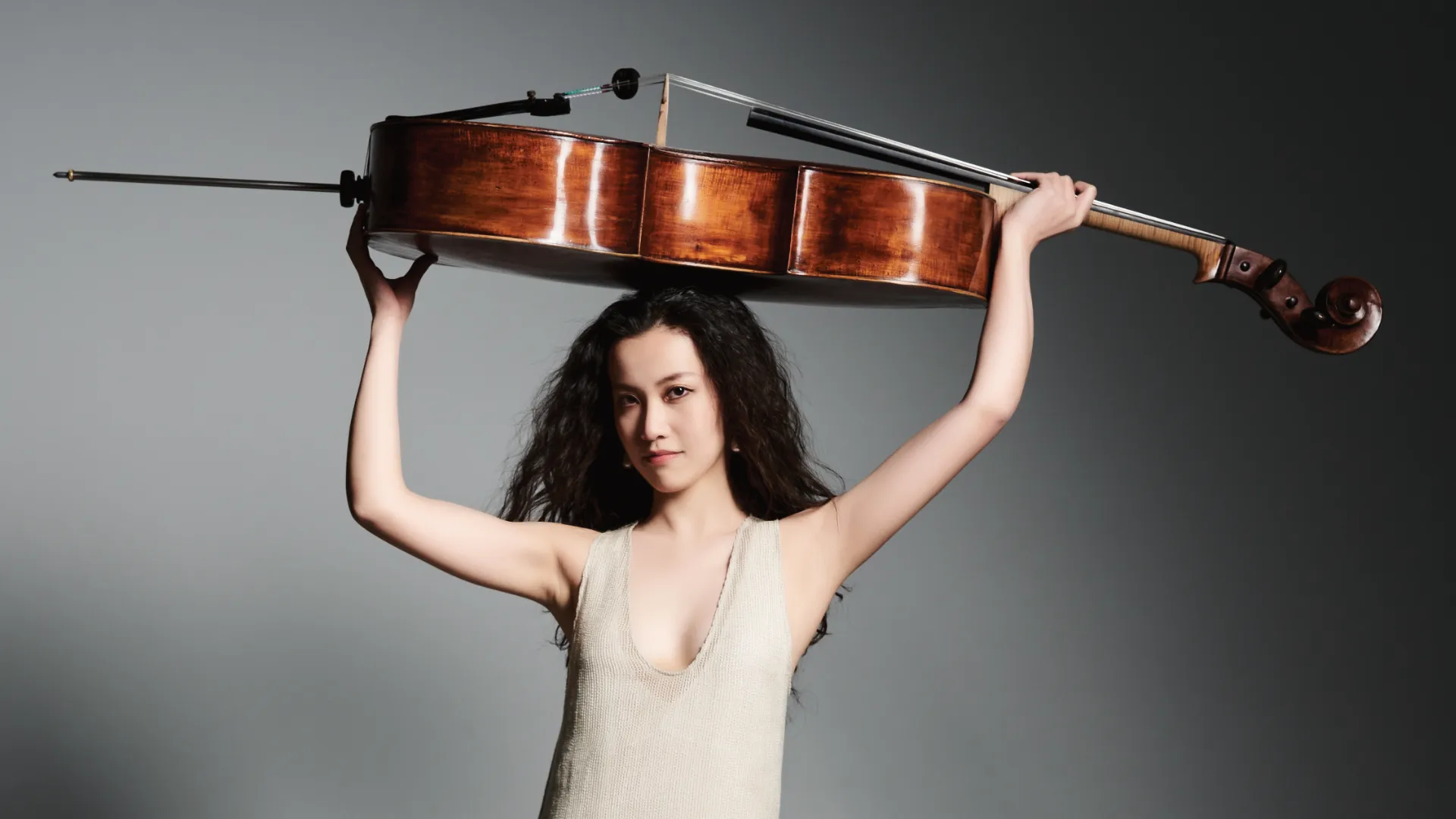
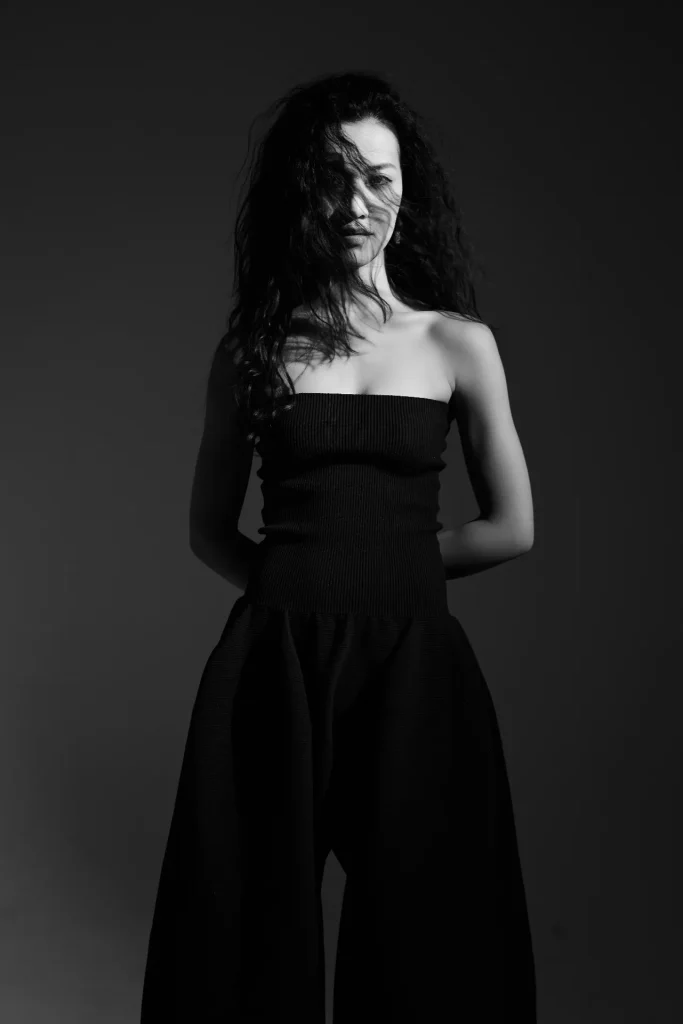
Cellist Lila is a passionate and expressive musician whose artistry bridges technical brilliance with deep emotional storytelling. Lila began playing piano at the tender age of four, before switching to the cello at the age of seven. She joined the Juilliard School Precollege division in 2016 and trained under Professors Richard Aaron and Sieun Lin. Lila has studied with Frans Helmerson at Kronberg Academy since 2018. She adds a unique voice to both solo and group performances and is well-known for the warmth of her tone and her captivating stage presence. Known for her fearless technicality and a sonic palette that ranges from velvet whispers to challenging radical vulnerability , Lila has redefined what it means to lead from the deep. She isn’t just playing the repertoire of the past, but is actively bowing a new, more emotional future into existence. Her interpretations balance precision with sensitivity, allowing audiences to experience familiar repertoire in fresh and intimate ways.
She believes in music as a powerful language, one that transcends borders, builds connection, and gives voice to stories that words alone cannot tell. In an era where digital perfection often masks raw emotion, cellist Lila remains devoted to the ‘magical grit’ of the strings. Her music is a masterclass in controlled chaos and deep empathy. Lila has developed deep natural balance physically and mentally, between stage life hectic and personal inner space. She has given concerts on many international stages such as the Verbier Festival, Schloss Elmau, Tsinandali Festival, Teatro dell’Opera di Roma, Moscow Tchaikovsky Concert Hall as well as in the Tokyo Suntory Hall. She has worked with the orchestras such as the Tokyo Symphony Orchestra, the Orchestra Roma Sinfonietta, the Moscow Virtuosi, the State Symphony Orchestra New Russia, the Shanghai Philharmonic Orchestra and the Shanghai Opera Symphony Orchestra under conductors such as Christoph Eschenbach, Vladimir Spivakov, Yury Tkachenko and Norichika Iimori.
Official site | Instagram | Facebook | Youtube
This interview first appeared on Planet China Vol.18: International Women Day’s 2026
When did you first realize that you love music? What inspired you to pursue a career in music? The cello has such a unique, vocal quality. What first drew you to this instrument rather than another?
I don’t think there was a single cinematic moment. It wasn’t a lightning bolt. It was more like a slow, irreversible falling. Music became the place where I felt most honest. As a child, I realized that when I played, I didn’t have to explain myself. The cello could say things that I didn’t yet have the language for. The cello’s voice — that dark, human register — felt close to speaking, almost like confessing. It felt vulnerable. It vibrates directly against your chest, you don’t just hear it, you physically absorb it. That intimacy is what chose me.
What are your fondest memories of training to become a musician? Which artists have influenced you the most?
My fondest memories are not competitions or achievements. They’re rehearsals, or a performance which I devoted all my attention and concentration to. Working with musicians like András Schiff, who speaks little but demands everything, taught me that depth doesn’t need theatrics. And of course, Ludwig van Beethoven has been my anchor. His music contains trauma, rebellion, forgiveness and tenderness all at once. It showed me that strength can be fragile and still unbreakable.
Cellist LiLa has a sense of self-understanding as an artist, she loves reading, and the similarities between nature and music.
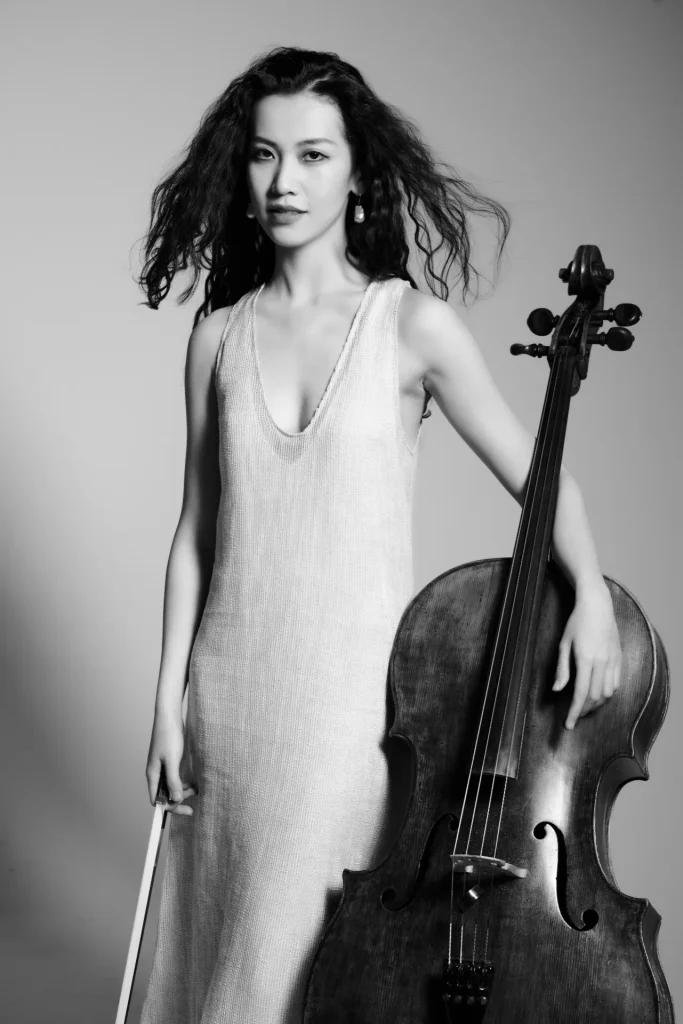
From an early age, Lila was drawn to the cello’s rich, human-like sound, an instrument whose depth and resonance continue to shape her artistic identity.
What are some sacrifices you faced pursuing your passion for music? What have been the greatest challenges of your career so far?
There is a romantic myth about pursuing art. The reality is airports, uncertainty, physical exhaustion, and constant self-doubt. I’ve sacrificed stability, proximity to family, and sometimes emotional safety. There are concerts where you feel invincible, and others where you question everything. One of the greatest challenges is learning not to tie your self-worth to applause. The stage is intoxicating, but it is not a stable foundation for identity.
What does playing the cello represent for you? How has music enriched your life?
It’s just my whole life. And I will keep doing it.
They say the cello is the instrument closest to the human voice, but in the hands of Lila, it sounds like an entire conversation.
What are your greatest satisfactions as a cellist? What milestone so far?
My greatest satisfaction comes from those rare concerts where I enter a state of extreme concentration — when time disappears and everything feels inevitable. Afterwards there’s a deep exhaustion, but also a quiet certainty. That feeling matters more to me than any prize. A milestone was finishing both my Bachelor’s and Master’s studies in Kronberg at 19. It marked the end of an intense chapter that shaped me profoundly. As a child, I won many international competitions before the age of eleven, but I barely remember them. I was too young. They were achievements, yes, but they don’t define me.
Cellists have a notoriously connected relationship with posture and physical strain. The cello vibrates directly against your chest and heart. How has your relationship with your own body changed as you’ve spent thousands of hours wrapped around this wooden box?
The cello forces you into radical awareness. If your body resists, the sound tightens.
Over thousands of hours, I’ve learned that tension is audible. Strength in cello playing is not muscular dominance; it’s alignment, gravity, breath. The instrument vibrates against my sternum, against my heart. There’s something humbling about that. You cannot fake sound production when your body is the resonating chamber.
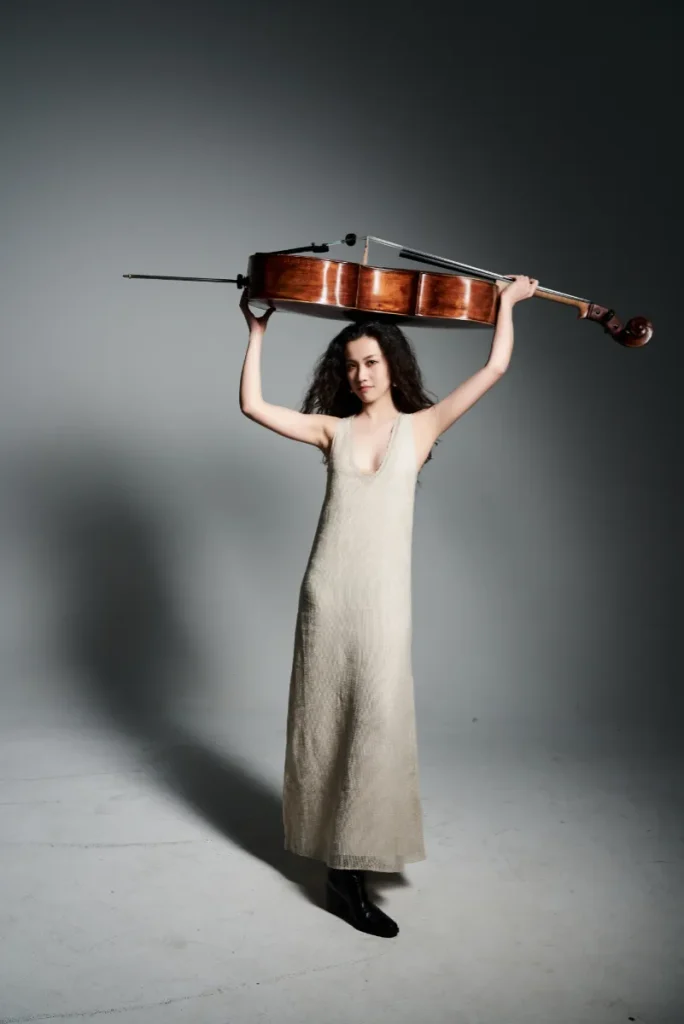
She plays a 1690s Giovanni Grancino cello, kindly loaned to her through the Beare’s International Violin Society.
Can you share with us a story of a performance or a behind the scenes moment that holds significant meaning for you? Why is it such a memorable experience?
I was once asked to jump into a piano trio concert the day before the performance. The program was Tchaikovsky and Ravel — two monumental piano trios. I had played a few movements almost ten years earlier, but essentially, I had to relearn both pieces overnight. I didn’t sleep at all. The next day, I traveled for hours to the venue, rehearsed, and walked straight onto the stage. The result was surprisingly good. But what stayed with me was the adrenaline, the razor-sharp clarity, the heightened awareness. It felt dangerous and alive.
That night reminded me that sometimes you are far more capable than you think, especially when there is no room left for doubt.
What are your next goals and commitments?
To record a debut album that feels honest, not strategic. To build a career that does not depend on trends or image, but on substance. And to protect the part of me that reads, reflects, and questions, because that inner life feeds the music.
As a chamber musician, she shared the stage with Steven Isserlis, Gidon Kremer, David Geringas, Tabea Zimmermann and Antoine Tamestit.
What would you recommend to anyone wanting to pursue a career like yours?
Don’t pursue this if you only love applause. Pursue it if you are willing to be alone with a phrase for hours. If you are willing to confront yourself. Pursue it when you really love music. And build a life outside music. Read. Love. Travel. Suffer. That is what will make your interpretations real.
IWD is often about “strength”, “inclusion” or “equity.” As a cellist artist, how do you redefine strength? In your playing, how are you paying realization forward to the girls watching and listening to you from the front row?
Strength, for me, is staying soft.
It’s keeping an open and kind heart even when life or people have hurt you. Closing yourself is easy. Remaining open and curious and fresh is much harder.
You become what you choose to see in this world.
Photos courtesy of Lila
Post Author