Professor Gao Yunxiang on Afro-Asian Solidarity, Gender, and Trans-Pacific Lives That Defied Borders
Professor Gao Yunxiang is a distinguished historian and scholar of trans-Pacific cultural history, author and teaching in the Department of History at Toronto Metropolitan University in Canada. History is often told through the lens of nations and wars, but Professor Gao Yunxiang chooses to tell it through the lives of those who refused to be contained by borders. She offers a fascinating opportunity to dive into and explore complex intersections of gender, culture, race, and transnationalism, since her work often focuses on “border-crossing” figures (like athletes, actors, and activists) who navigated complexities of 20th-century China and the United States. She aims to bridge the gap between historical data and human narrative. Her research aims to spark reflective, in-depth answers rather than standard biographical responses. She is an expert at showing how individuals weren’t just “Chinese” or “American,” but operated in a space between.
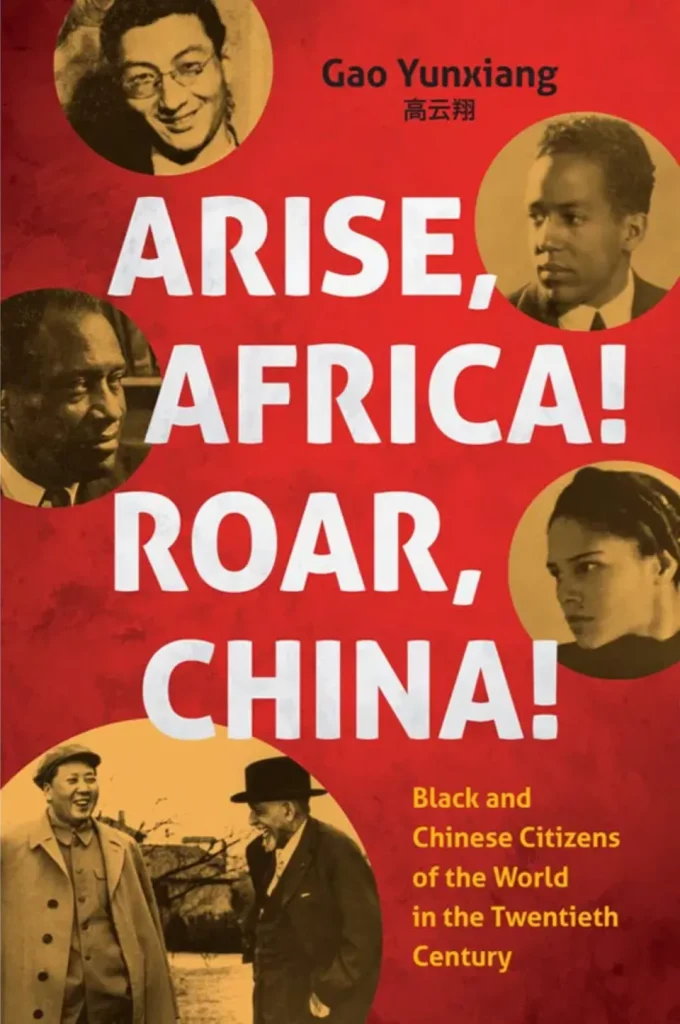
Professor Gao’s work illuminates “an other space” where cultures collide and collaborate, and humans act as a detective to tell the story of the soul, tracing the forgotten alliance between humanity activists who fought for a world free of colonialism. Her work “Arise, Africa! Roar, China!” centers on the ‘citizens of the world’ and definitive study on Afro-Asian solidarity, the activists and performers who bridged the gap between the Chinese Revolution and the Black Freedom Struggle. Her work challenges conventional narratives of Sino-American relations by placing Afro-Asian engagement as the help of internationalism, both collaborations at the center of twentieth-century global history. By excavating these hidden histories, she challenges humans to rethink the roots of modern global identity. Professor Gao’s earlier book Sporting Gender: Women Athletes and Celebrity-Making during China’s National Crisis, 1931–1945 examines gender, sports, and cultural politics in modern China. Her scholarship has been recognized for its intellectual rigor, interdisciplinary reach, and contribution to reshaping how historians understand cross-cultural encounters in the modern world unique ability to weave together personal biography with massive global shifts. History Today, The Du Bois Review, Gender and History, The Journal of American East-Asian Relations, Modern Chinese Literature and Culture, Socialism and Democracy, and Sport in Society are just a few of the publications in which she has written. A few of her articles have been translated also into Chinese.
- Sporting Gender: Women Athletes and Celebrity-Making during China’s National Crisis, 1931-45 (Contemporary Chinese Studies)
- Arise Africa, Roar China: Black and Chinese Citizens of the World in the Twentieth Century (The John Hope Franklin Series in African American History and Culture)
- Related articles: 20 Black Celebrities are unbelievable of Chinese Descent
What of your earliest childhood memories supported your perseverance and when did you decide that studying cultural history in depth, with an emphasis on China-West exchanges, would be your career path?
I grew up in a remote village beyond the Great Wall in Inner Mongolia of China. My father was a school teacher who exposed me to history and literary books. My mother was a farmer, but she is literate, unusual for rural women of her generation. She was initially from a well-to-do family in Shanxi province; her grandfather was a teacher. From her words, attitude, and actions, I learned that school and education are paramount, as exemplified by one of my earliest childhood memories refreshed by the recent snow storm in New York City. I was a first grader in the village school with nineteen students of three grades taught by one teacher. One morning, when we opened the door, snow as deep as my legs covered the ground under the bright sun and blue sky. Back then, of course there was no phone to communicate with the teacher. Thus, with determination, I trudged alone in the deep snow for around forty minutes to cover the path to school, which normally took around ten minutes. I was anxious to be late, but disappointed to find that no one else was there. The teacher emerged from her family’s living quarter adjacent to our classroom, still swallowing her breakfast. Not expecting anyone to show up, she looked at me with amazement and admiration, I would say. The episode seems to indicate my perseverance.
I have not decided to pursue transpacific cultural history, with particular attention to gender and race, as my career path overnight. Rather, the transnational sagas of my subjects naturally pulled me toward that direction. The figures in my first book Sporting Gender: Women Athletes and Celebrity-Making during China’s National Crisis, 1931–45 (University of British Columbia Press, 2013) pursued advanced degrees and career opportunities abroad or were deeply shaped by the popular culture from Hollywood and Europe, particularly Germany.
While conducting research on this book, I came across laudatory articles on the pioneering African American intellectual and activist W. E. B. Du Bois and his wife Shirley Graham Du Bois in The People’s Daily, the journalist mouthpiece of the Communist Party of China. My interest and discovery here correlated with some childhood memories of an old newspaper article and a propaganda poster. In my childhood home, the ceiling was wood board pasted with old newspapers for insolation. After I learned to read and write, I stared at a headline right above my pillow daily for around one year, until it was covered by a new layer of old newspapers on the eve of the next Chinese New Year. It was inscribed in my mind. What was the title of that article? “Robert Williams and Madam Du Bois Fervently Acclaim Chairman Mao’s Statement Supporting American Blacks’ Anti-Brutality Struggle.” That particular title is also connected to the memory of a poster in my little classroom. Advocating united liberation struggles, the poster featured indignant men and women of various skin colors in vibrant ethnic clothing charging forward, with a muscular black man holding a gun at the center. Such information eventually led to my second book, Arise, Africa! Roar, China! Black and Chinese Citizens of the World in the Twentieth Century (Chapel Hill: University of North Carolina Press, 2021).
During research for my first book, I also encountered a photograph of Soo Yong and Clark Gable in a popular Chinese-language magazine. That led to the book project I am finishing—a biography tentatively titled Soo Yong: A Hollywood Actress and Asian Diaspora Cosmopolitan. It traces her transpacific life and career.
She is the primary scholar who documented how Paul Robeson became a folk hero in China and a pioneer of the Chinese national anthem.
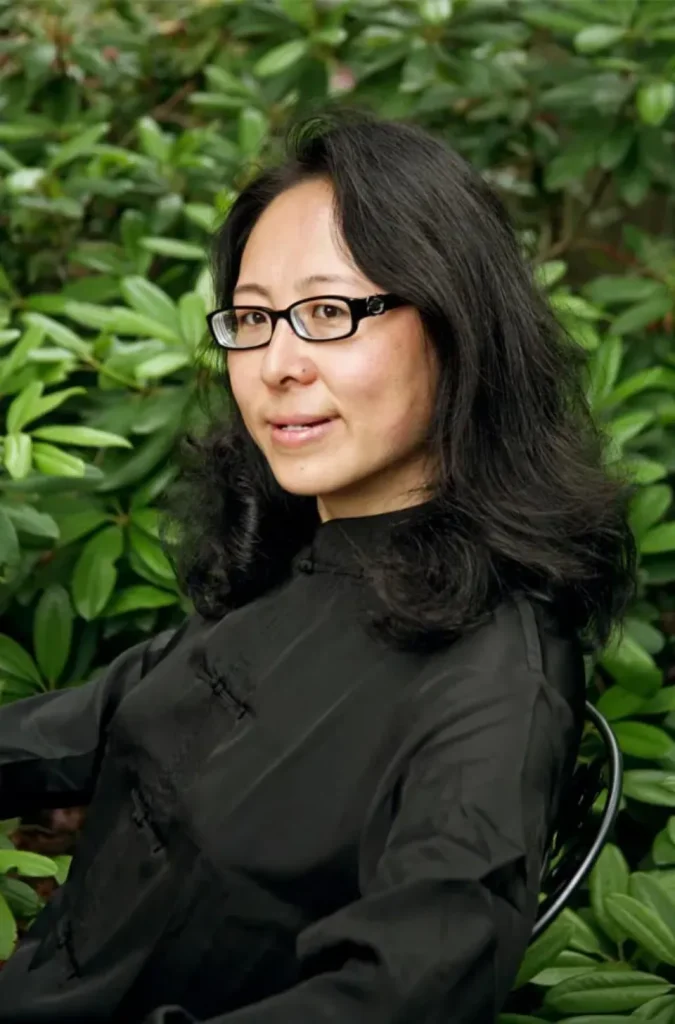
In your research on migration, how do migrants negotiate identity between homeland and host society across generations?
Before the second half of the twentieth century, when mainstream popular perceptions and laws considered the Chinese diaspora essentially Chinese, rather than full citizens in their adoptive countries, immigrants creatively negotiated their conflicting identities.
Take Soo Yong as an example. Although she was born to Chinese immigrant parents in the Territory of Hawaii, she was treated by the U.S. government for most of her life as an “alien” of ambiguous American origin. Assuming her foreignness as default, The New York Times commented, “Incidentally, Miss Yong speaks English with a clarity of diction rarely encountered among native American speakers.” In a society rife with racism toward Chinese, American-born or otherwise, Yong seemed to have gone beyond enduring Orientalist tone in the media to utilizing her veiled identity. She claimed that she had “spent her childhood in Canton,” which was supported by no evidence. She seemingly manufactured such information to self-brand as an “authentic” Chinese and thus reinforce her authority and qualifications to represent China in the media.
Soo Yong might have not spent her childhood in her ancestral home, but it was common for older generation Chinese born to immigrant parents including some of her relatives and family friends to do so. For instance, Sun Yat-sen, the founding father of the Republic of China and a close friend of the Yong clan retroactively claimed American birth by narrating such an experience.
The pioneering modern dancer and choreographer Sylvia Si-lan Chen was a daughter of Trinidad-born Eugene Chen, the foreign minister of Sun Yat-sen in the 1920s. Despite their brief physical presence in China, Sylvia and her siblings identified with China as their “home,” held Chinese passports, and longed to return until the final illusion of the radical cultural revolution. Sylvia began to adjust her racial consciousness and shifted her loyalty from the British empire to China during her brief stay in China in 1927 at the peak of his father’s political career. Previously, she wrote in her autobiography, “I was willing to find the Chinese enormously interesting, but only as a quaint and foreign race.” Now, “I began to feel proud of my Chinese ancestry for the first time in my life, and I started to look at the Chinese around me not from the outside but from among them.” Witnessing British colonial brutalities in China accelerated the shift of her self-identification. Sylvia recalled her shock “that a people could be so brutally excluded from a part of their own land.” Eugene’s historic triumph reclaiming the British concessions through negotiation particularly bolstered Sylvia’s new patriotism.
Yet, returning to the ancestral home was not always smooth sailing. Sylvia and her siblings were marginalized in their father’s life because of their mixed heritage and the Chens encountered racist attitudes in China. Political opponents’ venomous attacks on Eugene’s rumored black heritage exploded over resentment of his rapid rise inside the Nationalist Party in the 1920s, although he was pure Chinese. Such attacks tend to smear him as “a bastard with slave blood” from a “loose” Creole mother. These slurs challenged his racial and moral qualifications to serve in the Chinese government. Facing this racially charged political environment, Eugene refused to display his French Creole wife in China. In Eugene’s alleged final will, authorized by his second wife, a daughter of a high level official of the Nationalist government, shockingly, the racist shadow that he had faced was pushed to extremes. He allegedly disowned his mixed children in pursuit of his own pure Chineseness.
Sylvia’s identity dilemma was clearly illustrated in her brief encounters with the soon-to-be Madam Chiang Kai-shek, who invited Sylvia to her Shanghai house for dinner in 1927. Since the guest appeared an “English-trained flapper girl” in her “1926 dress,” “probably . . . a little short,” Mayling Soong wondered aloud whether she herself should wear leg-revealing European clothes. After subtly calling attention to their choices of wardrobes, Soong revealed her true point, as Sylvia wrote in her autobiography: “‘Wouldn’t you really prefer to be whole Chinese?’ she asked in a tone guaranteed to invite confidences. This was a question I had never thought about. I replied that I was quite happy being myself, thank you. Dinner was not a very gay affair.”
Regardless, travels and mobility, despite immigration and other hurdles, allowed generations of Chinese diaspora to seek new freedom, opportunities, and identities. The metropolitan Chens and their descendants scattered throughout Trinidad, England, France, Soviet Union, North America, and China. While they negotiated racial ambiguity and were often caught by crushing ideological, political, and bureaucratic obstacles, they were privileged to push geographic, gender, and racial boundaries during the turbulent years of the twentieth century.
Following the transition of Chinese diasporas into full citizens of their adoptive countries and the stoppage for the Chinese government to recognize their citizenship based on birth and blood in recent decades, their connections with the ancestral countries loosened.
Her earlier work, Sporting Girls: Urban Women and Body Culture in Modern China, is a foundational text on how physical fitness was used as a tool for female liberation.
Your research draws from multilingual archives and oral histories. How do personal narratives and archival documents interact in your research? Were there moments when archival records contradicted each other? What was the most difficult source to access, and how did that shape your narrative? How did you reconcile those differences?
In general, access to the multilingual archival and oral sources complement one another and enable me to connect domains commonly perceived non-overlapping.
Oral narratives greatly enriched my stories with great details otherwise lost in the duct of history. For instance, when I asked a noted Chinese actress’s husband of Anna May Wong, the first Hollywood star of Asian descent, he responded: “Fame and achievements are two different things.” That vividly captured how Chinese viewed Wong’s overly sexualized modern girl persona in films “derogatory to the dignity of the Chinese race.” Extremely proud of her achievements and legacy, Soo Yong’s family in Hawaii are eager for me to unpack her life and career. Oral materials from them greatly enriched my narrative on her childhood.
Yet, not every biographer enjoys such ardent and consistent support from surviving families and friends of their subject. The Yong clan’s cooperation is in sharp contrast to the reluctance of family and community members of some other outstanding yet marginalized historical figures. Inflicted with “self-hatred” and shamed of racialized and/or sexualized images of their pioneering celebrity relatives, the latter unfortunately tend to resist and suppress biographers’ efforts.
In addition, materials from certain institutes are difficult to access. I attempted to acquire some photographs of Soo Yong and Mei Lanfang, the King of Peking Opera, from Mei Lanfang Memorial Hall in Beijing and Soo Yong’s academic transcripts from Teachers College, Columbia University, to no avail. Sources that are most difficult to access are of course those held in official archives close to the public. However, such unfortunate instances do not necessarily interfere with the overall pictures.
Your work “Arise, Africa! Roar, China!: Black and Chinese Citizens of the World in the Twentieth Century” highlights the everyday encounters between Chinese workers and African communities. Why has this ‘Afro-Asian’ solidarity largely faded from public memory?
Such “Afro-Asian” solidarity was probably more evident in public consciousness during the Cold War. Its political and cultural legacies persist to this day despite the dramatic changes that took place in the past few decades. For instance, since 2009, the Ministry of Education of China has included a translation of “The Negro Speaks of Rivers,” one of Langston Hughes’ classic poems, in the approved textbook of Chinese language and literature mandated for ninth graders across the nation to learn about the “condensed history of the Black race.” Hughes’ work thus continues to have an enormous readership in China, comparable only with that enjoyed by figures as prominent as Mao Zedong. Together, the lives and careers of these five citizens of the world covered in this book stand as powerful counters to narratives that highlight racism and alienation. “Arise, Africa!” and “Roar, China!” as articulated by W.E. B. Du Bois and Langston Hughes, respectively, match the shared struggles of a nation and a nation-within-a-nation. Their power and promise resonate to this day. The theme has received increasing attention from historians and cultural studies scholars in the past decade.
How can be clear up the concept of “double consciousness”, the internal conflict experienced by the Chinese intellectuals you studied, particularly in relation to the tension between their traditional cultural heritage and their Western education?
The term “Double consciousness” was coined by W.E.B. Du Bois to describe how African Americans viewed themselves through the lens of the dominant racist society while simultaneously maintaining their own racial and cultural identity. That could apply to the Chinese diasporas as well.
For most Western educated Chinese intellectuals, they embraced both tradition and modernity/westernization. China’s New Cultural Movement is conventionally perceived as the peak to replace tradition with complete westernization. Yet, its core was to modernize Chinese culture through Western values. Integral to the New Cultural Movement was the transnational modern theater movement. Western modern plays without singing, was introduced to propagandize “civilization,” to enlighten new citizenry, and to promote national spirit; simultaneously, through global circulations, the “feudal” and “uncivilized” traditional theater was reinvented and internationalized with elements of modern Western theater. Hu Shi, one of China’s foremost intellectual giants of the twentieth century, helped to launch the New Cultural Movement across the Pacific while attending Cornell University. Meanwhile, he actively promoted Mei Lanfang’s tour in the United States to present Peking opera in 1930. Columbia University educated P.C. Chang, was a professor of China’s prestigious Nankai and Qinghua Colleges and later diplomat and principal author of The Universal Declaration of Human Rights; he was also a distinguished playwright with acclaimed expertise in both modern and traditional theaters.
Soo Yong was part of such transpacific Chinese intellectual network. She sought to cultivate a public persona with her signature mixture of tradition and modernity, which resonated with the conservative New Life Movement across the Pacific under her idol Madam Chiang Kai-shek’s leadership. Yong’s sentiment was best reflected through a revered wise matriarch in her monologue, who quotes Confucius with abandon, asserting that the good in “the old” can “serve as a model for the new.”
Meanwhile, leftist sojourners such as Sylvia Chen and Liu Liangmo sought to completely forfeit tradition and present a revolutionary modern China, because tradition could be stigmatized and associated with Orientalism in the West.
How can studying the history of migration help us better understand current geopolitical tensions? What is one historical myth or bias about modern China that you believe still shapes understanding today, and needs reconsideration? If you were advising, what historical lesson from your research would you urge them not to ignore?
My research and writing are loosely autobiographical. As an immigrant and self-claimed citizen of the world, I am naturally attracted to people, whose endeavors across racial, national, cultural, and linguistic boundaries illustrate that the world always remains connected despite political, legal, immigration, and diplomatic hurdles. While situating these figures in a complex and shifting political and ideological context, my research formulates accounts of the personal, artistic, cultural, and political networks they established.
As far as China is concerned, its transnational entanglements even during periods when the nation has commonly been regarded as insular and unconnected to the wider world. Tariffs, physical walls, immigration hurdles, and wars could not fundamentally transform the interdependent modern world.
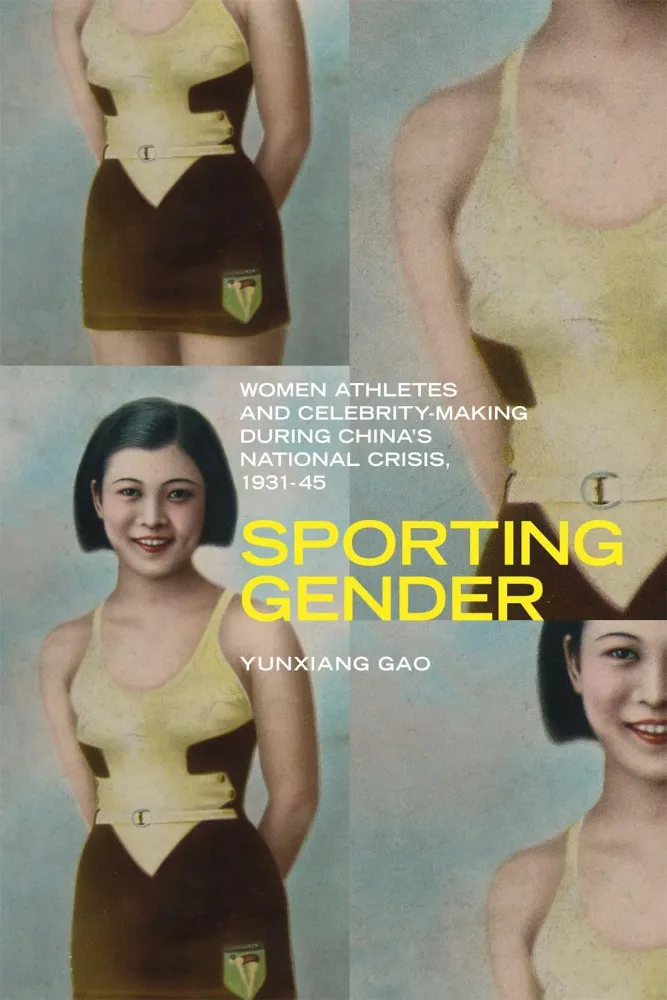
In your book Sporting Gender: Women Athletes and Celebrity-Making during China’s National Crisis, 1931–45, have you encountered a story that completely reshaped your interpretation of an event? Was there a particular story you encountered during research that fundamentally shaped your books’ direction?
I started the project looking through dry administrative and legal records on physical education and national and international athletic games. The discovery of Zhang Huilan, the first Chinese woman to receive a doctoral degree in physical education (from my alma mater University of Iowa) and her recognition by UNESCO started to push my attention beyond national boundaries and into the power of education. Encountering the “athletic movie star” Li Lili and expanding my research into magazines featuring such concepts as fit beauty, Hollywood stardom, and nudist movement in Germany allowed the book project to integrate new dimensions such as international popular culture and cinema.
You’ve written extensively about the ‘Sporting Girl’ in Republican China. How did the physical liberation of women’s bodies, through sports and dance, serve as a more radical political statement than the intellectual writings of the time.
In the Republic of China, women emerged in the public domain and gained fame as writers, actresses, and athletes/dancers. While sharing the power of celebrities, actresses and athletes/dancers displayed their bodies in public, further challenging conventional gender norms. When athletic and dancing bodies uniquely exhibited strength and power, they became especially threatening and often needed to be tamed, controlled, and justified in the name of national interest.
Looking at the lives of the actresses and socialites you study, there is often a tension between their public empowerment and their private struggles with patriarchal expectations. Did these women view themselves as revolutionaries, or were they simply trying to survive a changing world?
My research and writing illustrate the construction of modern Chinese womanhood through transnational education, drama, cinema, and sports. These pioneering women negotiated their space in patriarch power structures in sometimes subversive, admirably creative, and widely divergent ways. For instance, often caught in the subtle and petty politics of transpacific male officials who controlled the flow of resources, women such as Zhang Huilan and Soo Yong relied on sophisticated poise, charm, and respectability advanced education afforded them to diffuse the tensions.
Celebrity status often exposed glamourous actresses and athletes to sexual exploitations by powerful men such as high level government officials or studio executives. These women fought off real or threatened concubinage, damaging sexualized rumors, and overly sexualized screen image combined with racial violence through public denunciations, relocation, and carefully cultivated asexual and aristocratic public persona.
This year’s International Women’s Day focuses on “Rights. Justice. Action. For ALL Women and Girls,” and the “Give to Gain” campaign promotes generosity and collaboration. Based on your research, what insights have you gained about how communities can challenge cultural norms that perpetuate injustice, and what practical steps would you suggest to foster meaningful change?
The communities could get inspired by these extraordinary individuals whose brave and creative political activism, despite sometimes dangerous obstacles and restraints, helped to pave the path for racial and gender equalities. For instance, readers will find that political agility, linguistic skills, and affability that Liu Liangmo demonstrated in negotiating such obstacles particularly amazing. Caught between the rivalries between the Nationalist and Communist forces while promoting mass singing songs of resistance against Japan, Liu migrated to the United States. After an illustrious career promoting China among Americans in the 1940s, he slipped back to China, beyond the clutches of the FBI and INS. Inventing and flexibly employing diverse tools such as mass singing, accessible print and photo journalism, and lecture tours, in both English and Chinese, Liu was able to mobilize and organizing the grassroot masses and reaching out to the elite across racial and national boundaries. That testified the power of Liu’s techniques and attitude of “do it” and “do it well” as an activist and organizer.
Photos courtesy of Gao Yunxiang
Post Author