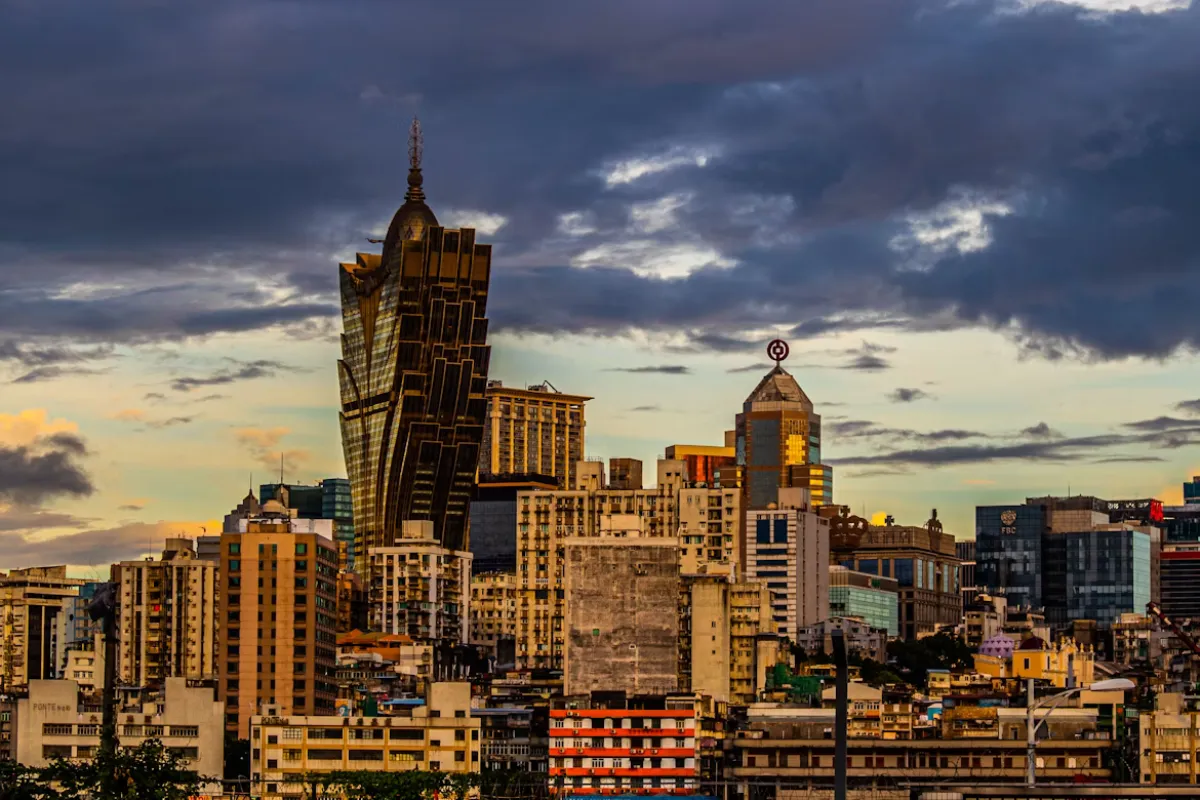
China has one of Asia’s most restrictive approaches to gambling, yet Chinese demand has played an outsized role in shaping the casino industry beyond the mainland.
The contradiction is most visible in Macau, where casino gaming remains legal under the territory’s separate regulatory system. It is also visible much further south, in places such as Cambodia and the Philippines, where businesses once developed specifically to serve Chinese gamblers who could not access the same products at home.
For more than two decades, the movement of Chinese tourists, capital and workers helped determine where new gambling centres emerged in Asia. More recently, Beijing’s attempts to suppress cross-border gambling have begun to influence the geography of the industry just as strongly.
China has therefore played two roles at once. It has been one of the region’s most important sources of gambling demand, while also becoming one of its most influential forces for gambling restriction.
Macau Established the Model
Macau remains the obvious starting point because no other casino market demonstrates the importance of mainland Chinese demand on the same scale.
Despite efforts to diversify its tourism economy, the territory remains closely connected to the mainland visitor market. Macau’s Statistics and Census Service recorded 20.94 million visitor arrivals during the first half of 2026, of whom 15.29 million came from mainland China. Mainland arrivals were also up 11 per cent from the same period in 2025.
Macau is a special case because gambling operates legally under the territory’s own regulatory framework. The wider lesson, however, was noticed elsewhere in Asia: a large Chinese customer base existed within relatively easy travelling distance, while the mainland itself offered almost no legal casino market.
This created an economic opportunity for neighbouring jurisdictions. Casinos did not need China’s gambling laws to change if Chinese customers could instead travel to where gambling was permitted.
Chinese Demand Moved South
The next phase was not confined to established casino centres. Chinese tourism and investment contributed to the development of new gambling economies across parts of Southeast Asia, sometimes at remarkable speed.
Cambodia provided one of the clearest examples. Sihanoukville, once primarily known as a coastal tourism destination, experienced a construction and casino boom during the second half of the 2010s as Chinese investment and visitor numbers increased.
Casinos were only one part of the transformation, but they became highly visible. Chinese-language businesses, hotels, residential developments and entertainment venues appeared alongside them, creating an economy increasingly orientated towards Chinese customers.
Online gambling altered the economics further because the customer no longer had to be physically present on the casino floor. An operation based in Cambodia could employ Chinese-speaking staff and use internet platforms to serve customers located elsewhere.
This model reduced the importance of the traditional casino destination. What mattered increasingly was access to telecommunications, payments, labour and a jurisdiction willing to host the business.
Cambodia changed course in 2019 and announced that online gambling licences would no longer be issued or renewed. The decision hit Sihanoukville particularly hard because a substantial part of the city’s recent growth had become connected to Chinese-facing gaming and related businesses.
The episode showed both sides of China’s regional influence. Chinese demand could help create a new industry very quickly, while the loss of access to that demand could expose how dependent the local economy had become on it.
The Philippines Took the Model Online
The Philippines developed the same idea on a much larger and more formalised basis through Philippine Offshore Gaming Operators, widely known as POGOs.
The model was unusual. Operators could locate staff and technical operations in the Philippines while offering online gambling to customers overseas, with mainland China becoming the industry’s most important target market.
POGOs consequently created demand for more than gaming licences. They required Chinese-speaking workers, office buildings, accommodation, payment services, technology suppliers and supporting businesses, particularly around Metro Manila.
For a period, this made offshore gaming a significant economic cluster rather than a narrow gambling sector.
It also created a political problem. The customers being targeted were located largely in a country where online gambling was prohibited, and Beijing repeatedly made clear that it did not regard the offshore location of an operator as removing the Chinese legal issue.
As concerns over kidnapping, trafficking, fraud and illegal POGO operations intensified inside the Philippines, attitudes in Manila also hardened. President Ferdinand Marcos Jr announced a ban on POGOs in July 2024, bringing an extraordinary period of expansion to an abrupt end.
China welcomed the decision. In a statement following the announcement, its embassy in Manila reiterated that Chinese law prohibits gambling and said Beijing had long called for the Philippines to ban the offshore gaming industry.
Beijing Began Regulating Demand Beyond Its Borders
The most important development was not any single casino closure or national ban. It was China’s growing willingness to restrict the channels connecting Chinese citizens with gambling businesses outside China.
In 2020, China’s Ministry of Culture and Tourism established a blacklist system for overseas gambling tourism destinations. The ministry said some overseas cities were attracting Chinese tourists for gambling and announced that travel restrictions would be applied to destinations placed on the list.
A third round of measures announced in 2021 demonstrated how broad these controls could become. They included restrictions on outbound tour groups and tourism visa services, along with tighter management of business jets and charter flights serving affected destinations.
This represented an important shift in the regional gambling equation. China did not need to regulate a casino located in another sovereign state if it could instead make it harder for Chinese customers to reach that casino.
The same principle now extends beyond tourism.
In May 2026, China’s ambassador to the Philippines described Beijing’s position on cross-border gambling through what he called the “three prohibitions”. Chinese capital should not invest in local casinos, Chinese citizens should not participate in their operation, and overseas casinos should not solicit Chinese citizens as customers.
Taken together, those restrictions target three of the components that helped Chinese-facing casino markets expand in the first place: capital, labour and customers.
Asia Remains a Patchwork of Gambling Markets
The effect of Chinese policy is amplified by the fragmented nature of Asian gambling regulation.
Market data compiled by GamblersPro.com, a global real-money online casino index with dedicated coverage of Asian markets, places China among the region’s most restrictive jurisdictions for online and cross-border gambling.
The wider Asian picture is far less uniform. Macau operates a regulated land-based casino industry, the Philippines permits regulated domestic forms of online gaming while shutting down the former offshore POGO model, and other jurisdictions range from tightly controlled casino markets to broad prohibitions.
This means a change in Chinese policy can have very different effects depending on where Chinese demand has moved. A casino economy built around physical tourism responds differently from an online operation that can relocate staff, technology and customer acquisition to another jurisdiction.
That distinction became increasingly important as enforcement intensified.
The Industry Did Not Simply Disappear
Restrictions in one country have not necessarily removed Chinese-facing gambling demand from the region. In some cases, they have changed where and how the underlying activity operates.
Parts of Cambodia, Laos and Myanmar subsequently became associated with online gambling businesses serving customers across borders. Some of these areas offered combinations of weak enforcement, special economic zones or political circumstances that made oversight more difficult.
The development became more serious as some online gambling networks overlapped with telecom fraud, scams, trafficking and other criminal activity.
China’s response increasingly shifted from gambling policy towards regional law enforcement. Chinese authorities have worked with governments across Southeast Asia to repatriate suspects and dismantle operations linked to cross-border gambling and telecommunications fraud.
The Philippines provides a recent example. In July 2026, Chinese authorities said law enforcement agencies from the two countries had cooperated in the repatriation of a suspect allegedly connected to a criminal group operating online gambling and telecom fraud sites in the Philippines and Cambodia.
This is a different regional landscape from the casino expansion of the 2000s and 2010s. The policy question is no longer simply whether a neighbouring country should permit casinos or collect tax from them, because governments must also consider who the customers are, how they are recruited and whether gaming operations are connected with wider cross-border criminal networks.
Chinese Demand Became Chinese Leverage
The history of Asian gambling over the past two decades is often told through individual markets. Macau boomed, Sihanoukville expanded, POGOs emerged in the Philippines, and governments later imposed new restrictions.
Viewed together, however, these developments form part of a larger regional pattern.
China’s restrictive domestic gambling policy did not eliminate demand. For many years, it helped push some of that demand towards jurisdictions where casinos or online operations could legally establish themselves, creating opportunities for businesses willing to serve Chinese customers outside the mainland.
As these industries expanded, Beijing developed increasingly sophisticated methods of attacking the connection between overseas gambling businesses and Chinese citizens. Tourism restrictions, criminal prosecutions, repatriation agreements and bilateral law enforcement cooperation have gradually extended China’s influence beyond its territorial borders.
This has given Beijing an unusual form of regulatory leverage.
China cannot determine the gambling laws of Cambodia, the Philippines or other sovereign states, but it can exert considerable influence over the Chinese customers, capital and labour on which some gambling businesses have depended.
The same Chinese demand that helped reshape the geography of Asian gambling has therefore become a mechanism through which Beijing can reshape it again.
Featured image: Unsplash
Post Author
