Palace intrigue, poison, and paranoia across two thousand years of Chinese rule
Chinese imperial history spans more than two thousand years and dozens of dynasties, and buried among the wise reformers and capable administrators is a smaller, stranger lineage: emperors whose vices, paranoia, and sheer incompetence hollowed out the very dynasties they inherited. Some were teenagers handed absolute power before they had any idea what to do with it. Others were talented in everything except ruling.
Here are fifteen of the most notorious, in chronological order.
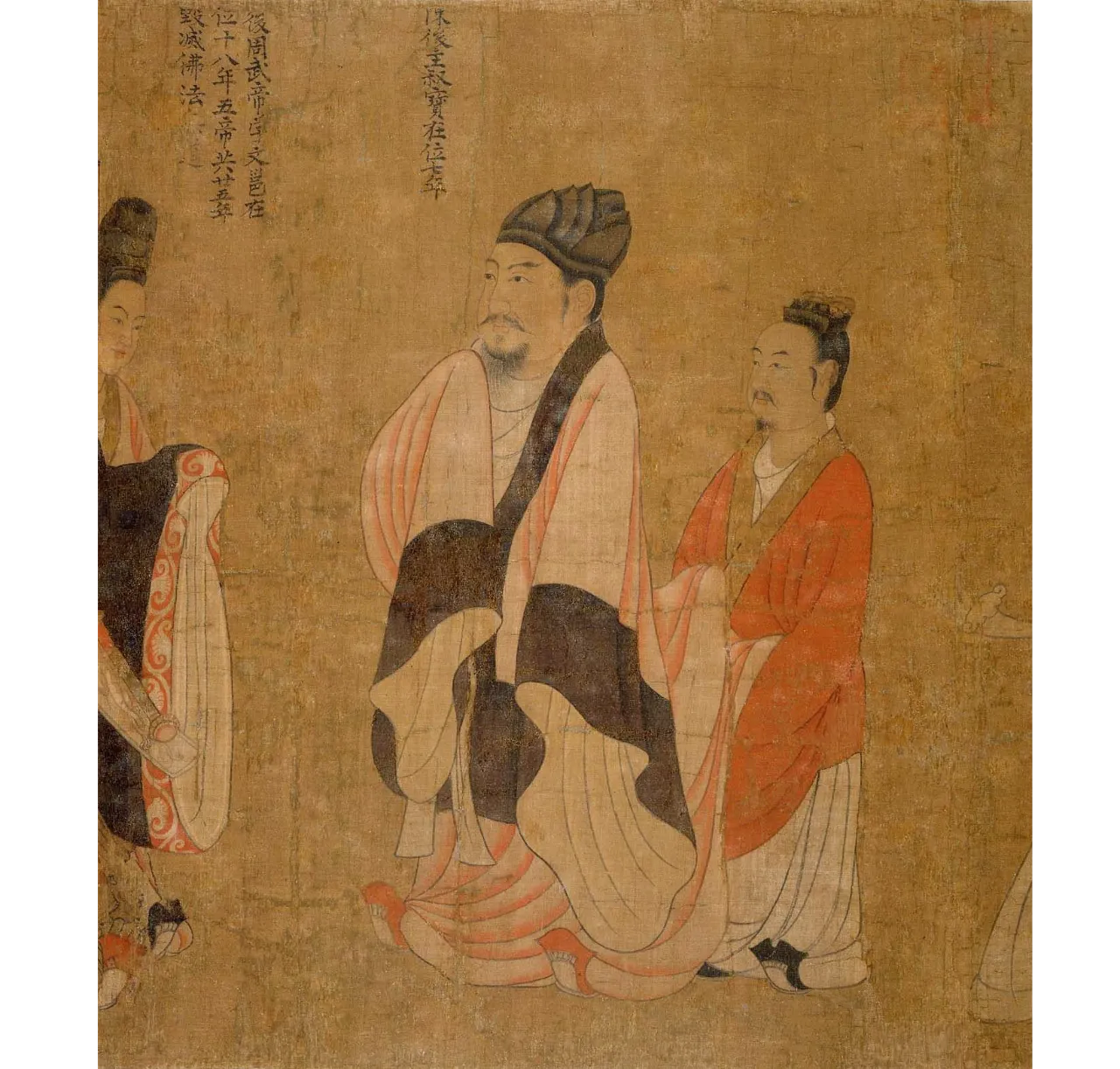
Featured image: Tang dynasty portrait of Emperor Houzhu (Chen Shubao) by Yan Liben, source
Qin Er Shi
Qin Er Shi, born Ying Huhai (229-207 BCE), was the second emperor of the Qin dynasty, China’s first unified imperial state, and its eighteenth son. He took the throne in 210 BCE through a palace conspiracy engineered by the eunuch Zhao Gao and the chancellor Li Si, who forged an imperial decree ordering the rightful heir, Fusu, to commit suicide.
Utterly dependent on Zhao Gao, Huhai reigned as little more than a puppet while his mentor purged the court, executing princes and officials on the flimsiest pretexts. His three years on the throne were marked by harsh policies and an almost total detachment from governance, conditions that fed directly into the uprisings that brought down the Qin within just fifteen years of its founding. In the end, even Zhao Gao turned on him, forcing Huhai to take his own life in 207 BCE. His name endures in a Cantonese expression still used today for a spoiled, incompetent heir.
His father set an odd precedent of his own. Qin Shi Huang, the founder of the dynasty, spent his final years dispatching alchemists and expeditions in search of the elixir of immortality, most famously sending the alchemist Xu Fu on a fleet with hundreds of young men and women to find it across the eastern sea, and reportedly died from the mercury-laced potions he drank in the meantime. Huhai never picked up the search himself. He had other people to answer to.
Liu Shan
Liu Shan (207-271) was the son of Liu Bei, founder of the state of Shu Han during the Three Kingdoms period (220-280), and became the last ruler of that short but eventful dynasty of ancient China.
Known by his childhood nickname, “A’dou,” his name remains, even today, a byword in Chinese for a person who cannot accomplish anything despite every resource being available to him. He took the throne as a teenager and, despite being supported by some of the most capable officials and strategists of the era, including the legendary Zhuge Liang and his generals, he never managed to turn Shu Han into a strong state.
Sun Hao
Sun Hao (242-284), during the Three Kingdoms period, was the fourth and last emperor of Eastern Wu. He was a bloodthirsty and erratic ruler whose reign helped bring both his dynasty and the Three Kingdoms period to a close.
He is remembered as an incapable, paranoid, extravagant, cruel, and vindictive ruler. In his early years he lowered taxes and tried to discipline his officials by releasing a number of concubines, but as the years passed he sank increasingly into vice and ruled as a tyrant, eliminating anyone who dared disagree with him.
He gradually abandoned the affairs of state altogether, devoting himself to cruelty against the innocent and to his many lovers. Historical accounts describe a favored method of torture in which he had his victims’ eyes gouged out before the skin of their faces was removed.
Fu Sheng
Fu Sheng (335-357), the self-styled “One-Eyed Tyrant,” was the second ruler of the Former Qin, a short-lived state of the Sixteen Kingdoms period. Blind in one eye and never expected to inherit, he took power in 355 after his father interpreted a folk rhyme as a sign from heaven that Fu Sheng should be his successor.
His two years in charge were a reign of undiluted terror. He reportedly received ministers flanked by attendants holding drawn bows and swords, with iron pincers and saws laid out before him, and had officials killed for the slightest offense: remonstrance was branded slander, flattery was branded sycophancy, and both were punished with death. He executed his own uncle by crushing his skull and had his wife, the Empress Liang, killed along with her father and uncle. He was overthrown and executed in a coup led by his cousin Fu Jian in 357, who took the throne in his place.
Liu Ziye
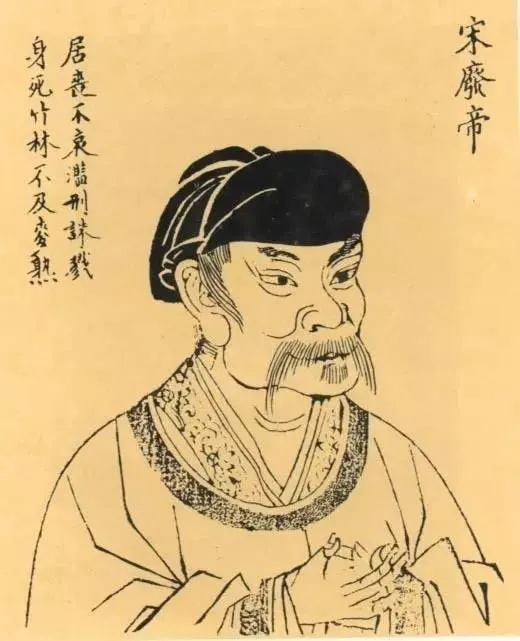
Liu Ziye (449-466), of the Southern dynasties, was the eldest son of Liu Jun, Emperor Xiaowu of the Liu Song dynasty (420-589). He took the throne in 464 as Emperor Qianfei at the age of fifteen and was assassinated less than two years later by his uncle Liu Yu, Prince of Xiangdong, who succeeded him as Emperor Ming.
He is remembered for extreme incompetence, for murdering relatives and senior officials, and for his dissolute private life. His father, Emperor Xiaowu, had never favored him and had considered replacing him with a younger brother, a slight that left Liu Ziye deeply resentful.
Once in power, Liu Ziye forced that younger brother to commit suicide and had his two sons killed as well. Fear of conspiracy drove him to purge the entire court that had served his father, and he placed his uncles under arrest and constant harassment out of fear they might rebel.
He also had a particular taste for incest. He forced his aunt, Liu Yingmei, to live in the palace to satisfy him, then had her husband He Mai killed after He Mai, unsurprisingly, plotted against him. He carried on an incestuous relationship with his own sister, Liu Chuyu, as well. Liu Chuyu, better known by her title Princess Shanyin, is a figure in her own right: her complaint that she was allowed only one husband while her brother kept thousands of concubines, and the household of thirty male attendants he assigned her in response, is one of the best-documented scandals of the Liu Song court. He ordered princesses and consorts to take part in public orgies with his servants, and on occasion forced concubines into sexual acts with animals. Disobedience meant death.
Liu Yu, Prince of Cangwu
Liu Yu (463-477), remembered by his posthumously demoted title of Prince of Cangwu, was the penultimate emperor of the Liu Song dynasty, reigning as a boy from 472 until his assassination in 477. His short rule was defined by casual, almost recreational cruelty.
He liked to roam outside the palace with his guards, killing any person or animal unlucky enough to cross his path. According to one well-known account, he grew fascinated by the belly of his general Xiao Daocheng while the man slept and had him used as a live target for blunted arrows, aiming for his navel for entertainment rather than to kill him. Xiao, understandably terrified for his life, had the fourteen-year-old emperor assassinated in his sleep. The palace guards, by all accounts, greeted news of the boy emperor’s death with relief rather than mourning. Xiao Daocheng went on to seize the throne himself two years later, ending the Liu Song dynasty and founding the Southern Qi.
Gao Yang
Gao Yang (529-559), Emperor Wenxuan of Northern Qi, was the founding emperor of his dynasty during the Northern and Southern Dynasties period (420-589).
His early years on the throne showed real attentiveness to matters of state, and under him Northern Qi grew for a time into a genuine military power. But as the years went on his character worsened and he slid into drinking and womanizing until his death in 559.
When drunk, he was prone to acts of gratuitous violence. On one occasion he beheaded the sister of his consort Xue, with whom he was having an affair. On another, after having a minister select a group of unfortunate prisoners, he killed them in cold blood for entertainment.
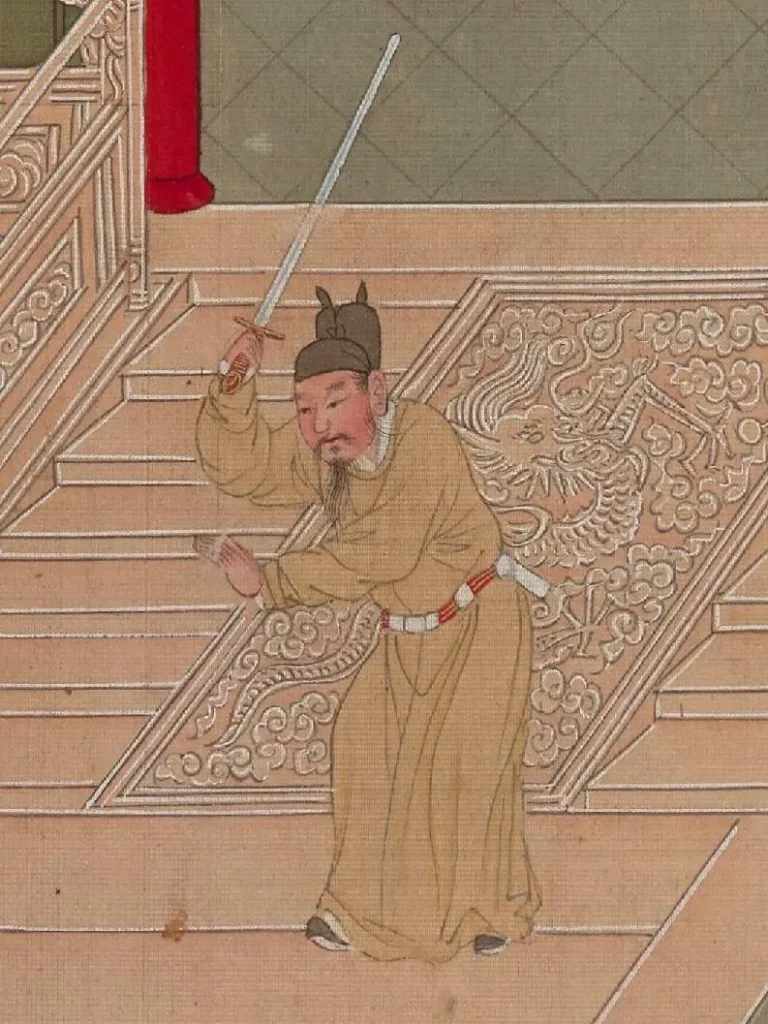
Chen Shubao
Chen Shubao, known posthumously as Houzhu of Chen (553-604), was the fifth and last emperor of the Chen dynasty (557-589) during the Southern and Northern Dynasties period. He took the throne in 583 and reigned until 589, when Sui forces conquered his capital, Jiankang, and captured him, ending both his rule and the dynasty.
He was brought to the Sui capital, Chang’an, where he continued to indulge his vices until his death in 604. He is remembered for his ineptitude, his incompetence, and his passion for literature, wine, and women.
His palace held three pavilions devoted to pleasure, where his concubines and his consort Zhang, along with senior officials, spent day and night feasting and composing lighthearted poetry. While the emperor amused himself, the population outside bore crushing taxes and constant abuse; the bodies of those who died of hunger and hardship piled up along the roadsides.
Yang Guang
Emperor Yang of Sui, born Yang Guang (569-618), was the second emperor of the Sui dynasty (581-618). He shrewdly usurped the throne from his brother, and it is said he had a hand in the death of his own father, Emperor Wen, as well.
After taking the throne in 604, he took his father’s two favorite consorts, Lady Xuanhua and Lady Ronghua, as his own. He proved to be a clever and ruthless tyrant, imposing crushing taxes and a climate of terror on the population.
His reign nonetheless produced major public works, including the completion of the Grand Canal, the reconstruction of parts of the Great Wall, and the building of portions of the eastern capital, Luoyang. He repeatedly attacked the Korean kingdom of Goguryeo without ever prevailing, and as the exhausted population rose up with growing frequency, he was ultimately driven to suicide in 618.
Zhao Ji
Zhao Ji (1082-1135), known as Emperor Huizong, was the eighth emperor of the Song dynasty (960-1279) and reigned for twenty-six years. Like several others on this list, he indulged a life built around luxury, literature, and art. A genuinely talented painter and calligrapher, he was nonetheless an incompetent ruler who presided over the collapse of the Northern Song.
He was surrounded by a court of officials who schemed to eliminate loyal ministers and steered the impressionable emperor toward vice. Unsatisfied with his concubines, he reportedly disguised himself as a commoner to visit ordinary brothels.
In 1126, as the capital Kaifeng fell to the invading Jin armies, he abdicated in favor of his son, Zhao Huan (Emperor Qinzong). The following year both were captured and deported to Wuguocheng, in present-day Heilongjiang, where they were held prisoner. Huizong spent roughly nine years in captivity, stripped of every comfort he had once taken for granted, and died there in 1135.
Yelü Yanxi
Emperor Tianzuo, Yelü Yanxi (1075-1128), was the ninth and last ruler of the Liao dynasty (916-1125). During a reign of roughly twenty-five years, he showed little foresight, badly underestimating the rising power of the Wanyan clan, which later overran his kingdom and founded the Jin dynasty.
He preferred to spend his time hunting, fishing, and gambling, effectively handing power to his trusted brother-in-law Xiao Fengxian, who in turn promoted damaging figures such as Li Chuwen to high office. These men oppressed the population and let the dynasty slide into chaos and irrelevance. His negligence cost the state dearly, and it eventually fell into civil war among rival clans. In 1124 he was captured by Jin troops, tortured, and killed in 1128, his body reportedly trampled by horses.
Toghun Temür
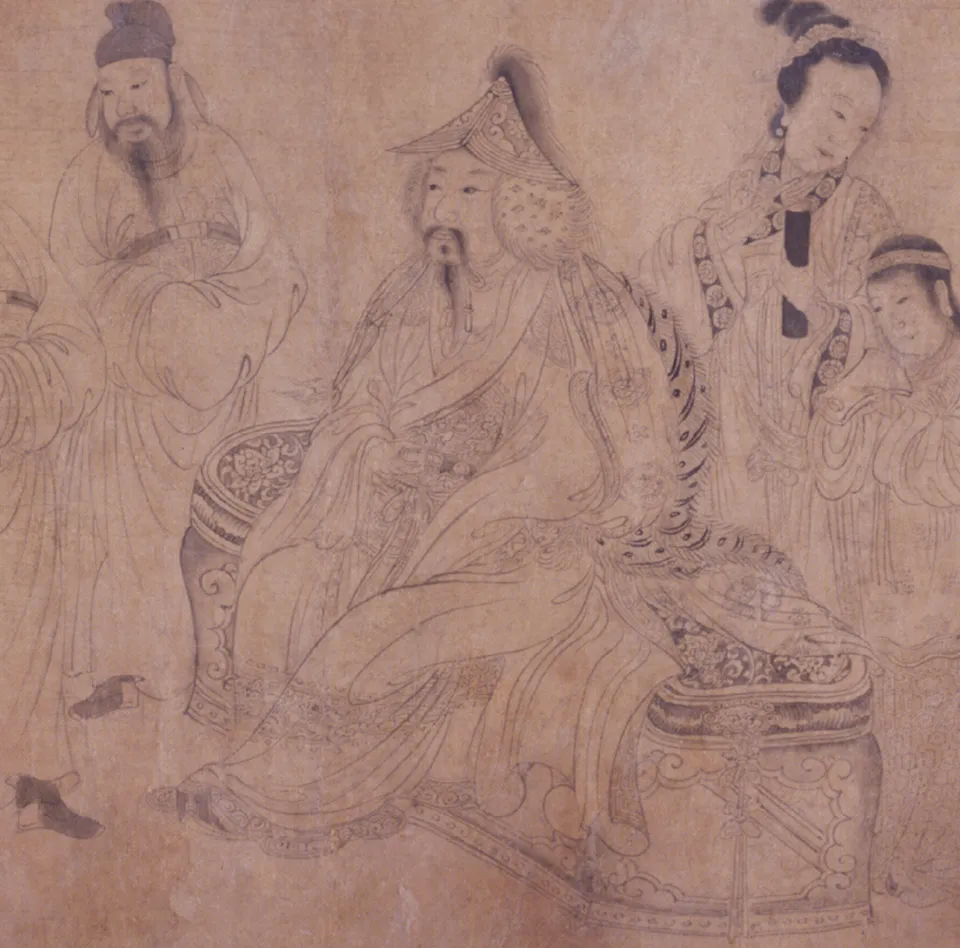
Toghun Temür (1320-1370), Emperor Shun, was the eleventh and last emperor of the Mongol Yuan dynasty (1260-1368). He took the throne in 1333 at just thirteen and is remembered as a ruler interested in little beyond sex.
A devoted patron of orgies, he had large stages built where dancers performed for his pleasure. Shun harbored a deep hostility toward the Han Chinese, promoting continual discrimination and oppression against them during his reign, even ordering the killing of Han people bearing the surnames Zhang, Wang, Liu, Li, and Zhao.
His discriminatory policies helped drive the empire to its end. The capital, Dadu, present-day Beijing, fell to the forces of Zhu Yuanzhang, and Emperor Shun fled to Yingchang in Inner Mongolia, where he died of dysentery in 1370.
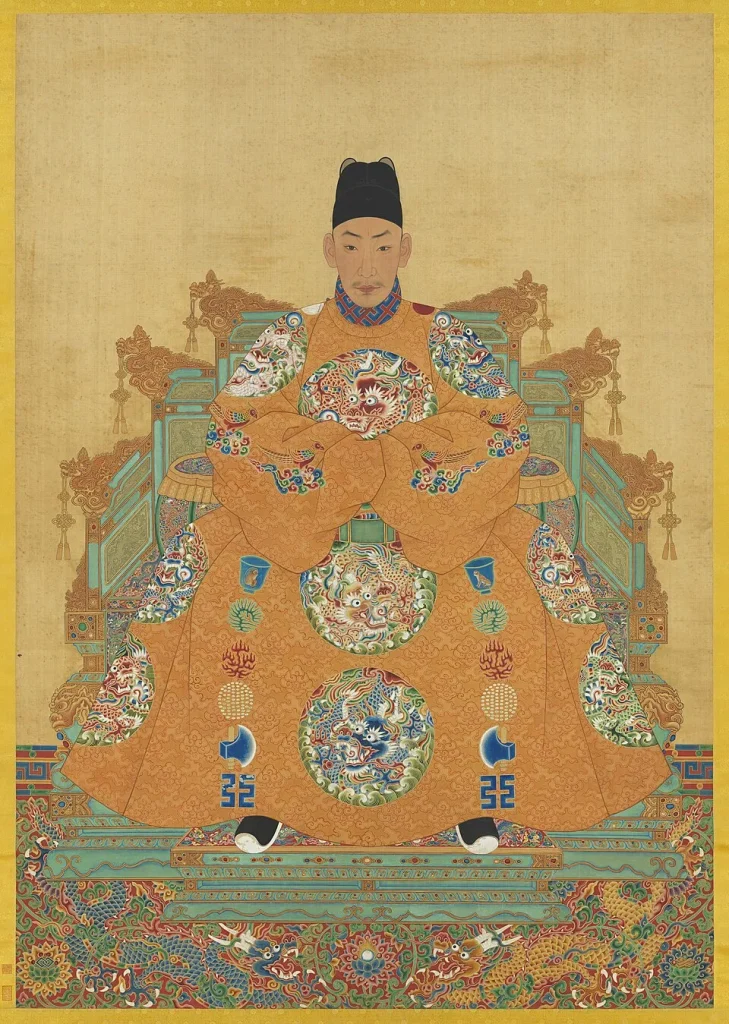
The Zhengde Emperor
Zhu Houzhao (1491-1521), the Zhengde Emperor, was the tenth ruler of the Ming dynasty and ascended the throne at fourteen as the only child of the capable and disciplined Hongzhi Emperor. Where his father had been a model of Confucian restraint, Zhengde treated the empire as his personal playground.
He built a private compound outside the Forbidden City known as the Leopard Quarter, complete with a menagerie of leopards, tigers, and elephants, and moved there with his favorite eunuchs and officers, effectively abandoning the business of ruling. He set up a mock marketplace inside the palace so he could shop and haggle like an ordinary commoner, and he was known for his taste for abducting women, most infamously during the sack of Yangzhou following a rebellion, when he and his men are said to have assaulted an untold number of local women, sending families scrambling to marry off their daughters for protection. He died in 1521 at twenty-nine after falling into a lake while drunk and never fully recovering, leaving no heir.
Zhu Youxiao
The Tianqi Emperor, Zhu Youxiao (1605-1627), was the fifteenth emperor of the Ming dynasty (1368-1644). He took the throne in 1620 at fifteen and quickly fell under the influence of his wet nurse, Madam Ke.
Zhu Youxiao was largely illiterate and had little grasp of state affairs, so he delegated nearly every decision to the notorious eunuch Wei Zhongxian, who had formed an alliance with Madam Ke. Wei manipulated the emperor and placed his own allies in every position of real power.
The Donglin faction, loyal to the throne, sent repeated memorials denouncing Wei’s crimes, but the emperor made the mistake of appointing Wei himself to rule on the accusations. The result was a bloodbath: those who were not executed were exiled. Throughout his reign, Wei’s power over the population deepened the empire’s social conflicts, and the dynasty stood on the edge of collapse when Zhu Youxiao died, reportedly of poisoning. All of his children died young.
Sources: China.org.cn; Wikipedia entries on Qin Er Shi, Liu Shan, Sun Hao, Fu Sheng, Liu Ziye, the Latter Deposed Emperor of Liu Song, Gao Yang, Chen Shubao, Emperor Yang of Sui, Emperor Huizong of Song, Emperor Tianzuo of Liao, Toghun Temür, the Zhengde Emperor, and the Tianqi Emperor.
Topics: mad Chinese emperors, worst emperors in Chinese history, cruel emperors of China, Chinese dynasty collapse, ancient Chinese rulers, tyrannical emperors of China, incompetent Chinese rulers
Post Author
