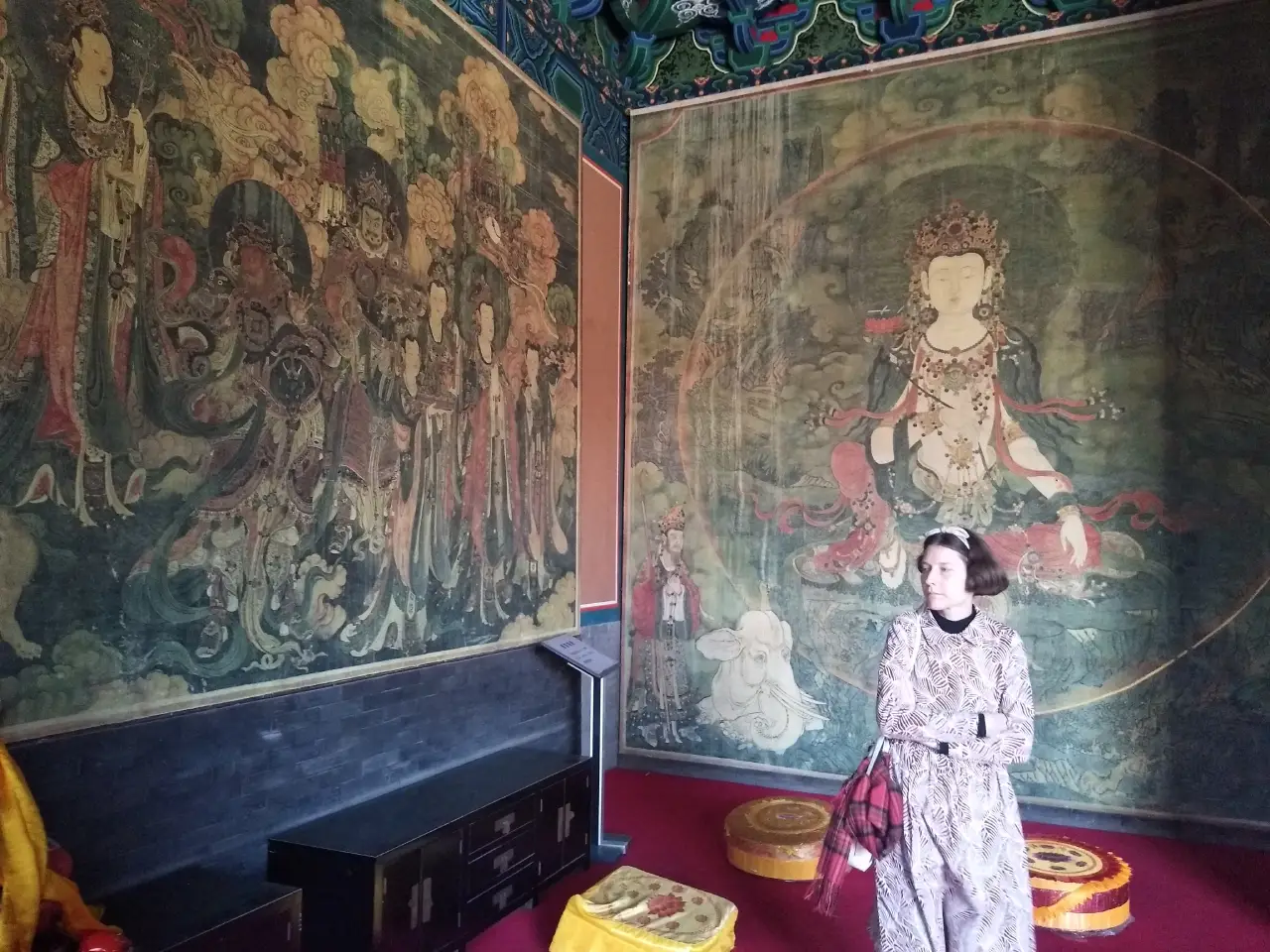
Tammy Treichel’s experience of life in Beijing’s hutongs
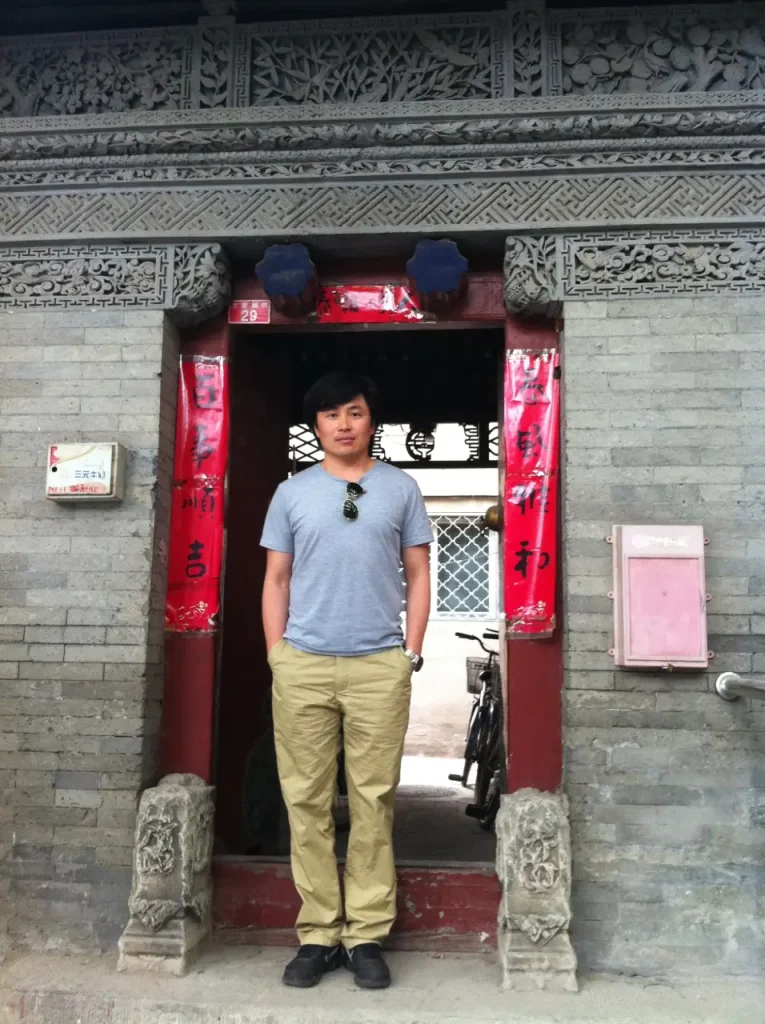
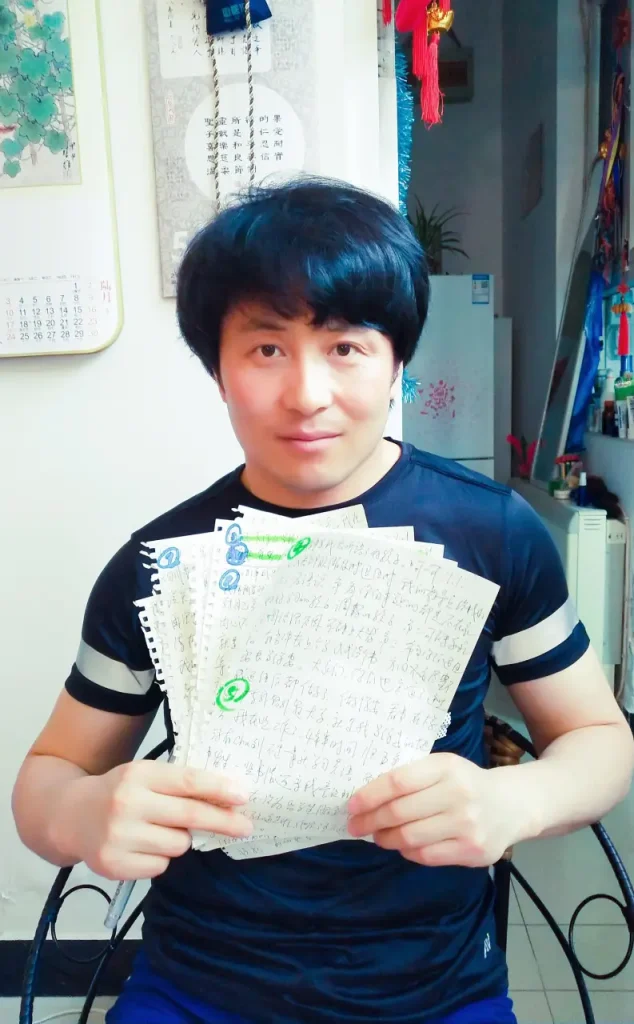
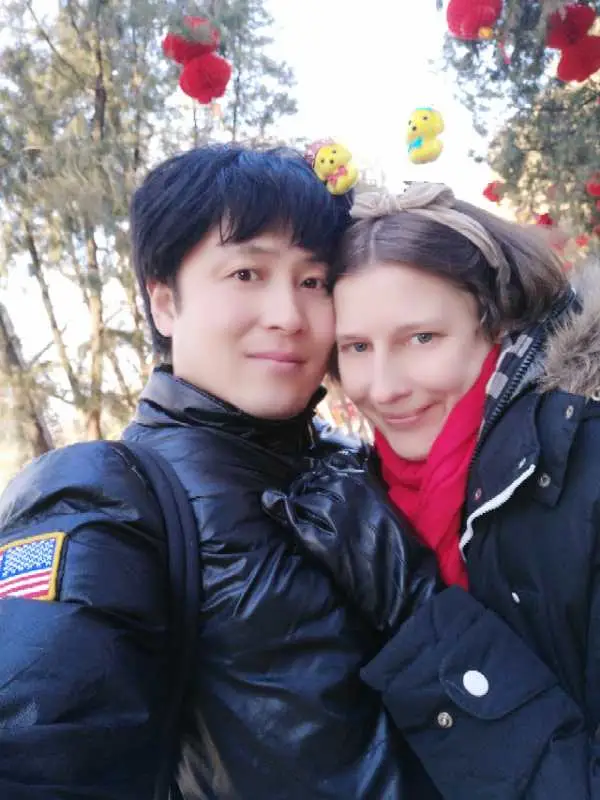
Tammy (Tamara) Arehart Treichel is an American academic and editor based in Beijing. After earning a PhD in English, she transitioned to freelance writing for China-related publications. Her memoir, Hutong Heartthrobs, is inspired by her life with her Chinese partner Jackie, a former security guard-turned-actor. They live together in a traditional hutong house in Beijing with their rescue cats and lizards.
What inspired you to create a cross-cultural love story set in Beijing’s hutongs?
My mother is a science writer who has authored several science-related books. At age 82, she is working on her next big project. She can’t stop writing and the same can be said of myself; I suppose it’s in my DNA.
Since coming to China, I have always wanted to write a book about my experiences in this country, yet I didn’t want to write a boilerplate “Ooooh, China is so cool, the food is so delicious, the landscape is breathtaking and the locals are oh-so-nice” type of book that some foreigners produce. But for numerous reasons I didn’t want to write a book that explores China’s dark sides, either, although those can be thought-provoking. In my book, I aimed for a more nuanced approach, something light and entertaining yet a book that also gives the reader some ideas about how to bridge differences between Westerners (in my case, an American) and Chinese people.

When Jackie came into my life, so did the opportunity to write a book that blends both of our experiences in the setting of Beijing’s hutongs. I did some research on Amazon and discovered to my surprise that there were no directly competitive titles to a potential book exploring a shared life between a Chinese man and a Western woman, so I decided to have a go. When I approached my publisher, Graham Earnshaw, he also believed the joint story idea had merit and gave me some valuable advice on how to better incorporate two points of view (Jackie’s and mine) into an organic whole. The hardest part was interviewing Jackie and then typing out his answers in Chinese, translating into English and then ensuring through a third party (Chinese native speaker who was highly proficient in English) that my understanding of Jackie’s statements was correct to achieve accuracy as much as possible.

Do you think Tammy’s journey in the book parallels your own journey of discovering China? If so, how?
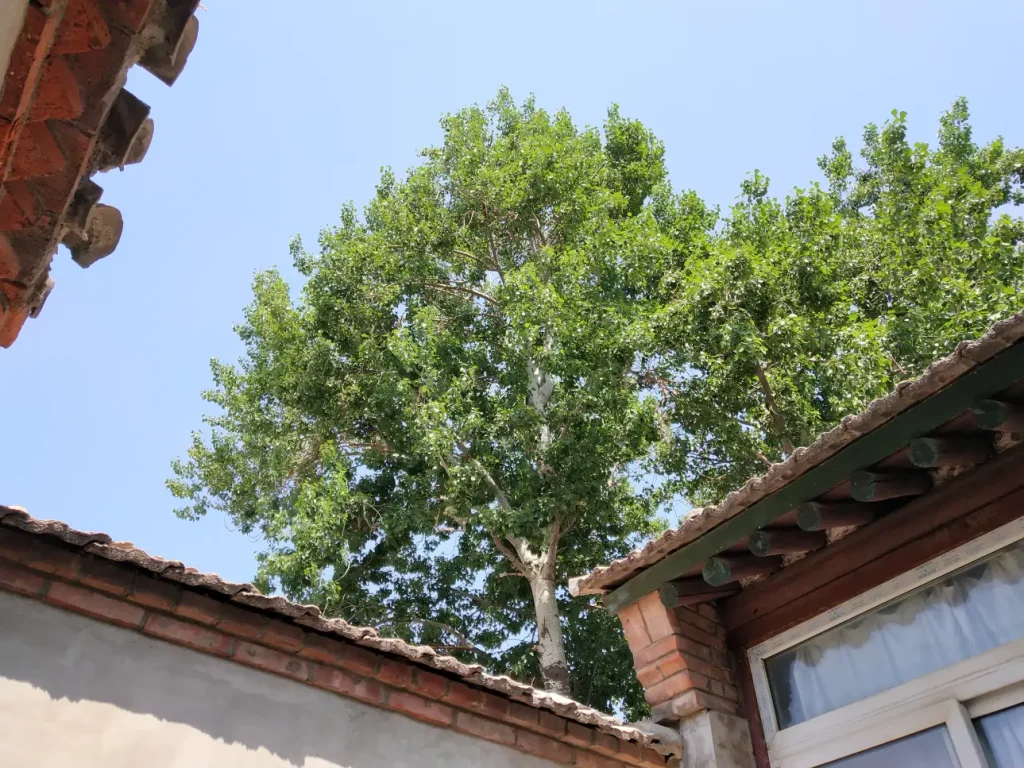
Yes, indeed. It is my life story intertwined with Jackie’s, so it can be classified as a memoir/autobiography/biography. What I wrote in Hutong Heartthrobs are facts about our life together, they are not certainly not fictionalized, although some real-life elements might have been embellished a tiny bit for dramatic or symbolic effect. For example, the old popular tree next to our hutong house is symbolic of “roots” and the importance of ties to our country and families of origin. Also, a recurring classic theme is that of climbing mountains, i.e. challenges that need to be surmounted in life.
What role does the setting of the hutong play in shaping the characters’ relationship and the overall narrative?
Hutongs, i.e. narrow, winding alleyways that go back to the Yuan Dynasty (1271-1368) are a prominent characteristic of Beijing, so you could almost say the hutong neighborhood we live in is a sort of character in the book, just like New York City is said to be a “character” in the TV series Sex and the City.
Hutongs are often associated with dead ends and have a maze-like character, which reflects how I occasionally feel about my life experiences in Beijing — a perpetual feeling of being lost in a completely different culture and always having to try to find my way out of bizarre situations. Yet hutong houses can also be very snug, very romantic and make for the perfect “love nest,” if adequately heated in winter, of course.
How do the cultural misunderstandings between Tammy and Jackie reflect broader societal themes?
That is an excellent question; let me expand on this from “society” to “international society/global stage.” In its foreign policy, the United States has demonstrated a rather narrow-minded approach to China and other countries that are vastly different, i.e. non-allies in a traditional sense; it’s all a zero-sum game. At least that is what local media outlets in China claim, and I ultimately came to the conclusion that there is some truth to this. Maybe it has to do with the American concept of “Manifest Destiny,” according to which, America is supposed to continuously expand its “frontier” and sphere of influence because it is its god-given destiny.
By contrast, China has demonstrated more flexibility and openness in some of its foreign policy, if you think of the Belt and Road Initiative, a club advertised as welcoming all, and the Asian Infrastructure Investment Bank (AIIB), in which China wields significant influence and which has been created as an alternative to the International Monetary Fund and World Bank, for example.
As the American in Hutong Heartthrobs, I find myself sometimes being too narrow-minded, too Captain Ahab-like and not flexible enough and occasionally having an “us versus them” mentality, which I have been trying to correct over the years. In fact, I have learned a lot of humbling lessons regarding this in China.
As a rather stubborn and strong-willed person, my life motto has been “The path to my fixed purpose is laid with iron rails, whereon my soul is grooved to run” (to quote Captain Ahab in Moby-Dick). This didn’t have a good outcome for Ahab, as you will probably remember, as his monomaniac approach to a very ambiguous environment ultimately leads to his destruction, whereas the more “fluid” and highly adaptable Ishmael survives.
Jackie, as a Chinese, has demonstrated a more inclusive and flexible approach to dealing with other people and the daily challenges we encounter; he is the Ishmael to my Ahab. A good example of this is the bus-hijacking episode in Hutong Heartthrobs, where Jackie’s and my approaches to dealing with a mini-crisis vastly differ. He let me see this episode in a completely different light.
Can you discuss any specific misunderstandings between Tammy and Jackie that were inspired by your own experiences?
All of the misunderstandings that are recounted in my memoir Hutong Heartthrobs were real-life problems (see above). You could say my book is reality TV in prose with an occasional poetic touch.
Why did you choose to make Tammy an academic and editor? What challenges does this profession bring in a cross-cultural context?
Well, since this is a memoir, Tammy aka Tamara was/is an academic and editor in real life. I left academia after completing my doctorate. Do I regret this? Most of the time, the answer is no; the academic experience from what I witnessed is really too much like David Lodge describes so vividly in some of his novels, cut-throat, prestige- and peer-oriented, and you are always expected to be on the up and up if you are serious about an academic career. This might suit and give a sense of fulfillment to some people, but not someone as independently minded as I am. So in a way, I am now considered “academically dead,” having left academia and not published anything research-related after my doctoral thesis about Moby-Dick came out as as a book, issued by an academic press, yet I do and will always cherish my ties to my alma mater and my mentors and peers there.
The academic experience helped me to approach problems more objectively, more analytically; you have to be ready to admit for example that your pre-conceived notions are completely wrong and be ready to ruthlessly throw them overboard if they don’t accord with the facts and then start from scratch. Having your preconceived notions completely destroyed and then having to rebuild on rubble, which actually occurred when I was working on my doctoral thesis, has helped me to do mental U-turns while living in China, and open myself up to radically different ideas and concepts, although it has been far from easy.
My day job in Beijing is working as a news editor. That involves questioning “facts” and being detail-oriented, and you could almost say a perfectionist of sorts. The running gag in Hutong Heartthrobs is that Tammy is not “flexible” enough — a relic of my innate personality and my occupational disease as an editor, I suppose.
In what ways do you think Hutong Heartthrobs challenges stereotypes about both Chinese and American cultures?
The greatest challenge to prevailing stereotypes is that most Chinese-American (or more broadly, Western) couples are composed of a Western man and a Chinese woman. Relatively few couples are Chinese man-Western woman, although their numbers may be increasing. Why this is so, and the context surrounding this age-old phenomenon, is an intriguing question which also merits exploration, perhaps in a separate book.
Gender stereotypes: The fact that the woman in the relationship is quite a bit more educated and older than her male partner is still quite unusual, especially in a traditional country such as China. And a mousy, foreign PhD holder/bluestocking being involved with a swashbuckling Chinese migrant worker? Get out the popcorn, that makes for a juicy story!
Also, just the fact that Jackie and I are “different from other people” is explored in detail in Hutong Heartthrobs. Not only is our lifestyle somewhat unconventional, but we don’t consider ourselves a run-of-the-mill couple for the most part. This has caused our families of origin a bit of a headache at times.
Conversely, does Hutong Heartthrobs reinforce stereotypes? A British friend of mine said there does indeed exist the stereotype of the foreign (laowai) hutong dweller in Beijing, but I have yet to hear more about that. The foreigners I know — with one or two short-lived exceptions — all live in high-rises, and not really downtown along the second ring road in an old musty hutong house opposite historical attractions like the Confucius Temple and Imperial College.

Are you currently working on a new book, and if so, will it continue exploring themes of cross-cultural relationships or perhaps a completely different subject?
Yes! I have finished the first draft of a chick-lit novel that might appeal to especially middle-aged women, over the age of forty. It is set in China, and involves a cross-cultural relationship, exotic pets and salty cocktail snacks. I think the chick lit genre suits me for now as it combines romance as well as comedic and soap operatic elements. I won’t reveal more about the content for now.
I finished the first draft in about three months this summer, inspired by Chris Baty’s gung-ho NaNoWriMo challenge of writing a novel in 30 days (it took me 90 days but I didn’t go about it in a fanatical way). I loved the novel-writing process and the relationship you establish with your characters and how they eventually take on a life of their own; this was something I looked forward to feeling and working on almost every morning before work and dreaming about at night.
When I felt inspired, I immediately jotted down my ideas on a piece of paper or my smartphone, even if it was 3 a.m.; memory is a slippery thing. Writing a novel is a somewhat different experience than writing a memoir, but there are some similarities (character consistency, building suspense, pacing…). You learn a lot during the process. I am now working on fine-tuning my manuscript and researching publishing options.
Photos courtesy of Tamara Treichel
Post Author

Well Done. Interesting! Thanks. Jim Marquart
This was a fantastic interview. I read the book overnight in one sitting the day I received it in the mail. While I have known Tammy since her birth (as the oldest daughter of a close friend, her Dad Horst. I travelled with him to visit Tammy while a student at Heidelbeerg University where she received her Docorate in English) I never fully appreciated her insight until I read this amazing and informative interview. Indeed, well done, dear Tammy. Jim & Joann Marquart