History and the Supernatural Collide in The Phoenix and the Firebird by Alexis Kossiakoff and Scott Forbes Crawford
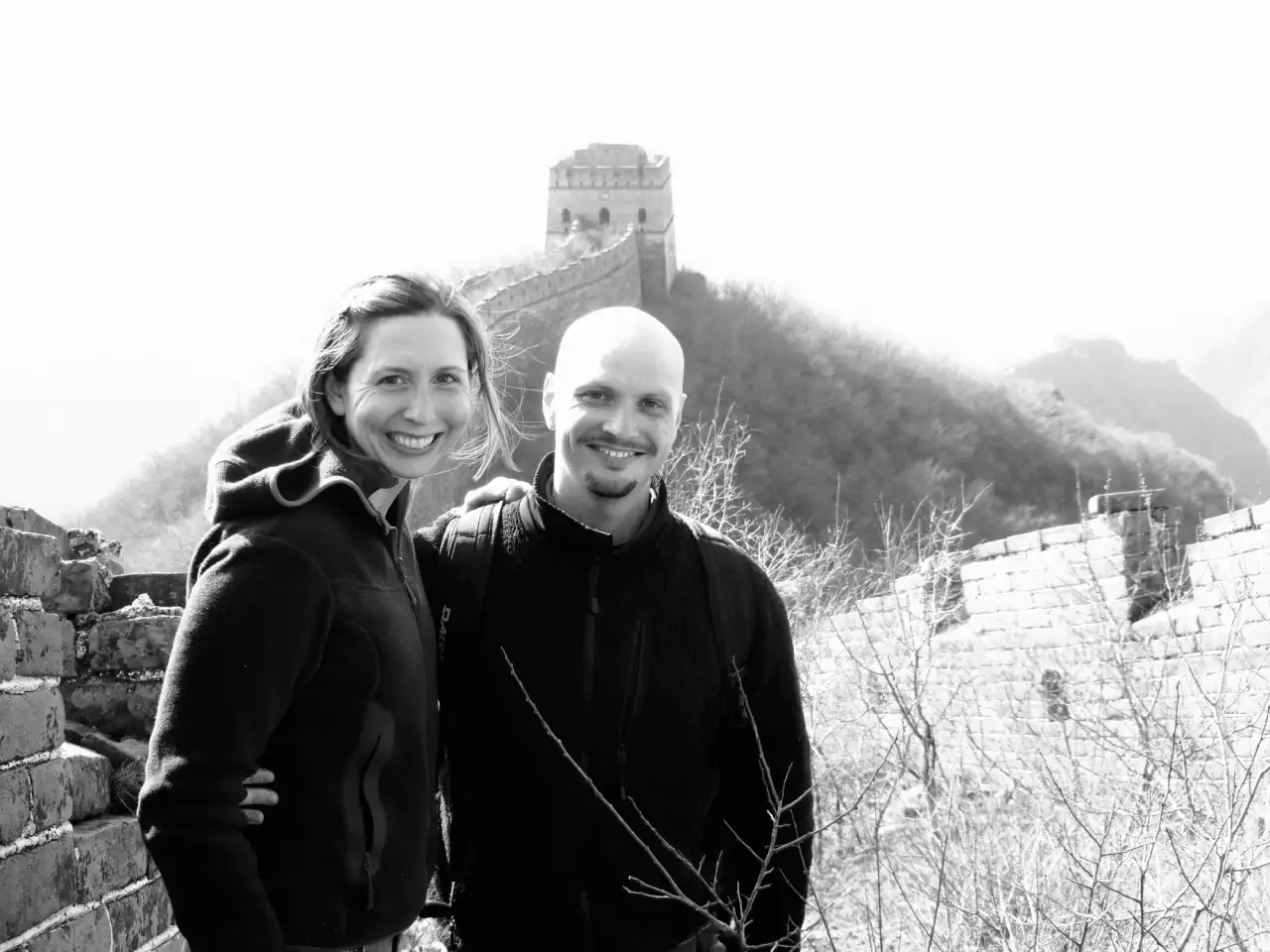
Alexis Kossiakoff and Scott Forbes Crawford are writers who collaborate to create stories inspired by their cultural backgrounds and life experiences. Kossiakoff’s Russian heritage, particularly her family’s escape from the Russian Revolution and subsequent life in China, deeply influences their work. Crawford’s extensive knowledge of Asian cultures, gained from his time living in Beijing, Taipei, and Japan, also plays a key role in their storytelling. Their collaborative novel, The Phoenix and the Firebird, published by Earnshaw Books, combines Chinese and Slavic folklore within a historical setting. Drawing from personal and historical contexts, they create narratives that explore themes of friendship, adventure, and the supernatural, offering readers a unique perspective on the past.
What inspired you to write “The Phoenix and the Firebird,” and how did the idea for the story originate?
We (Alexis Kossiakoff and Scott Forbes Crawford, a married couple) had been living in Beijing for quite some time, and always kept an eye out for material we might use for a collaborative project. The initial inspiration for writing, though, came from somewhere farther away but also much closer: Alexis’ Russian family. Her great-grandfather served as an officer in the Czar’s army and after the Russian Revolution, he and his family fled. They went first to Harbin, followed by Hankou (now part of Wuhan), and found safety in China for several years.
That experience fascinated us, especially what it must have been like for Alexis’ grandfather, known as Kossy, who was a young boy at the time. As an old man, Kossy shared stories of his childhood in 1920s China. He lived through much political turmoil, both in his home country and his adopted one.
We decided to spin all this into a story. And because our link to the family history was through Kossy, telling the tale through a young person’s perspective felt the most natural. So we wrote it with a Middle Grade audience primarily in mind, and chose to incorporate folklore from Chinese and Slavic traditions as well, to make the story more exciting and to explore interesting corners of both cultures.


Can you explain the significance of the Phoenix Mountain in the story and its impact on the characters’ evolution?
The girls depart Peking and go on a quest into the wilderness. As they venture through a dark and forbidding forest, the mountain represents their distant goal and a great threshold, physical and otherwise, they must cross. As they enter the mountain’s shadow, their character and friendship are tested and strengthened.
What was the inspiration behind the enigmatic figure of Vlad and his interactions with Lucy?
Without giving away too much, we were drawn to the mercurial tendencies of some characters found in Slavic folktales. Sometimes they are heroic, other times, vicious.
At Lucy’s age, children begin to understand that adults are more complex and flawed than they previously believed. Initially, she has a very negative impression of him. However, as she gets to know him better, she begins to see his humanity and finds ways to connect with him. Through this process, Lucy matures, grappling with a more nuanced understanding of good and evil, and realizing that a person can embody both qualities simultaneously.

What inspired the concept of the grave-robber and the tunnels into the fortress? Was there a particular legend or myth that influenced this?
Living in China, we were always fascinated by the concept of the Hungry Ghost festival in August. These ghosts illustrate the Buddhist beliefs of the intermingling of the spiritual and physical realms. The idea of a soul that is never satisfied, that always is looking for more framed the creation of the grave robber character, and maybe also hints at a change Lucy must make in herself….
How did you balance the elements of Chinese and Russian folklore within the storyline?
Our goal was to demonstrate how certain elements of folklore intertwine and diverge, and to use these aspects to drive the plot forward. Although there is some overlap, Chinese and Slavic folklore creatures differ in key ways due to the distinct social structures and belief systems of their cultures. Chinese folklore often emphasizes moral lessons and the maintenance of hierarchy, while Slavic folklore is more focused on themes of good versus evil and has a stronger connection to the natural world. Because of these differences, it made the balance easier because they spoke to different elements of our story and didn’t become repetitive.
What role does the forest play in the story, both as a setting and as a character in its own right? What inspired the creation of the mystical creatures and occult powers within the forest?
The forest plays a few roles. Lucy and Su are city girls and placing them in a sprawling wilderness means they are on unfamiliar ground, which is often satisfying in a story. We drew from the archetypal forest of fairy tales, offering both danger and enchantment.
As to the creatures who inhabit it, we liked the idea of a wild and forbidding place where creatures are forced to the fringes to live. Much like Lucy, who must abandon her cozy life in Russia for the uncertainty and danger of life in a new land.
What research did you conduct to authentically portray the historical setting of 1920s China?
We turned to a variety of sources for that research and also received wonderful guidance and support from experts. As we completed most of the manuscript while living in Beijing, we took advantage of that by frequently walking the hutong and other older parts of the city such as the Legation Quarter.
Sometimes we took these walks with a masterful guide, Lars Ulrik Thom. His company Beijing Postcards is dedicated to exploring the history of the city and he leads walking tours based on a range of themes, such as the Boxer Rebellion or the life of famed courtesan Sai Jinhua. Lars is a passionate and learned observer of the city and his knowledge and enthusiasm were a boon to our project.
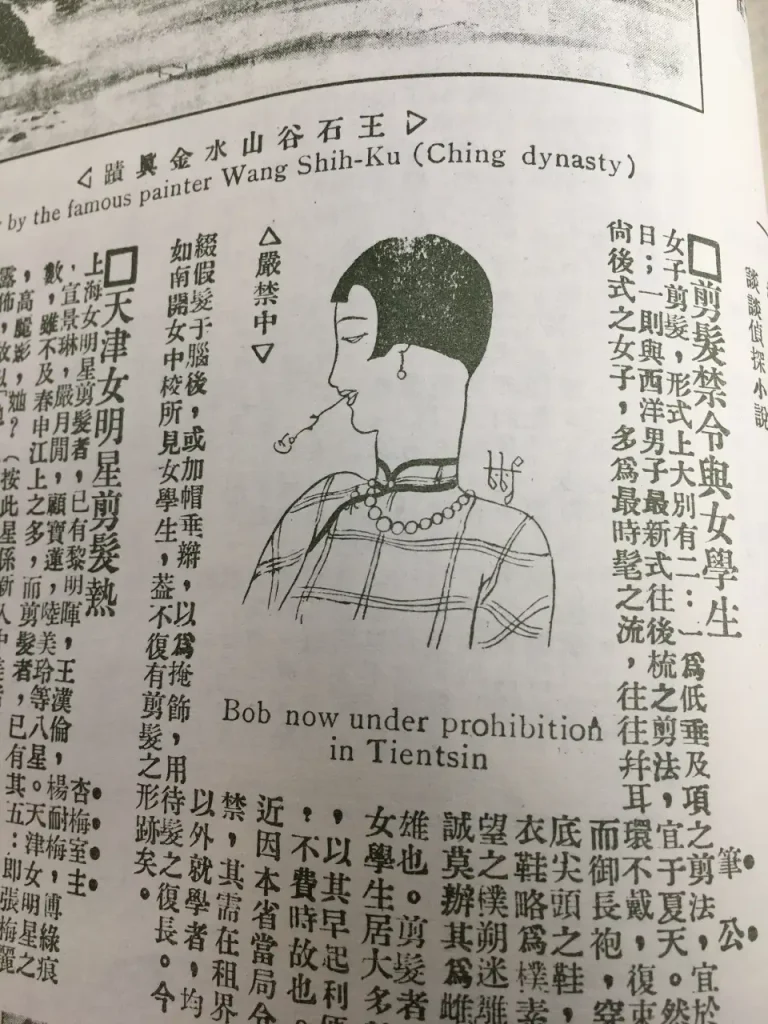
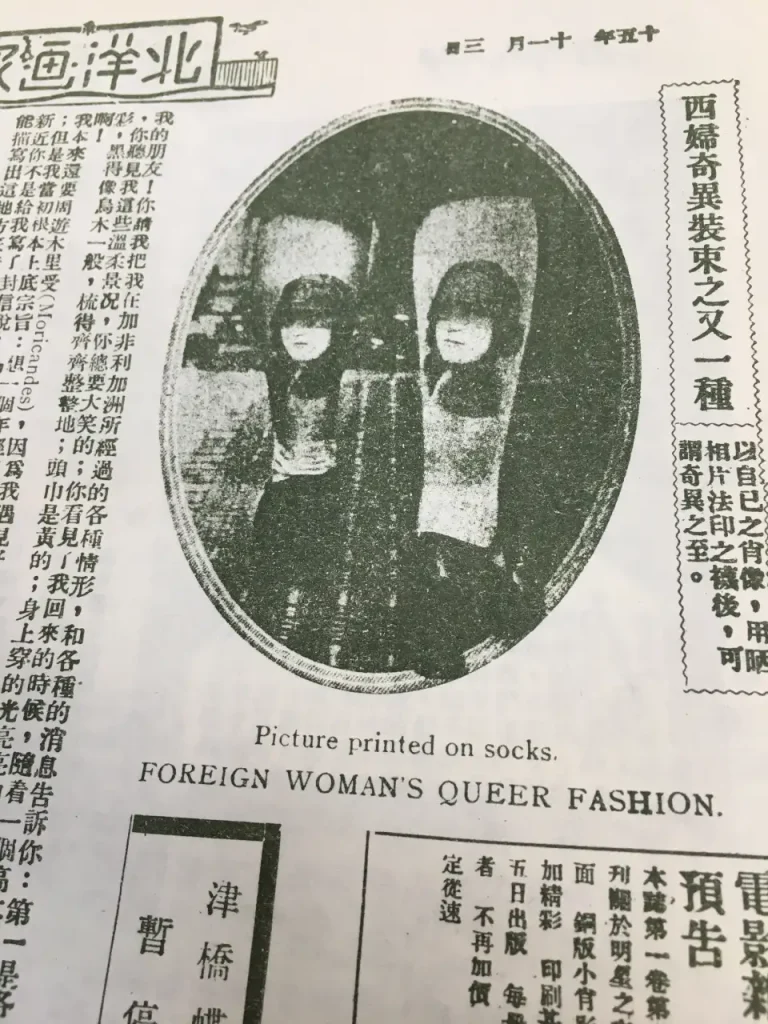
Our thanks go to Lars also for taking Scott on a research trip to the National Library of China. There is a wealth of primary sources from the time we wrote about to draw from, including period magazines held at the library. The stories and their illustrations helped to form a picture of the era.
Speaking of photographs, Alexis’ family managed to hold onto many photos taken by them in China as well as postcards from the time.
Finally, we read many books from the time and about it. There are two we must highlight: first, The Search for a Vanishing Beijing by M.A. Aldrich. It is an erudite guide to the city, a perfect companion when walking its streets. It opened our eyes to the depths of Beijing’s history and lore and helped us see the vestiges of a city hidden beneath the “beautification” that has changed the face of many neighborhoods.
The second book is Paul French’s Midnight in Peking. His narrative and investigation of a young woman’s death in 1936 showed how the city could become such a powerful setting. This spurred us to attempt to pour as much flavor as we could muster into our portrayal of Peking.
How do you approach writing scenes that combine fantasy and realism, particularly in the context of the supernatural elements?
This combination comes naturally for both of us because we have pretty wild imaginations. It might be harder for us to imagine (or accept) a world without the fantastic than one with it. The challenge was to rein in some of the fantasy so that the historical aspects remained prominent, and to ground our characters in the place and time.
How do you collaborate on writing a book? Can you describe your process and how you divide the work?
It took us a few tries to settle on our method. Together we shape the basic story, devising an outline. What we learned is that once the writing begins, it’s important that one of us has sole “custody” over the manuscript. One author has complete control and hands off their work to the other once completing their pass. By going back and forth like this, we can tap into one another’s strengths, address our weaknesses, and perhaps most importantly, establish a single voice over the entire novel.
Can you share any details or teasers about your next project? What themes or genres are you planning to explore?
We are at work on a historical novel set in Central Asia circa 300 AD. A young woman, the apprentice to a traveling doctor, becomes embroiled in a conspiracy and must investigate her own shadowy past to thwart her foes. It is such a pleasure conjuring the range of characters she meets: nomads, Sogdian merchants, runaway slaves, monks and actors and magicians.
We are challenging ourselves to capture this world with a focus on the “middle” of the Silk Road, primarily the area around the Tarim Basin and what is now Uzbekistan. So often we view the Silk Road through perspectives based on its two ends, Byzantium/Rome and China. Our ambition is to bring Central Asia, the heart of this vast trade network, to greater prominence. And of course, our other ambition is to tell a gripping story filled with suspense, adventure and romance.
This is new and invigorating territory for us and we hope it will be for readers when we complete our journey with a book to present.
Photos courtesy of Alexis Kossiakoff and Scott Forbes Crawford
Post Author
