A look at necessity, hardship, and the ropes that shaped a river economy
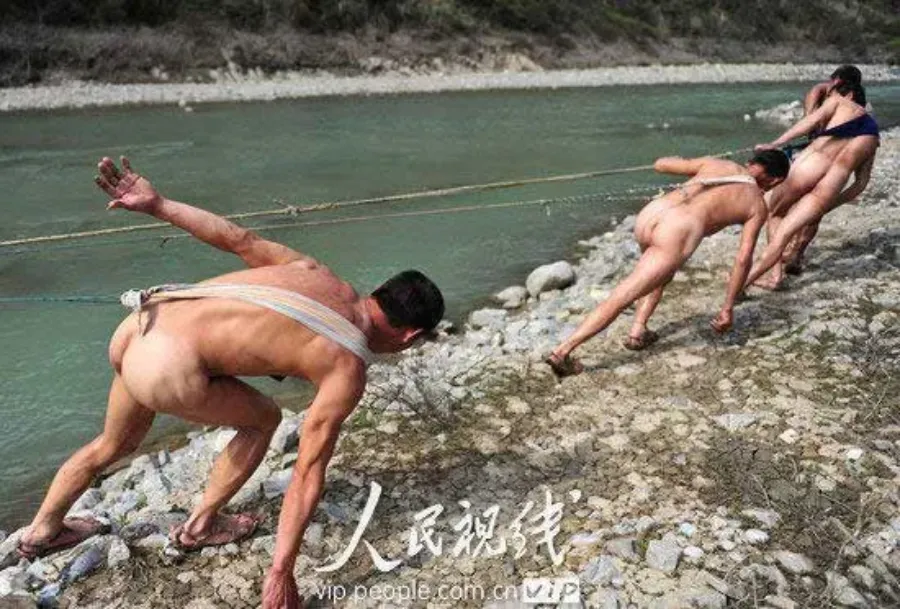
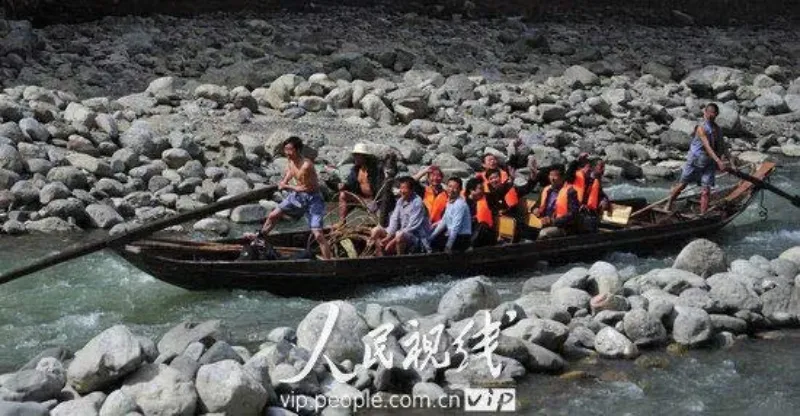
For centuries, men walked bent double along the rocky banks of the Shennong Stream (神农溪), a narrow tributary of the Yangtze that cuts through Badong County (巴东县) in Hubei Province. Bound to wooden boats by a rope slung over one shoulder, they hauled cargo and passengers upstream against currents too violent for oars alone. For most of the year they did this work naked. The practice, born of necessity rather than spectacle, became one of the most recognizable images of the Three Gorges region, and one of its most uncomfortable cultural inheritances.
Part of our China History Archive
A tradition shaped by water, not choice
The men who performed this labor were known as boat trackers, or qianfu (纤夫). Their nakedness was never ornamental. Clothing woven from hemp or cotton grew heavy and stiff once soaked, and the constant friction against wet fabric tore open the skin. Since the trackers spent entire days submerged to the waist or deeper, and since the gorges they worked through were sparsely populated, generations of them concluded that going without clothes was simply more practical than enduring illness or injury.
Only in the depths of winter did the trackers cover themselves, and even then only partially. Older accounts describe men wrapping a single padded jacket around their upper bodies while remaining bare below the waist, their legs cracking open in the cold. A saying attributed to the trackers themselves captured the inversion at the heart of their working lives: while everyone else got dressed in the morning before going out to farm, they undressed before entering the water.
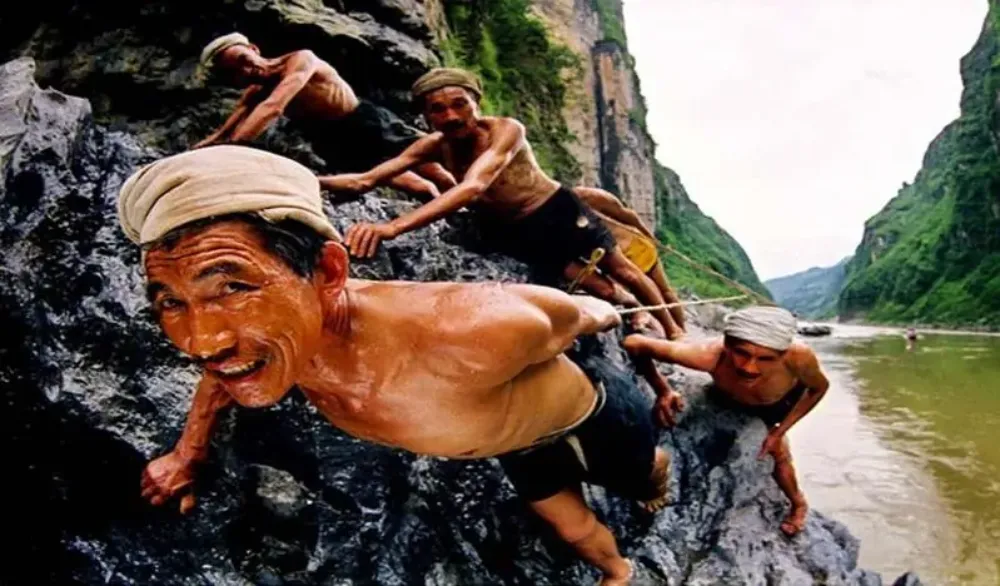
To move their boats, shaped like elongated pods and sometimes called “Divine Barges,” the trackers relied on ropes braided from bamboo strips boiled in sulfur water to make them tough, insect-resistant, and smooth against wet skin. A technique known locally as “Reverse Ox Pulling” let them lean back against the towline to slow a boat’s descent through shallow rapids, while at other times the whole crew would wade in to physically carry the vessel over a shoal. Straw or woven sandals, and a padded shoulder cloth hand-sewn from a plain fabric known as “White Official Cloth,” left undecorated to avoid chafing, completed a labor kit built entirely around endurance.
Out of this grinding, repetitive effort grew a distinctive vocal tradition. The trackers developed work chants to coordinate their steps, ease exhaustion, and voice what the labor itself could not express. Loud, urgent, and heavy with rhythmic filler syllables rather than lyrical content, these songs accompanied every stage of the work, from gripping the cable to steering out of a rapid. Today known as the Yangtze River Gorge Boatmen’s Work Songs, they were later inscribed on China’s national list of intangible cultural heritage, one of the few tangible traces of a labor culture that has otherwise all but disappeared.
Centuries of use beyond simple transport
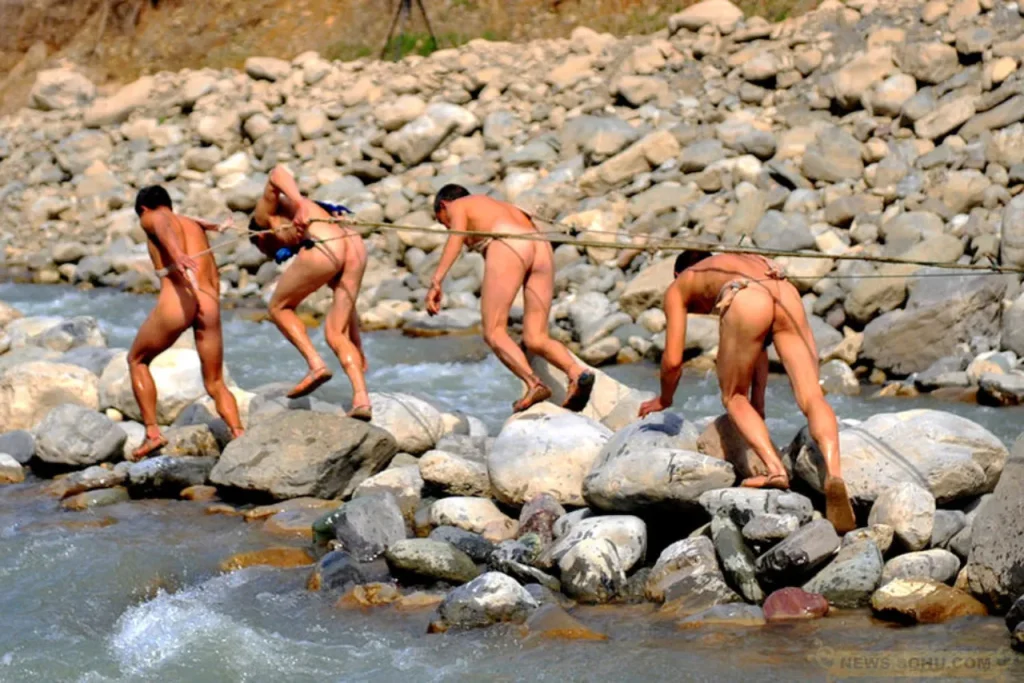
The trackers’ role in regional history reaches back well before tourism ever entered the picture. Local accounts tie the Ba people of the Shennong Stream to military transport duties following the campaigns against the Shang dynasty, and to the later conflicts between the states of Ba and Chu. During the Three Kingdoms period, the same stretch of river was the setting for Liu Bei’s fire attack and blockade during his campaign against Eastern Wu forces.
Centuries later, in the chaotic transition between the Ming and Qing dynasties, a subordinate of the rebel leader Li Zicheng held the same stream together with local farmers and trackers, a group remembered as the “Kuidong Thirteen Families.” The trackers’ involvement in political upheaval continued into the twentieth century: in early 1928, they assisted Zhang Huafu and Huang Dapeng in seizing the town of Badong, an action that led to the founding of the CPC Badong-Guizhou-Xingshan County Committee. During the war against Japan, trackers and their wooden boats were organized into formations for military transport, and after 1949 they supported the People’s Liberation Army in crossing the Yangtze and took part in the Jingjiang River Flood Diversion Project, a major hydraulic works effort. By 1956 the once-independent trackers and their boats had been absorbed into transportation cooperatives as part of broader collectivization.
From daily labor to tourist attraction, and back again
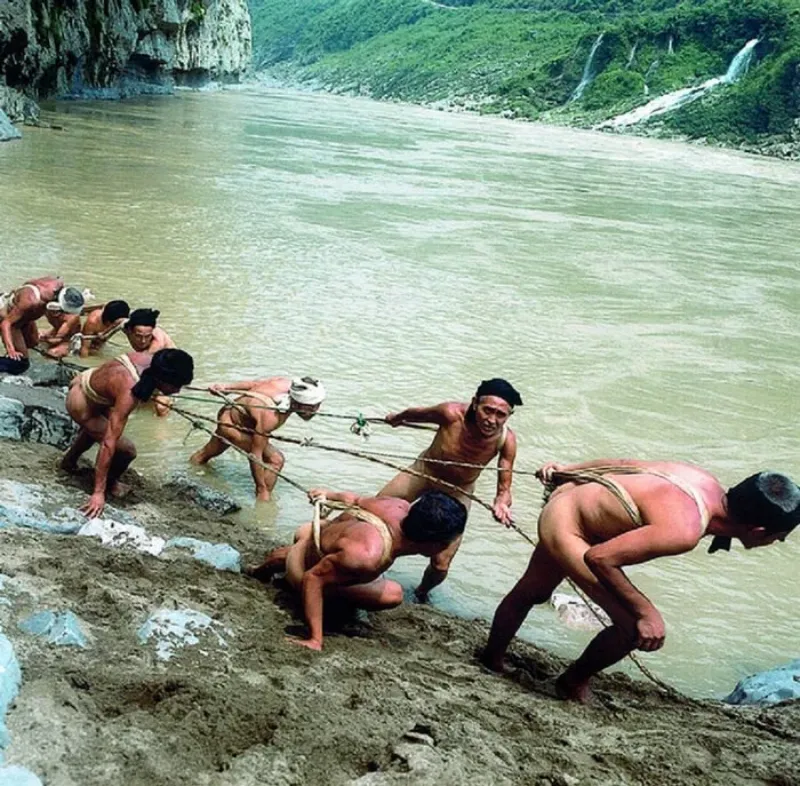
Nude tracking as an economic necessity began to fade well before any political controversy touched it. Rising incomes and improved transport links along the Shennong Stream during the 1980s reduced the need for human-powered haulage, and local authorities, responding to complaints from an increasing number of visitors, required trackers to wear specially made shorts on the job. By some accounts this brought an end to a practice that had continued in something close to its old form until that decade.
What kept boat tracking alive after that was tourism itself. Once the Shennong Stream was developed as a scenic destination in the 1990s, the sight of trackers hauling small peapod boats through the gorges became a signature attraction, marketed heavily and, according to critics, sometimes marketed dishonestly, since the nudity shown on promotional posters no longer matched what visitors actually saw on the water. The 2003 impoundment of the Three Gorges Reservoir (三峡库区) then raised water levels dramatically, submerging much of the dramatic gorge scenery that had originally drawn visitors and further eroding the practical rationale, and the visual spectacle, of the old profession.
Local authorities did not let the tradition disappear entirely. Beginning in 2009, Badong County has held an annual Yangtze Three Gorges Boatmen Culture Tourism Festival, and in 2011 the Shennong Stream Trackers’ Cultural Tourism Area was designated a National 5A-level scenic area, the highest tourism rating issued by Chinese authorities, and the first such designation in the Enshi Tujia and Miao Autonomous Prefecture. The stream’s banks have been home to the Tujia people (土家族) for generations, and their folklore and customs remain part of what the site presents to visitors.
A brief, noisy controversy in 2010
In February 2010, Yao Benchi (姚本驰), then deputy secretary-general of the Enshi Prefecture Chinese People’s Political Consultative Conference, used a session of the local “Two Sessions” political meetings to propose restoring nude tracking as a standing feature of the scenic area, arguing it held both cultural heritage value and tourism potential. The idea drew as much mockery as applause and set off a short-lived public debate, with critics questioning whether “culture preservation” was doing the work of a tourism pitch, and tourism officials responding cautiously without endorsing it. That same month, and independent of the political debate, trackers on the stream briefly worked nude again simply because tourists asked and were willing to pay. Nothing came of Yao’s proposal beyond the news cycle it generated.
What separates the tradition from the spectacle
Chinese commentary on the episode has generally drawn a sharper line between “boat tracker culture” as a whole and “nude tracking” as one historical feature of it, arguing that conflating the two risks trivializing what was, for the men who did the work, a mark of poverty and hardship rather than an aesthetic choice. Torn and salt-stiffened clothing, the impossibility of drying off between repeated trips into the water, and the risk of rheumatism from wearing perpetually damp fabric were the real, unglamorous reasons the practice existed at all.
What remains today
Boat tracking on the Shennong Stream survives largely as a staged element of the tourist experience rather than as functional transport. Visitors are typically ferried by peapod boat, poled or towed by trackers dressed in shorts, and are sometimes invited to request a traditional work song from a guide in Tujia costume. As the last generation of trackers old enough to remember the practice in its unaltered form continues to age, the loss facing Shennong Stream is not primarily one of nudity or spectacle, but of a working culture, and the songs, tools, and physical knowledge that came with it, for which no staged performance can fully account.
Original pictures: China People
Source: CinaOggi; Baike Baidu
Post Author
