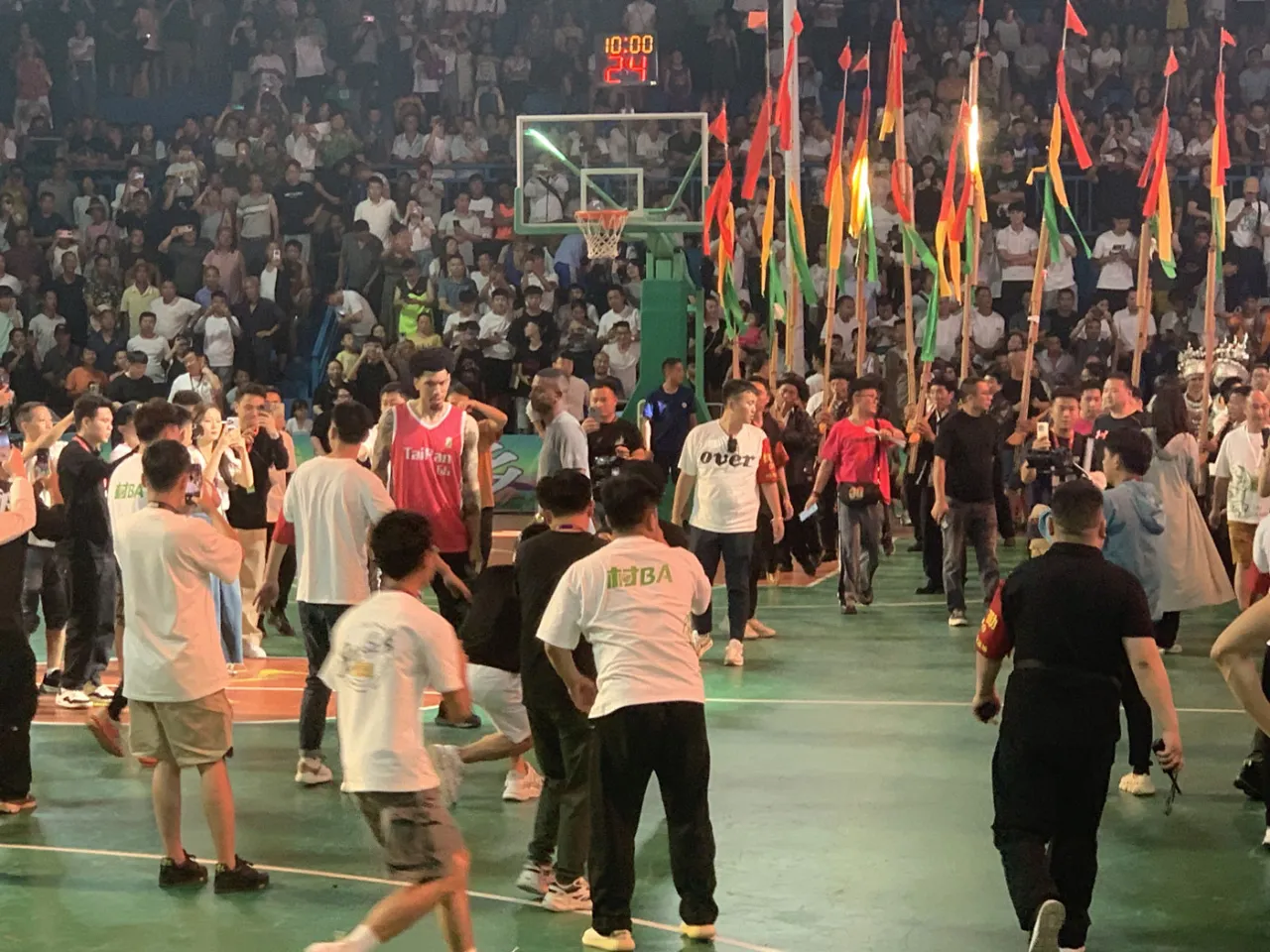
Basketball in China is not only an arena sport. In many cities, it belongs just as much to schoolyards, estate courts, riverside parks, university campuses and small commercial plazas. A hoop can turn a hard patch of public ground into a social clock: students arrive after class, office workers come after dinner, older neighbours stop to watch, and strangers become temporary teammates.
That everyday rhythm explains why basketball has settled so naturally into urban Chinese life. It is compact, fast and easy to recognize from a distance. It also fits the way modern sports culture now moves between physical courts and digital habits. Following basketball today often goes beyond watching the game, with many fans comparing odds, exploring different betting markets, and searching for rajabets login password before placing a wager on the next matchup.
The story is not just about popularity. It is about how a global sport became part of the city’s social fabric, shaped by schools, media, professional role models and neighbourhood space.
Why basketball fits the Chinese city
Basketball suits dense urban life because it does not need a full field. A single half-court can hold a serious game, a casual shooting contest or a rotation of three-on-three teams. In a city where public space is valuable, that flexibility matters.
It also gives different age groups a shared language. A teenager can copy an NBA move, a parent can remember Yao Ming’s peak years, and a school coach can turn a few drills into a structured evening practice. The rules are familiar enough for casual players, but the game is layered enough for serious students of tactics and skill.
There is a cultural reason too. Basketball produces visible effort. Anyone watching from the edge can read the game: who runs back on defence, who passes too late, who calls for the ball, who keeps shooting after missing. In that sense, the court becomes a small public theatre for discipline, confidence and social negotiation.
| Urban layer | What basketball provides | Why it matters to city life |
| Schoolyards | Daily access to basic training and peer competition | Turns sport into routine rather than occasional entertainment |
| Residential courts | Low-barrier evening play near home | Builds casual neighbourhood interaction |
| University campuses | Organized leagues, clubs and identity | Links sport with youth culture and social belonging |
| Commercial plazas | Branded events, pop-up games and 3×3 formats | Makes basketball part of shopping and leisure districts |
| Professional arenas | CBA games, stars and broadcast culture | Gives local play a visible elite reference point |
From Yao Ming to the local half-court
Yao Ming remains the most important bridge in modern Chinese basketball culture. His move from the Shanghai Sharks to the Houston Rockets in 2002 gave many Chinese fans a direct emotional route into the NBA. His career did not simply create viewers; it helped make basketball feel internationally connected while still rooted in a Chinese story.
That influence still matters, but the everyday court is where it becomes local. Children do not need to understand global sports business to understand the appeal of a tall Shanghai centre who became an eight-time NBA All-Star. They only need to see that someone from China could become a serious figure on the largest basketball stage.
Professional basketball also gives street and school players a vocabulary. The Chinese Basketball Association’s home-and-away league structure helped normalize the idea of city-based teams, rivalries and regular-season attention. A fan in Beijing, Shanghai, Guangdong or Liaoning can connect professional identity with place, then carry that same sense of place back to the local court.
The important point is not that every young player dreams of going professional. Most do not. The point is that elite basketball gives ordinary play a frame. A pickup game feels bigger when players can imagine themselves inside a wider basketball world.
A basketball court in a Chinese city often works like an informal club without a membership desk. People learn who usually plays well, who talks too much, who brings friends, who is patient with beginners and who only wants to win. Over time, the court develops its own etiquette.
That etiquette can be simple:
- Winners stay on, but not forever.
- Younger players wait their turn.
- A hard foul gets noticed quickly.
- A good pass earns quiet respect.
- Nobody owns the court for the whole evening.
These unwritten rules make the space social as much as athletic. Basketball lets people negotiate hierarchy without a formal introduction. Skill matters, but so do reliability, stamina and emotional control.
The court is also one of the few urban spaces where strangers can cooperate almost immediately. A person may arrive alone and still join a game within minutes. That is a small detail, but in large cities it matters. Public sport can soften the anonymity of apartment-block life.
Why 3×3 feels especially urban
Three-on-three basketball has helped clarify something Chinese players already understood: the small court can be complete in itself. FIBA describes 3×3 as an urban basketball discipline, and its format fits places where space, pace and spectatorship matter.
In China, that makes sense for both grassroots sport and city events. A 3×3 game can be staged in a plaza, near a shopping district or inside a festival layout. It is short enough for passersby, intense enough for players and visually clear enough for online clips.
This format also changes who feels invited. Full-court basketball can be intimidating for casual players because it rewards endurance, size and organized teams. Three-on-three is more accessible. It still rewards skill, but a smaller group can form quickly and a single strong passer or shooter can change the game.
For urban culture, that is the appeal. The format matches the city’s tempo: compressed, social, competitive and easy to share.
Schools, public policy and access
Basketball’s place in China’s cities is also connected to schools. School courts are often among the most visible sports facilities in a neighbourhood. When education and sports authorities discuss opening school facilities to the public outside teaching hours, they are addressing a practical urban issue: people need places to move.
This matters because enthusiasm alone cannot sustain a sports culture. Courts need surfaces, lighting, safety rules, maintenance and predictable access. Without those basics, basketball becomes something people watch more than something they can play.
The strongest urban basketball cultures are built from repeated availability. A child must be able to return to the same court. A student team needs regular practice time. Workers need evening access. Older residents need public spaces where watching sport is comfortable, not obstructive.
That is why basketball should be seen as social infrastructure. The hoop is a small object, but the system around it is larger: schools, parks, residential planning, youth coaching, public health and commercial sponsorship all shape who gets to play.
What visitors can learn from China’s city courts
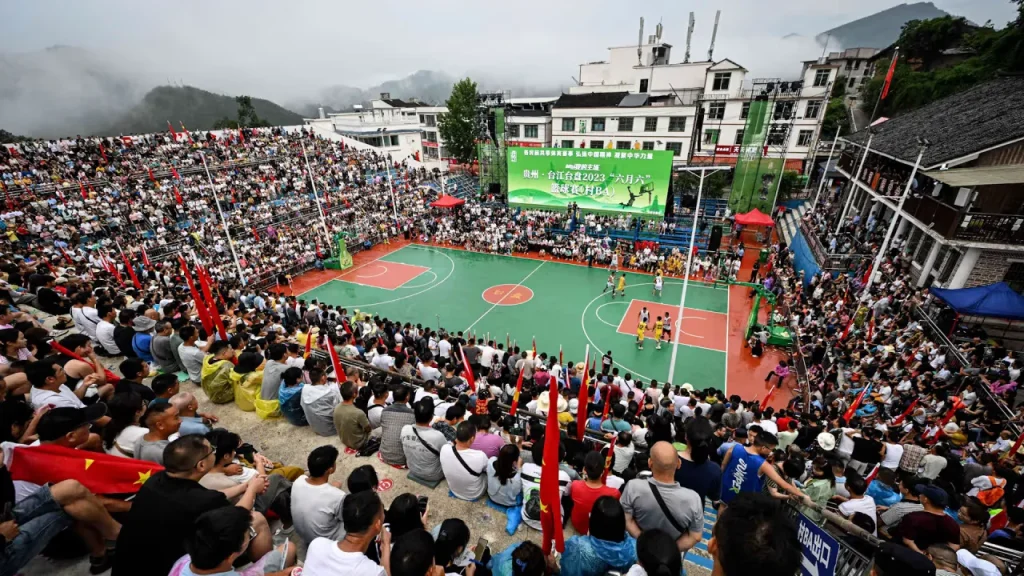
For travellers interested in Chinese culture, basketball courts offer a different kind of observation point. Temples, museums and historic streets explain one part of China. Evening courts explain another: youth confidence, urban leisure, global influence, local identity and the negotiation of shared space.
A visitor does not need to interrupt the game. Watching from the edge is enough. Notice the shoes, the jerseys, the mix of Mandarin and local speech, the way teams form, the pauses for water, the older men judging quietly from the sidelines, the children copying moves before they are old enough to join.
That scene says a great deal about contemporary China. It shows a society where global sport has been absorbed into local habits rather than simply imported. Basketball in China’s cities is not an American game placed on Chinese concrete. It is now part of how many Chinese urban communities gather, compete and remember themselves after the working day ends.
The court may be small, but the cultural footprint is large.
Post Author
