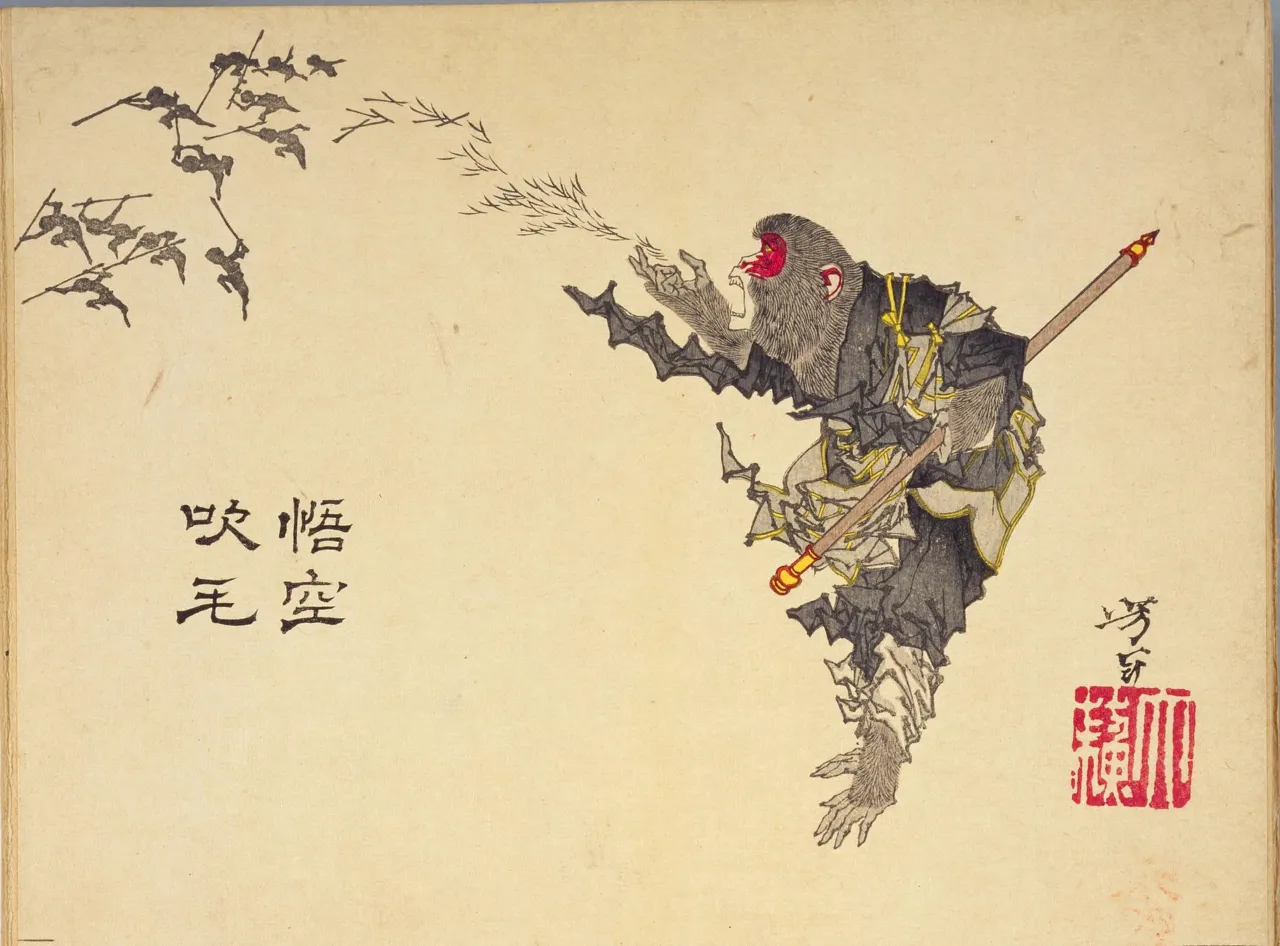
There was a time when creating a fictional character meant sitting with a notebook, a film script, a brush, or a half-finished novel. A name appeared first, perhaps. Then a face. Then a voice, a secret, a place of birth, an old wound, a reason for walking into the story. Writers, painters, opera performers, comic artists, and filmmakers have always known this: a character is never only a figure. A character is a small world.
Today, that world can be built with a prompt.
AI character generators, including platforms such as joi.com, have turned character creation into something faster, stranger, and more participatory. A user can design a personality, choose a mood, imagine a backstory, and begin a conversation with a fictional companion almost immediately. Joi presents itself as a place to talk with AI characters and fictional companions, while its character-generation page focuses on creating a custom AI character.
At first glance, this may look like another chapter in the long history of internet entertainment. But viewed through Chinese culture, it becomes more interesting. China has one of the richest traditions of character-making in the world. Its literary, theatrical, cinematic, and mythological archives are filled with figures who are not simply “heroes” or “villains,” but symbolic carriers of memory, morality, rebellion, longing, and transformation.
Think of Sun Wukong, the Monkey King: trickster, warrior, disciple, rebel, comic force, and spiritual traveler all at once. Think of Mulan, who moves between gender roles, family duty, and military legend. Think of the lonely ghosts of classical tales, the swordsmen of wuxia cinema, the scholars of Qing fiction, the immortals, fox spirits, opera generals, courtesans, wandering monks, and revolutionary women who have appeared again and again in Chinese storytelling.
These figures survive because they can be reimagined.
That is what makes AI character creation culturally significant. It is not only a tool for fantasy. It is a new workshop for narrative memory.
China Underground has long positioned itself around Chinese culture, art, history, cinema, news, images, interviews, and contemporary trends, with dedicated sections that include Chinese art, history, cinema, science, photography, and an AI China Guide. In that context, AI characters are not just a technology story. They sit at the crossing point of mythology, digital identity, visual culture, cinema, and the old human desire to speak with someone who is not quite real but feels meaningful enough to answer.
Chinese culture has always been comfortable with porous borders between the visible and invisible. Ancestors remain present in ritual. Spirits return in stories. Mountains have personalities. Objects carry memory. A painted figure can seem alive. A film character can become more familiar than a neighbor. In this sense, the AI companion is not as alien as it first appears. It belongs, awkwardly but clearly, to a much older tradition of imagined presences.
The difference is that the imagined presence can now talk back.
This changes the role of the audience. In classical literature, readers followed the path of the character. In the cinema, viewers watched from a distance. In gaming, players influenced action within a designed system. With AI characters, the user steps into a more intimate position. They are not only watching, reading, or playing. They are shaping the figure through dialogue.
A character inspired by Tang dynasty poetry might speak in restrained images of moonlight, wine, exile, and unfinished letters. A cyberpunk heroine from a future Shenzhen might combine startup slang with the melancholy of Wong Kar-wai’s urban nights. A wuxia swordswoman could carry the moral severity of old martial arts fiction but answer questions in a modern, dry voice. A ghost from a ruined courtyard in Suzhou might remember things that never happened, because AI is very good at inventing memories.
This is where the creative possibility lies. Not in copying Chinese culture as decoration, but in building characters with texture.
A shallow AI character says, “I am a Chinese princess.” A better one knows what dynasty shaped her manners, what dialect she heard as a child, what poem she half-remembers, what food she misses, what political danger she avoids naming, and what silence means in her world. The difference is not technical. It is cultural.
Good character creation requires respect for details.
Chinese cinema offers another map. The China Underground Movie Database describes Chinese cinema as a broad field that includes films, directors, actors, trailers, posters, and works from China, Hong Kong, and Taiwan. This matters because Chinese-language cinema has already created hundreds of character types that AI users may unconsciously draw from: the lonely migrant, the disciplined fighter, the corrupt official, the nightclub singer, the village girl who leaves home, the gangster with a code, the mother who says little but sees everything, the drifting young person in a city too large to love them back.
An AI character inspired by Chinese cinema does not need to wear a qipao or carry a sword. She might be a documentary photographer in Chongqing. A retired opera performer in Taipei. A delivery rider in Guangzhou who writes science fiction at night. A Hong Kong sound designer haunted by old cassette tapes. A Yunnan tea seller who knows more about mushrooms than people. These are not exotic figures. They are characters with social weather around them.
The risk, of course, is flattening. AI tools often make stereotypes quickly if users feed them lazy instructions. “Asian beauty,” “dragon lady,” “mysterious girl,” “obedient companion” — these are not characters. They are dead images. They belong to the long history of looking at Asian women and Asian cultures through fantasy rather than attention.
If AI character creation is to become something more serious, even in entertainment, it needs better prompts and better imagination.
Instead of asking only how a character looks, we should ask what she remembers. What does she misunderstand? What does she want but cannot admit? What city shaped her? What does she believe about family? What does she do when embarrassed? What kind of silence does she use — angry, polite, protective, tired? What historical pressure sits behind her casual words?
Chinese storytelling has always understood that people are made by relationships: family, teacher and student, ruler and subject, sworn brothers, lovers separated by duty, ghosts tied to the living, children carrying the unfinished business of parents. AI character design becomes richer when it borrows from this relational depth.
The future of AI characters may not be only about realism. In fact, realism may be the less interesting goal. The more interesting question is whether these characters can become vessels for atmosphere, memory, and cultural imagination. A perfect simulation of a person is not necessary. A compelling fictional presence is enough.
There is a difference between a chatbot and a character.
A chatbot answers. A character carries a world.
This is why platforms such as Joi are worth looking at beyond their surface appeal. They show a broader shift in digital culture: people no longer want only information from machines. They want tone, personality, mood, attention, and narrative. They want to enter a scene and be answered from inside it.
For Chinese cultural storytelling, this opens strange doors. Students could speak with a fictional Song dynasty painter. Film fans could create characters inspired by Hong Kong noir. Writers could test dialogue with a Republican-era journalist or a mythological fox spirit living in modern Shanghai. Diaspora users could invent characters caught between languages, accents, family expectations, and memory. None of this replaces literature, cinema, or scholarship. But it may create new entrances into them.
The old stories will not disappear because of AI. They have survived woodblock printing, opera stages, silent films, propaganda posters, television dramas, video games, and short-video platforms. They will survive prompts too.
The question is what we will do with them.
If we use AI only to produce attractive empty figures, then the result will be forgettable. If we use it with curiosity, cultural knowledge, and a little humility, it can become a new kind of storytelling instrument — imperfect, unstable, sometimes ridiculous, sometimes unexpectedly moving.
A character begins as a mask. Then a voice finds it.
In Chinese tradition, masks, painted faces, shadows, puppets, spirits, and cinematic close-ups have all carried human feeling across distance. AI characters are only the newest form of that old experiment.
Someone invents a face.
Someone gives it a past.
Then, from the other side of the screen, it answers.
Featured image: Source, Sun Wukong Tsukioka Yoshitoshi Ukiyo-e prints by Tsukioka Yoshitoshi
Post Author
