
Tuhu: A Cultural Icon of Zhuang Music
The Tuhu’s Distinctive Design and Cultural Significance. Tuhu, also known as 土胡, is a traditional two-stringed fiddle originating from the Zhuang people in Guangxi, China. … Read more
The Tuhu’s Distinctive Design and Cultural Significance. Tuhu, also known as 土胡, is a traditional two-stringed fiddle originating from the Zhuang people in Guangxi, China. … Read more

Tiexianzai’s Role in Taiwanese Opera and Hakka Music. Tiexianzai (鐵弦仔), also known as guchuixian (鼓吹弦), is a unique two-stringed fiddle originating from Taiwan. It is … Read more

Sihu (四胡) – A Traditional Chinese Stringed Instrument The Sihu (四胡), also known as the Four-Stringed Fiddle, is a traditional Chinese stringed instrument. It is … Read more
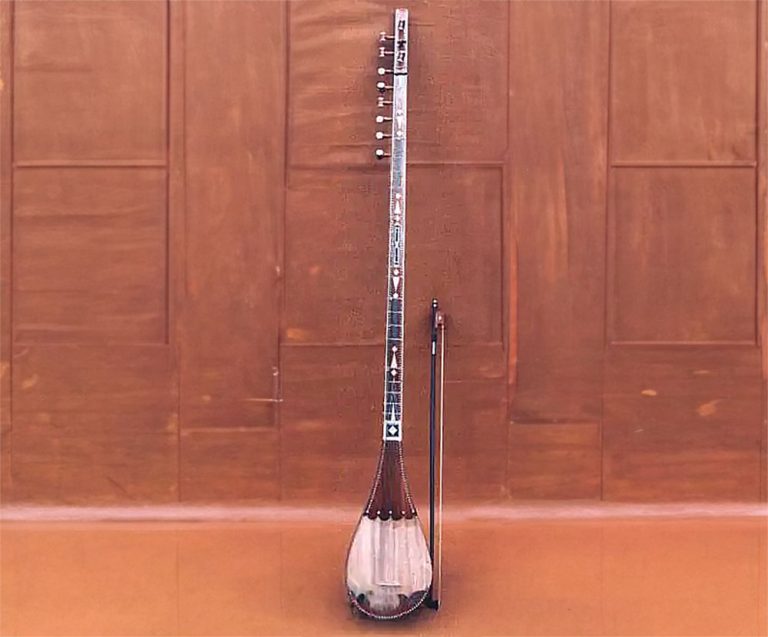
Sataer’s Role in Uyghur Music: An Instrument of Harmony and Tradition. Sataer (萨塔尔 or 萨它尔) is a traditional Uyghur bowed string instrument, predominantly used in … Read more

Morin Khuur: The Mongolian Horsehead Fiddle The Morin Khuur (Matouqin, 马头琴), also known as the horsehead fiddle, is a traditional Mongolian bowed stringed instrument. It … Read more

Laruan (拉阮) – A Four-Stringed Bowed Instrument The Laruan (拉阮), a Chinese traditional instrument, is a four-stringed bowed musical device that draws inspiration from the … Read more

The Jing Erhu: A Journey Through Its Historical Significance and Sound. Jing Erhu, also known as 京二胡, is a traditional Chinese stringed instrument, distinctively used … Read more

The Erhu: A Comprehensive Overview of a Traditional Chinese Instrument The Erhu (二胡), a traditional Chinese stringed instrument, is renowned for its distinct sound and … Read more

Harmony of History: Understanding the Se, China’s Classic Zither. The Se (瑟) is a traditional Chinese plucked string instrument, resembling a Zheng but slightly wider. … Read more