Interview with the artist who creates cut paper art focused on migration and diaspora
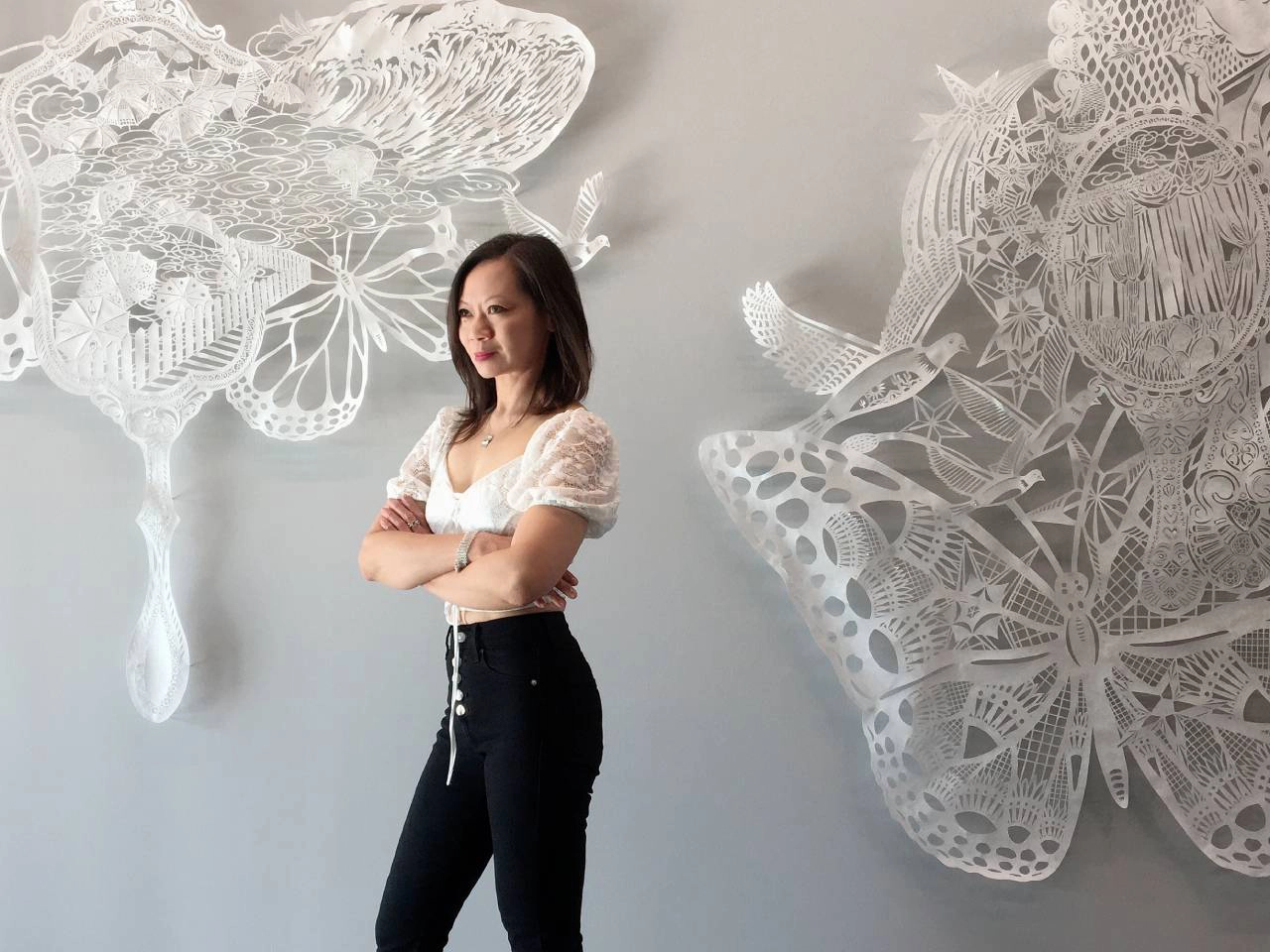
Bovey Lee is an internationally acclaimed artist for her creation with cut paper. She completed a BA in Fine arts at the Chinese University of Hong Kong, and received her first MFA in painting from the University of California, Berkeley; a second MFA in digital arts from Pratt Institute, New York. She began experimenting with cut paper in 2005 and later chose it as her main medium of inspiration and for creating her pieces of art. Her early creations were a combination of autobiography and cultural commentary. She eventually wants to broaden her message to include remarks on topics close to her. She decided to explore the effects of urbanism on nature, cultural journey and migrations: power, sacrifice and survival, these underlying themes connect all her corpus of art. She crafts complex and dramatic narratives of paradox, tension, and conflict within the confines of these topics. Each piece was hand-cut onto a single sheet of silk-backed Chinese xuan (rice) paper. Her artwork explores the tension and the precarious relationship between man and the environment.
Her paper cut narrates all human desires and behaviors, toward nature and what people do to the environment, in the era from technology to urbanization to consumption. Her selected prizes come from the San Francisco Foundation, the Vira I. Heinz Endowment Fellowship, the Pennsylvania Council on the Arts, and the Pollock-Krasner Foundation. She have exhibitions in the Fujikawa Kirie Art Museum, Japan (2011); Museum Rijswijk, The Netherlands (2010); Museum Bellerive, Zurich, Switzerland (2009); and National Glass Centre, United Kingdom (2008). Her artworks may be found in the collections of Fidelity Investments, the Chinese University of Hong Kong, the Hong Kong Museum of Art, the Ashmolean Museum of Art and Archaeology at Oxford University in the United Kingdom, and the Progressive Corporate Art Collection. The New Encyclopedia of Origami and Papercraft Techniques (Quarto, London); L’art de la découpe (Editions Alternatives, Paris); Push Paper (Lark publications, New York); and Papercraft, Papercraft 2, and Illusive 3 (Gelstaten, Berlin) are among the publications that include her cut paper. In the United States, Bovey Lee lives and works in Los Angeles, California.
Bovey Lee’s Official Site | Instagram | Facebook
This interview was first published in issue no. 17 of the free digital magazine Planet China.
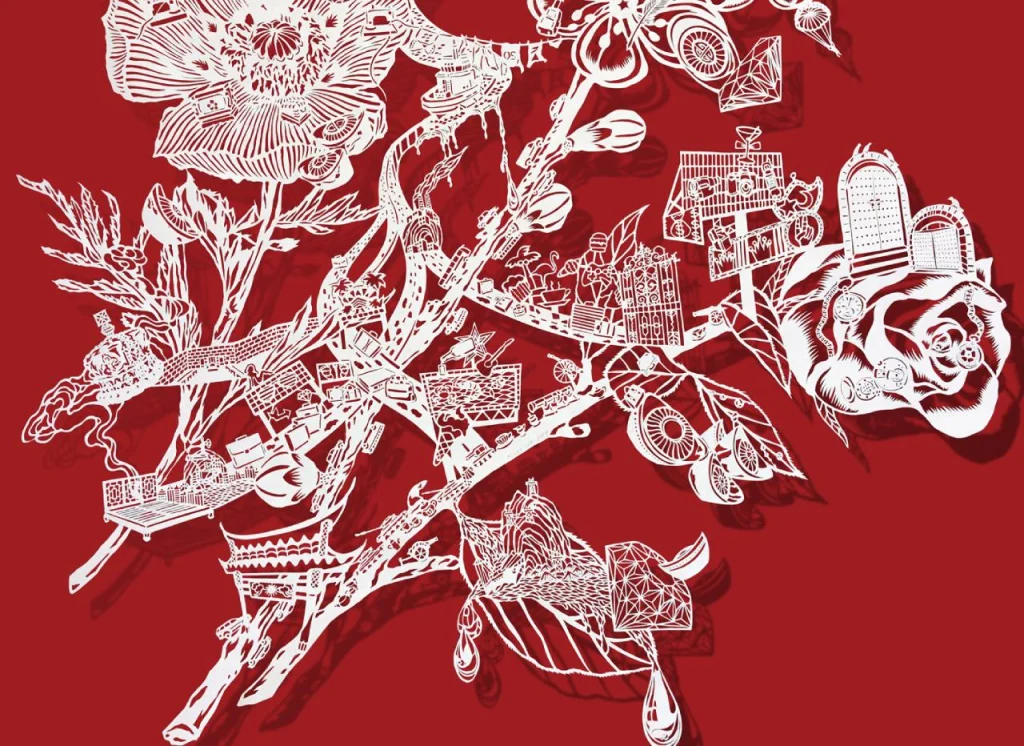
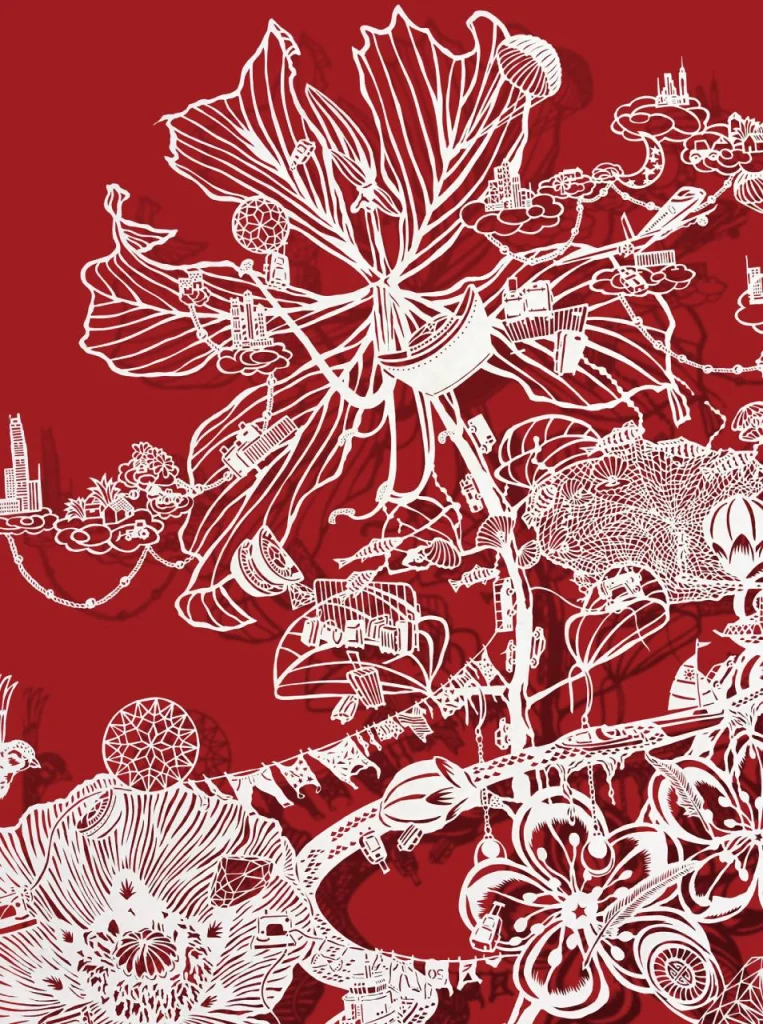
Four Golden Flowers
Cut Xuan paper on silk
27×36 inches
2015
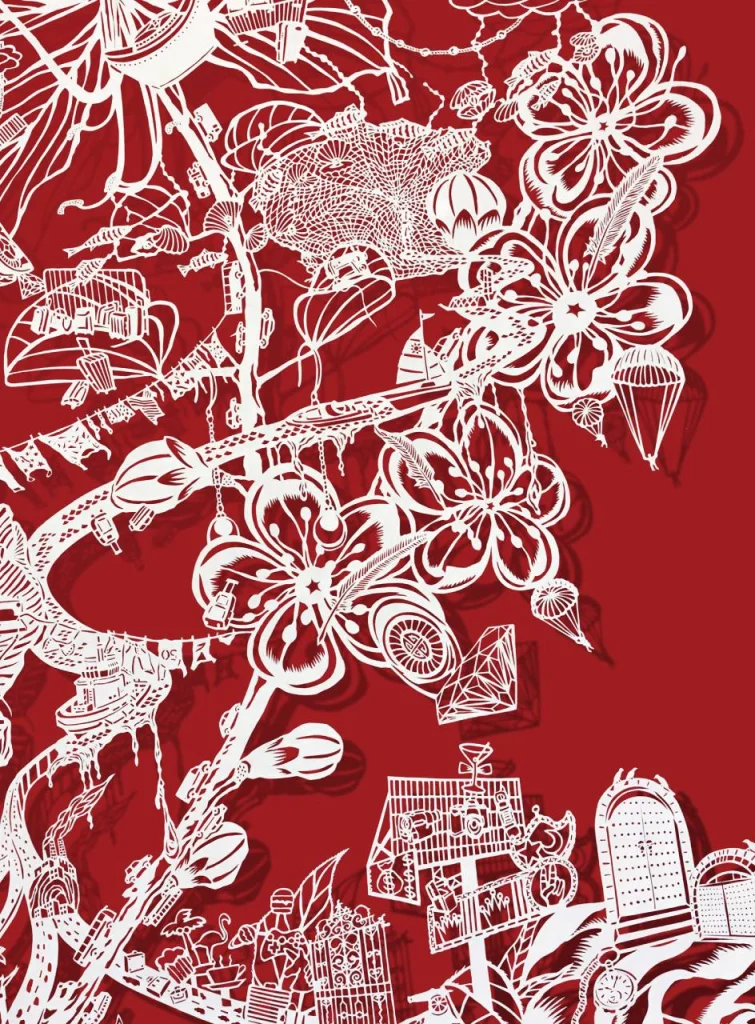
Four Golden Flowers
Cut Xuan paper on silk
27×36 inches
2015
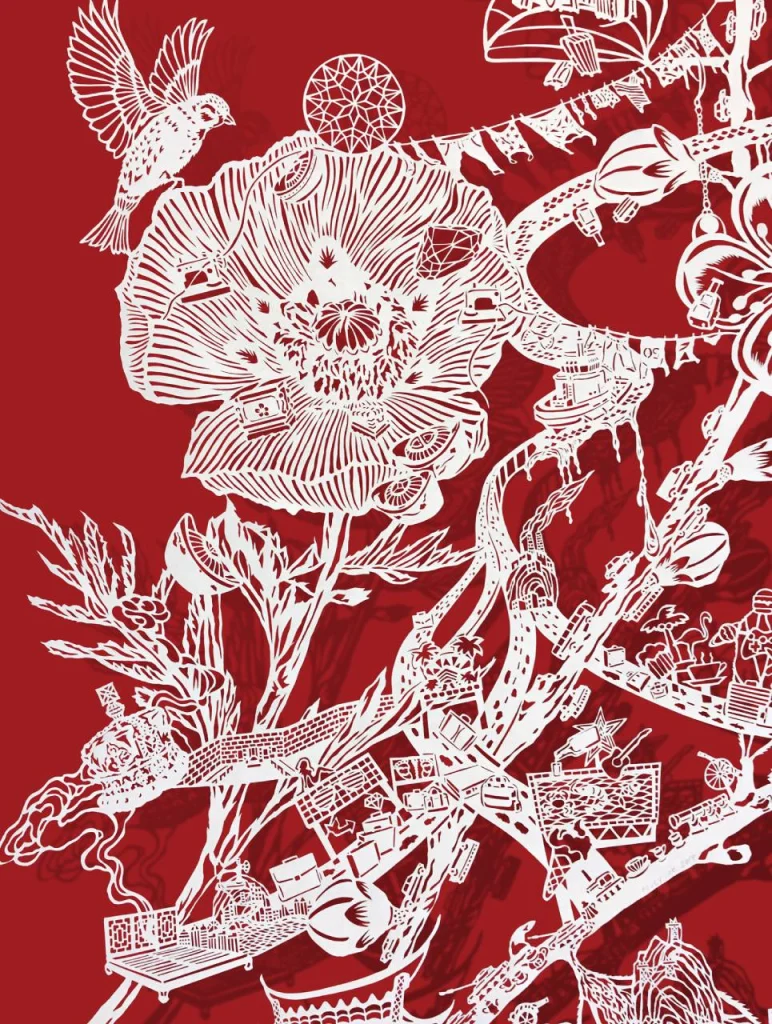
Four Golden Flowers
Cut Xuan paper on silk
27×36 inches
2015
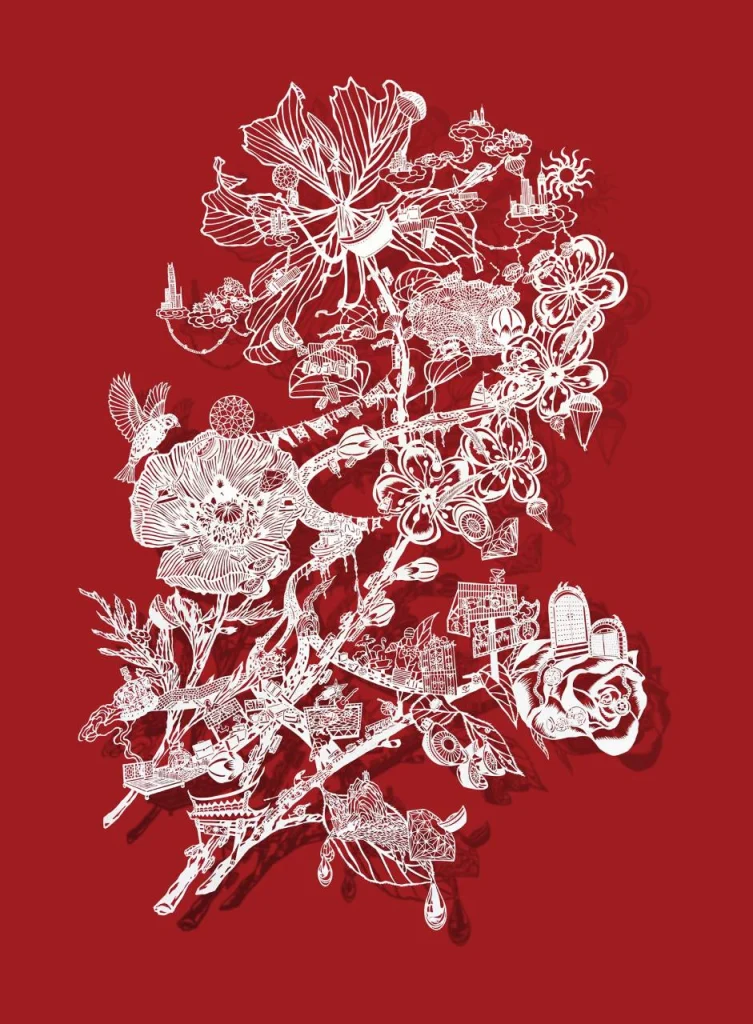
Four Golden Flowers
Cut Xuan paper on silk
27×36 inches
2015
Four Golden Flowers
Cut Xuan paper on silk
27×36 inches
2015
Was there a defining moment in which you realized you wanted to be an artist? How did paper become your primary medium for your creations? What initially inspired you to start working with paper?
There wasn’t a singular moment but rather an accumulation of experiences that made it clear to me that art was not just what I did, but who I am. Paper came into my practice early and unexpectedly —it was both a return and a discovery. As a child in Hong Kong, I practiced Chinese calligraphy and landscape painting, where paper is fundamental. Later, after years of working in digital media, I found myself yearning for a more tactile connection to my art. Paper had always been there, quietly waiting. The moment I made my first cut, I knew I had found something deeply personal yet universally resonant.
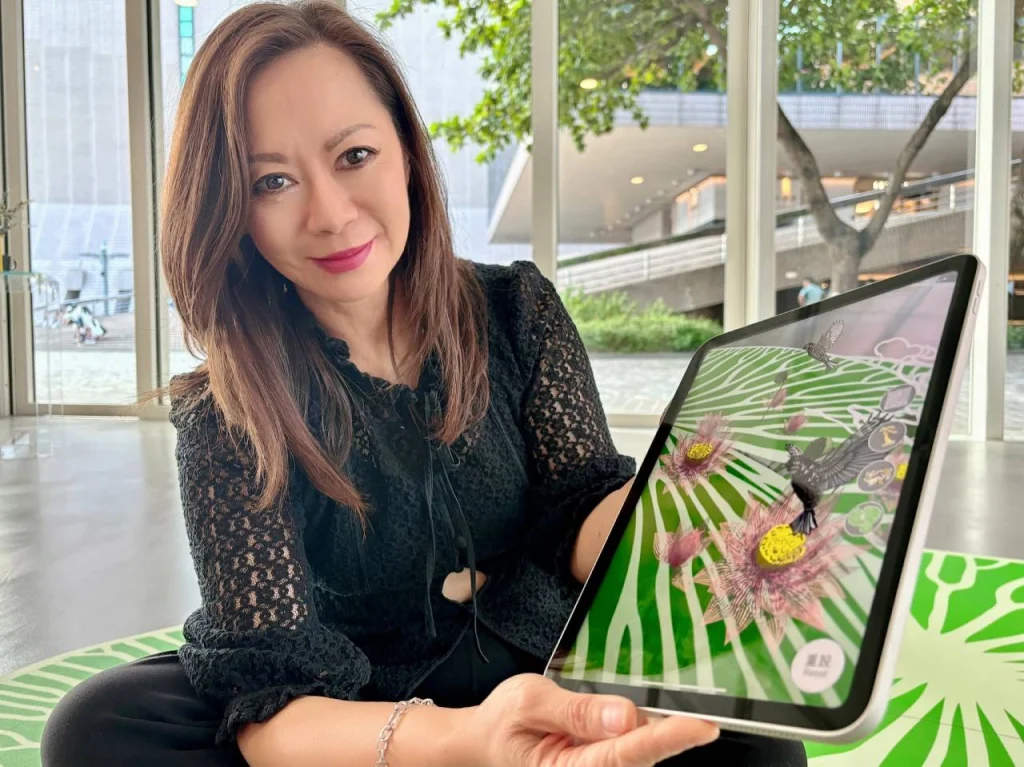
Can you tell us about your beginning and the biggest challenge of mastering this art? Several of your works are really intricate. What motivates you to keep going till the final small incision?
The beginning was slow and I spent a year researching the history and contemporary development of cut paper. And then it accelerated quickly and my confidence grew. One of the biggest challenges was building endurance—both physically and mentally—to execute large-scale, intricate works. I remember thinking so intensely about every cut that it was at once agonizing and exhilarating. But I never saw it as discouraging—rather, it was a lesson in commitment. I keep going because each incision is a step toward revealing the full story. There’s a point in the process where the work stops feeling like paper and starts breathing, moving—it becomes something more. That’s what keeps me going.
In order to produce captivating and intricate cut paper artwork, Bovey Lee has substituted the knife to the brush. Chinese paper cutting is a traditional folk craft
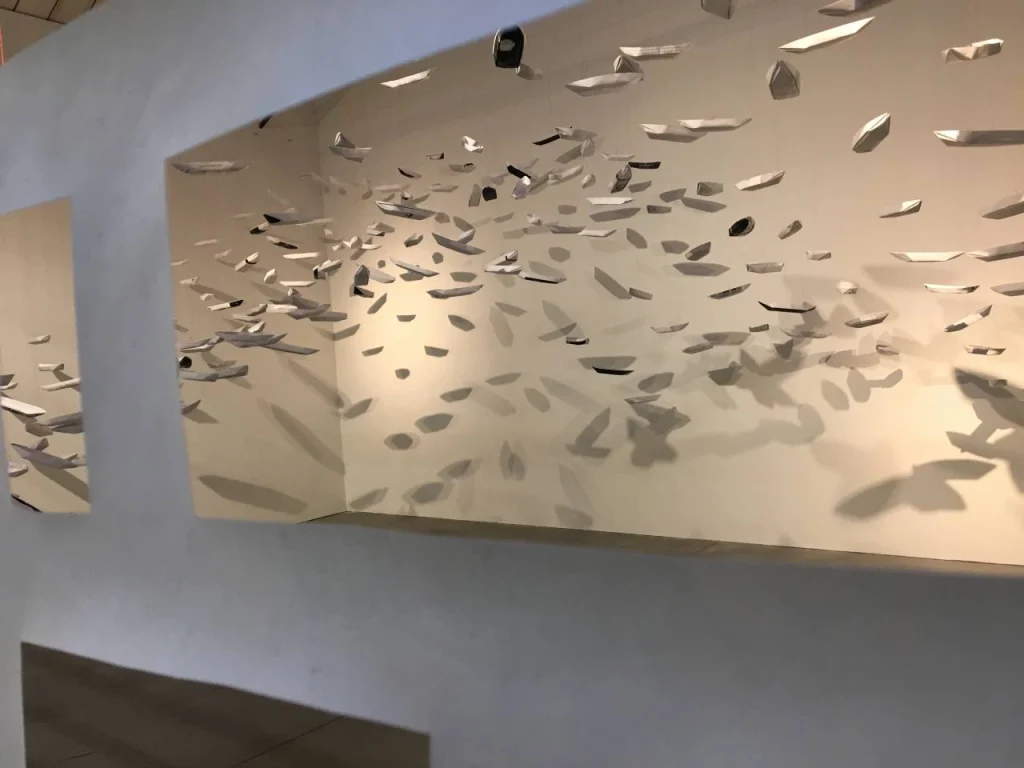
Cut installation on Tyvek
19×22 feet
2017
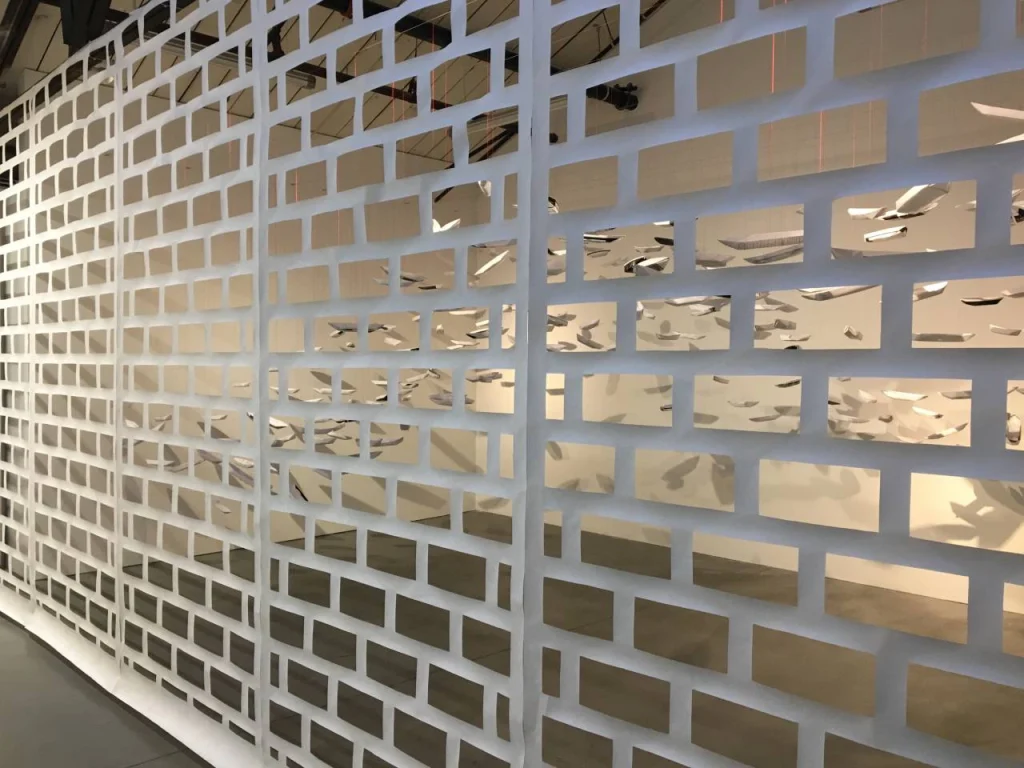
Cut installation on Tyvek
19×22 feet
2017
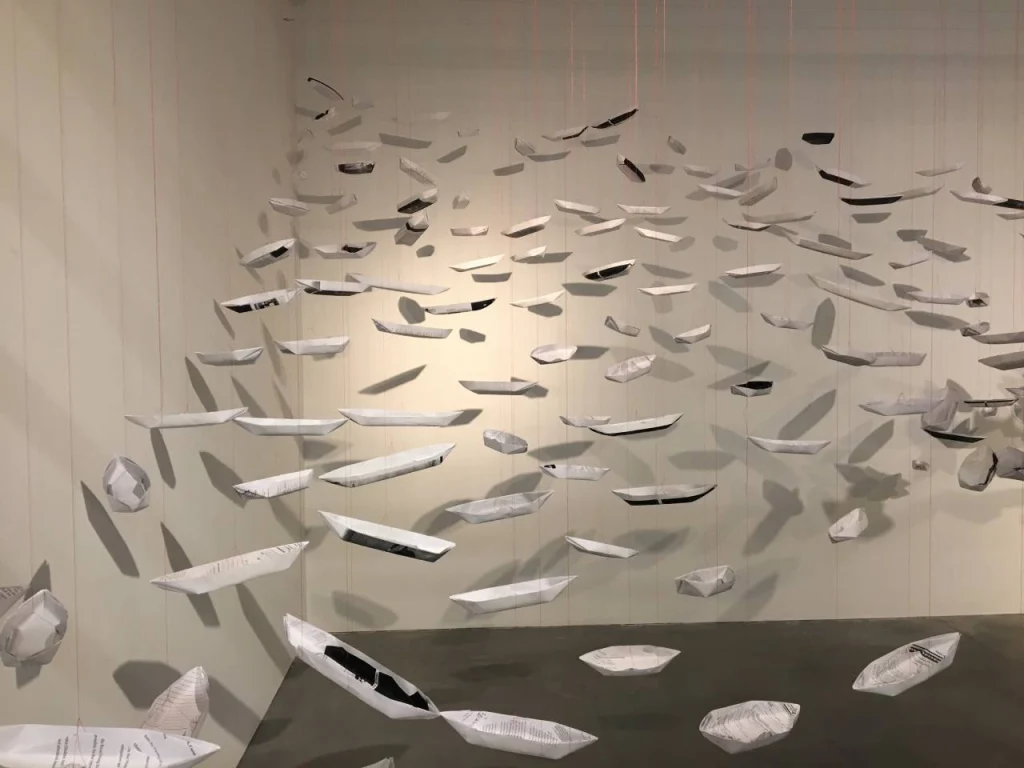
Cut installation on Tyvek
19×22 feet
2017
Your artwork involves both delicacy and precision. Do you use different and specific paper types? How does the fragility of paper reflect the emotional and physical experiences you want to communicate in your piece?
I primarily use Chinese Xuan (rice) paper because I love its fiber structure, softness, feel to the touch, and relative resilience. It’s also the first material I knew as a young girl practicing Chinese calligraphy. We share a long history together. The tension between fragility and strength is integral to my work. Paper, like the human experience, is vulnerable—it can tear, wrinkle, or disintegrate—but in the right hands, it holds history, memory, and resilience. That duality mirrors themes in my work, especially around migration, identity, and transformation. I often push Xuan paper to its limits, much like life does to us, and yet, there is great beauty and reward in overcoming challenges.
For installations, I like using Tyvek, which is made from high-density polyethylene (HDPE) fibers. It’s lightweight, durable, and resistant to the elements. These properties make it ideal to create installations with because it allows me to maintain the high intricacies that are known in my Xuan paper work.
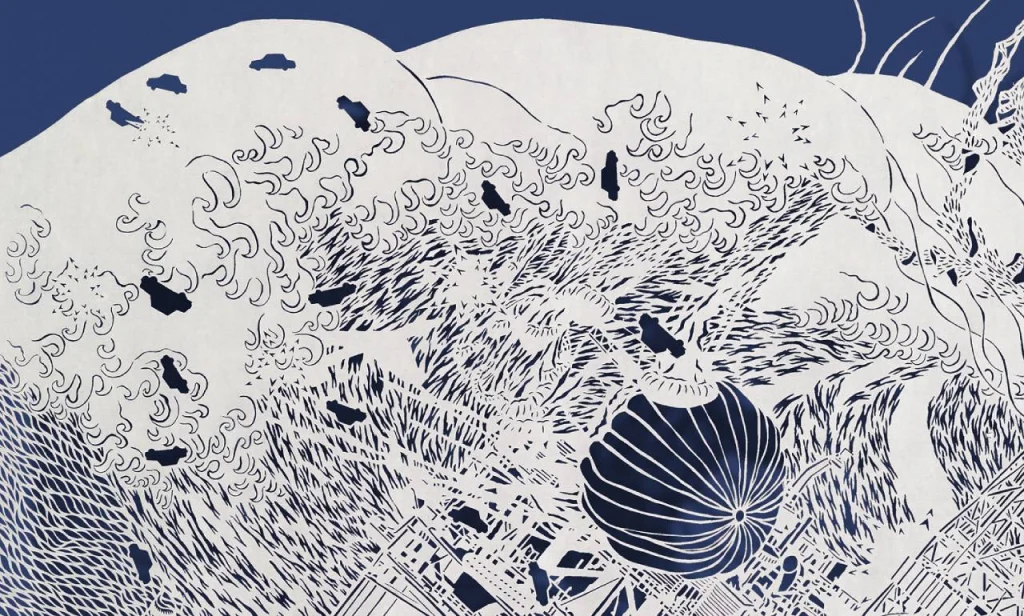
Tsunami-Oblivious
Cut Xuan paper
27×36.5 inches
2009
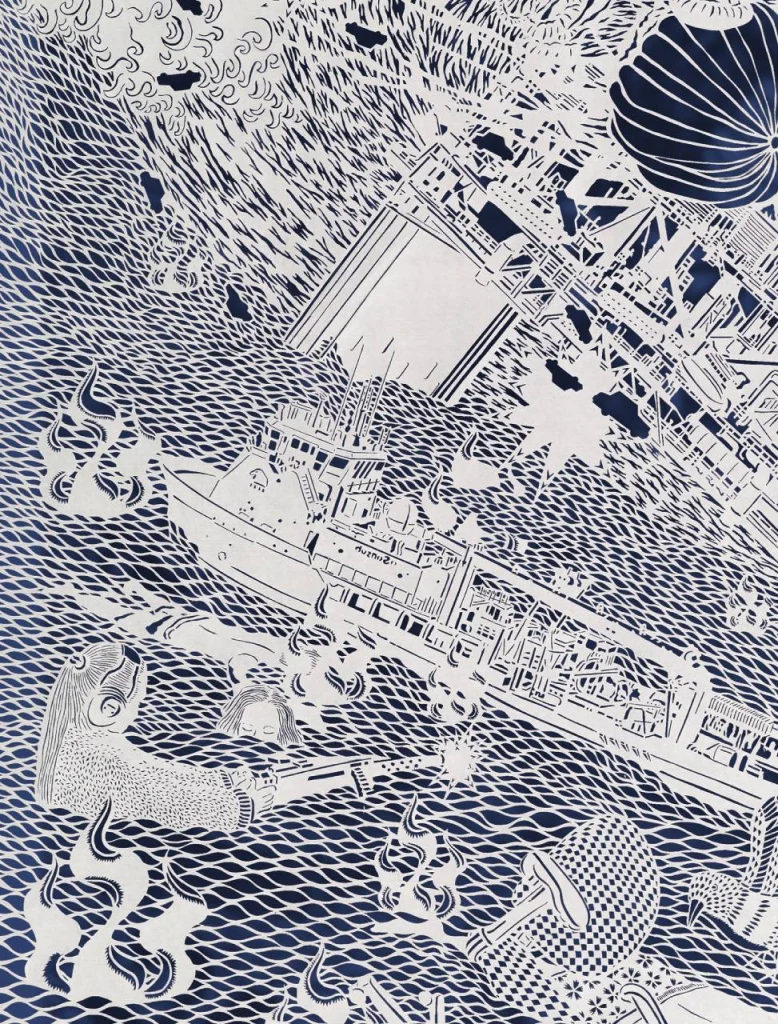
Tsunami-Oblivious
Cut Xuan paper
27×36.5 inches
2009
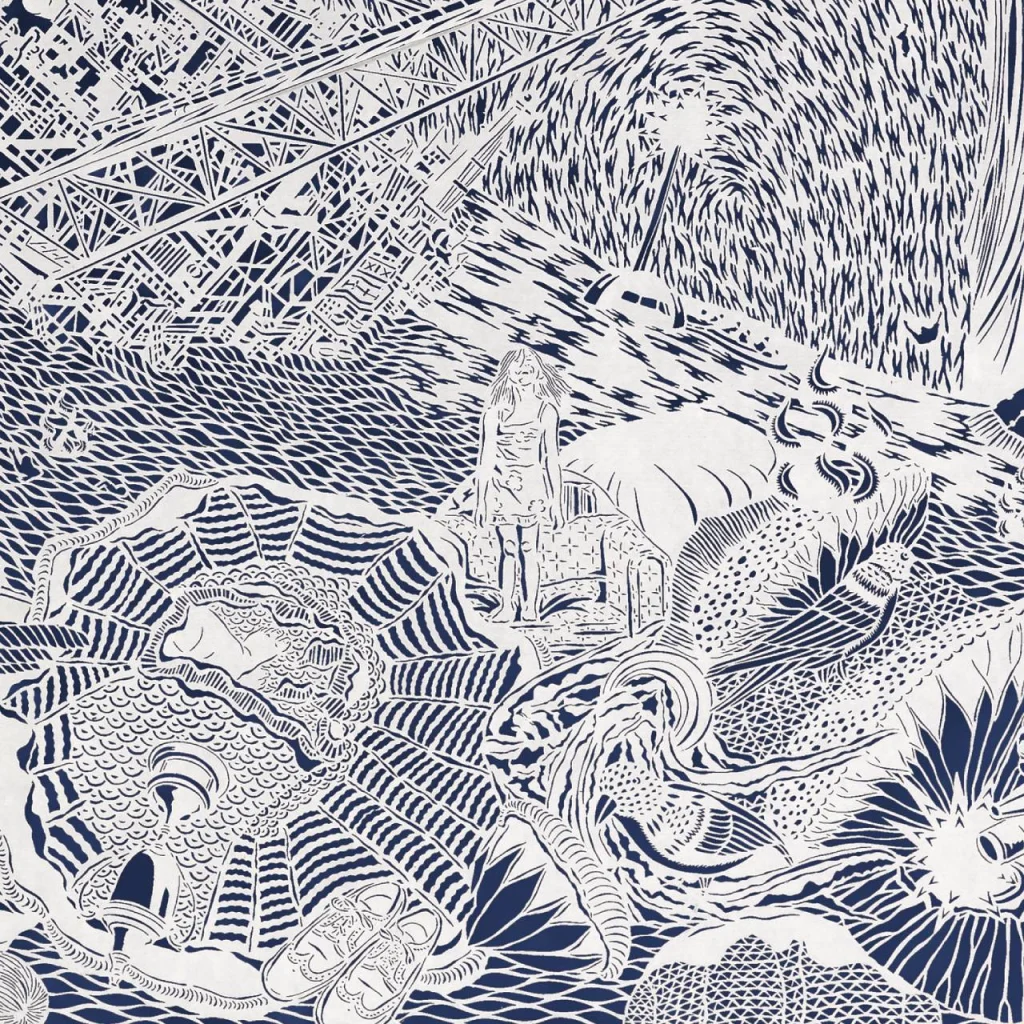
Tsunami-Oblivious
Cut Xuan paper
27×36.5 inches
2009
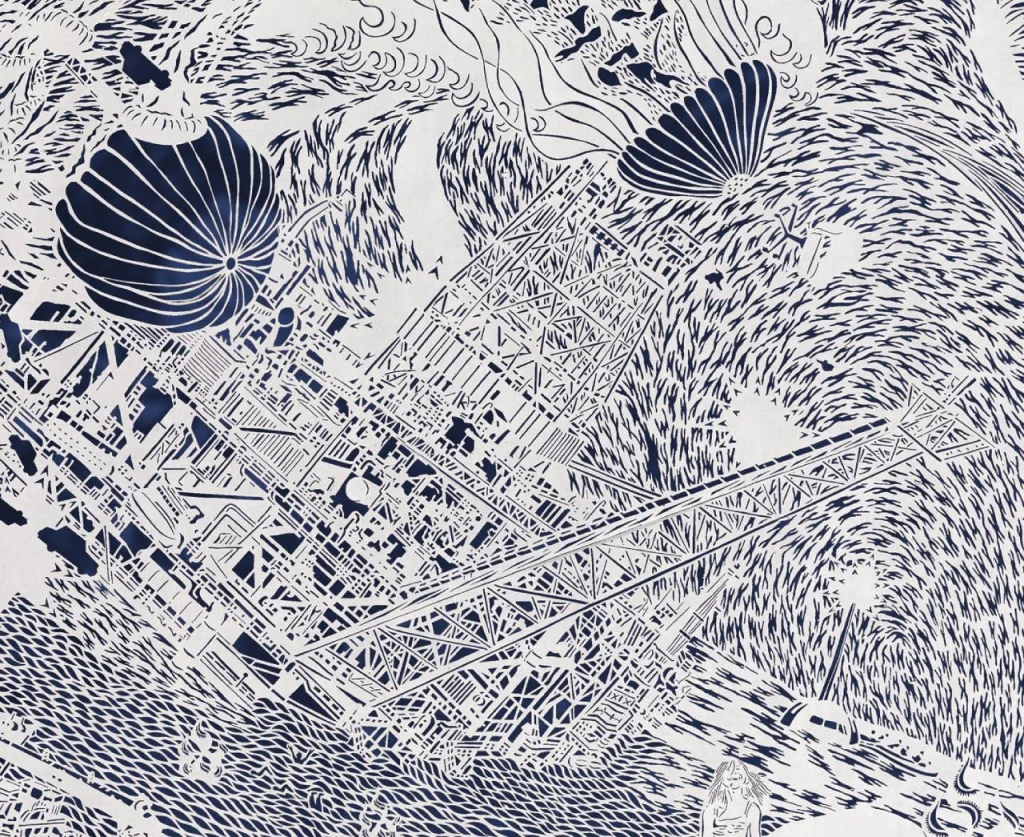
Cut Xuan paper
27×36.5 inches
2009
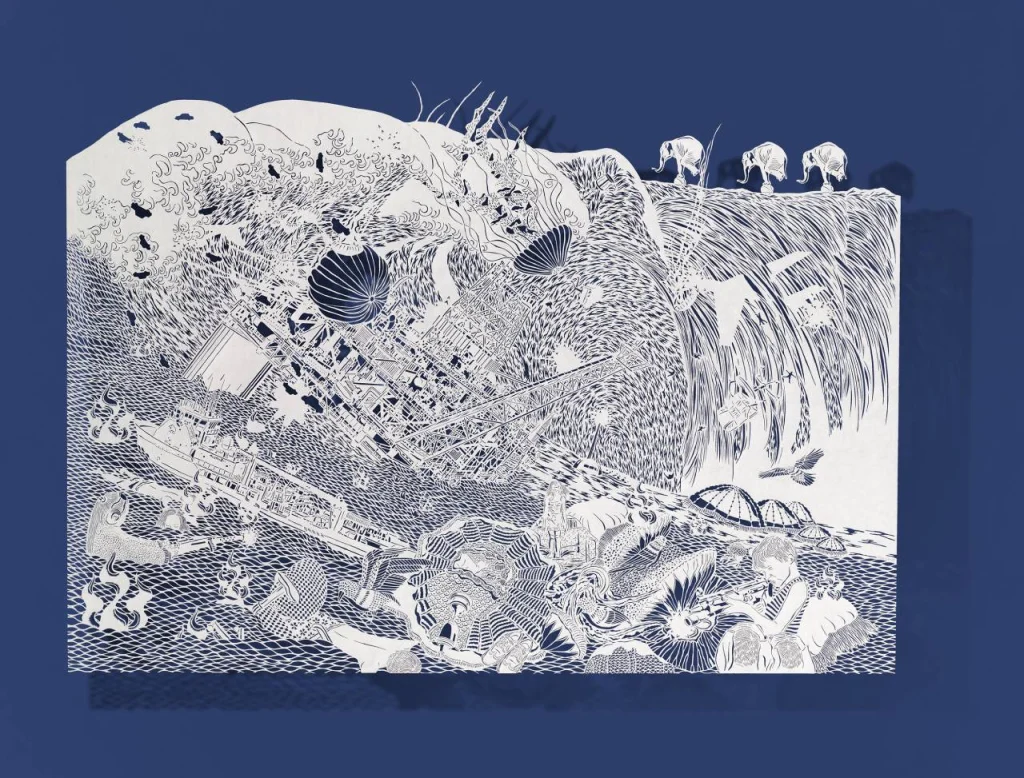
Cut Xuan paper
27×36.5 inches
2009
Your artwork involves a lot of cutting. Incise, remove, actions that might be considered negative or violent, yet they create something sculptural, textured, and dynamic. Could you tell us more about what the act of cutting means to you as an artist?
Cutting is an act of both destruction and creation, much like life itself. Every removal of material reveals something new. It is an assertion of presence through absence. The cuts in my work often symbolize loss, displacement, or change—whether personal or collective. But what emerges in the end is connected, whole, and purposeful. I think of cutting as sculpting with voids, making silence speak. Without the voids, light cannot come through. For me, the act of cutting is also courageous and assertive. There’s no going back once the incision is made. It’s a commitment to the work, embracing the risks of that first cut and knowing it will shape everything that follows.
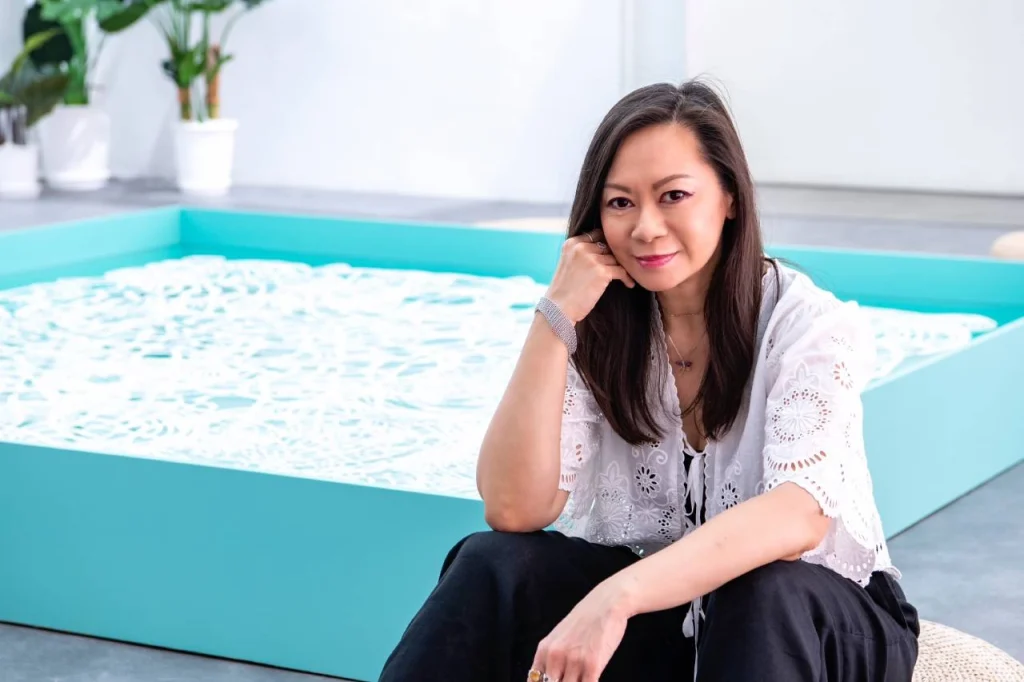
Working with paper involves keeping a special connection with touch. Your art focuses on details that can be seen and physically felt. What do the materials represent to you? What about the sense of touch?
Touch is everything. In an increasingly digital world, working with my hands is an act of resistance, a return to something innate and visceral. Paper carries a sensory history—how it bends, resists, or absorbs the blade. It records touch, just as skin does. My process is slow, deliberate, and intimate. The sensation of cutting, the tension of fibers giving way—it’s a dialogue between my being and the material, and that presence and connection is irreplaceable.
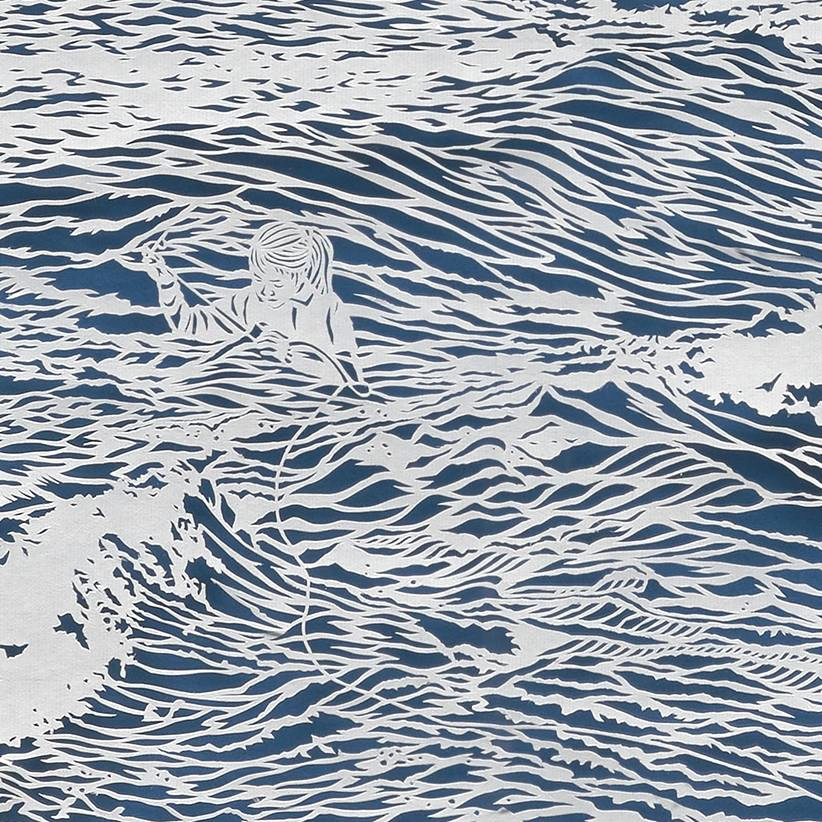
Cut Xuan paper
20×30 inches
2018
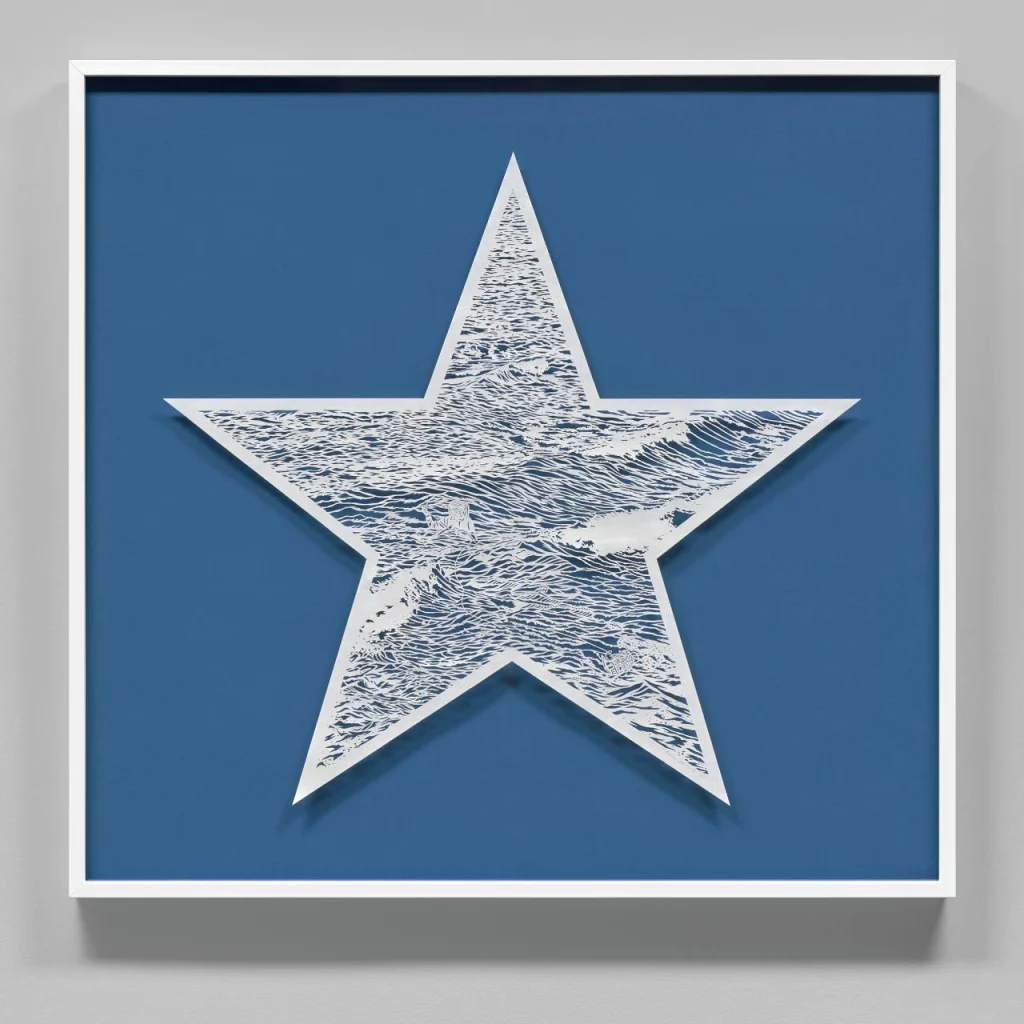
Cut Xuan paper
20×30 inches
2018
Do you keep a journal or analog sketchbook where you plan your ideas and upcoming projects, or do you prefer digital tools?
I do both. I keep a physical sketchbook for free-flowing ideas, notes, and compositions. There’s something irreplaceable about the scratch of pencil on paper—it feels alive and true. But I also use digital tools for refining, layering, and testing scale.
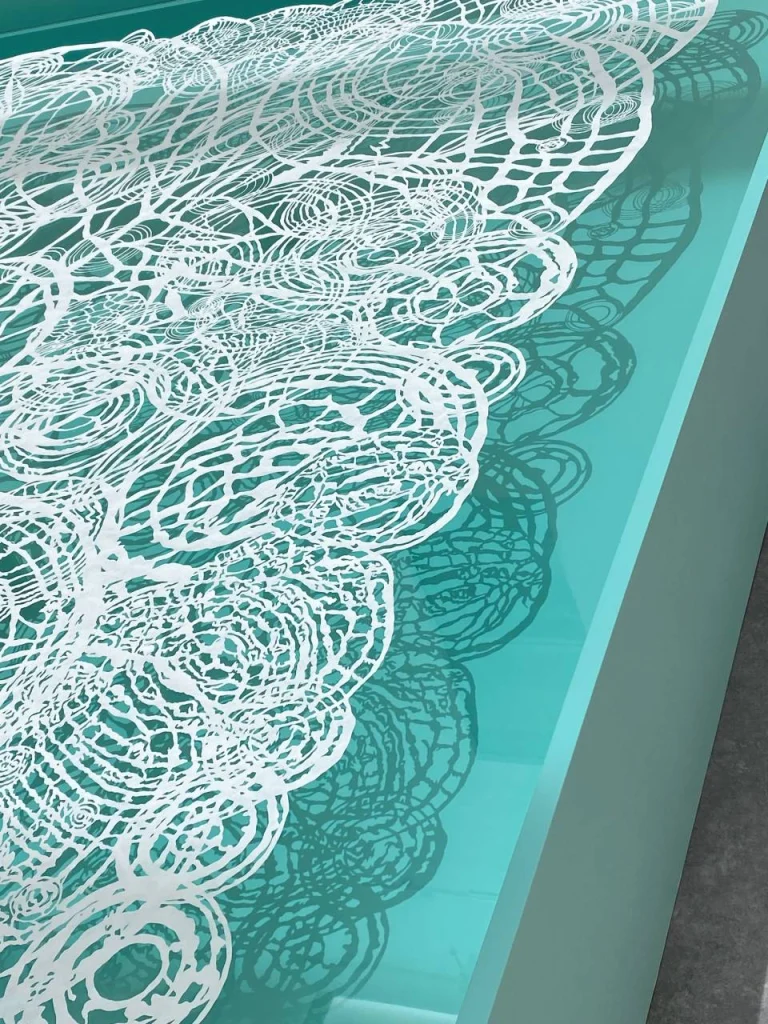
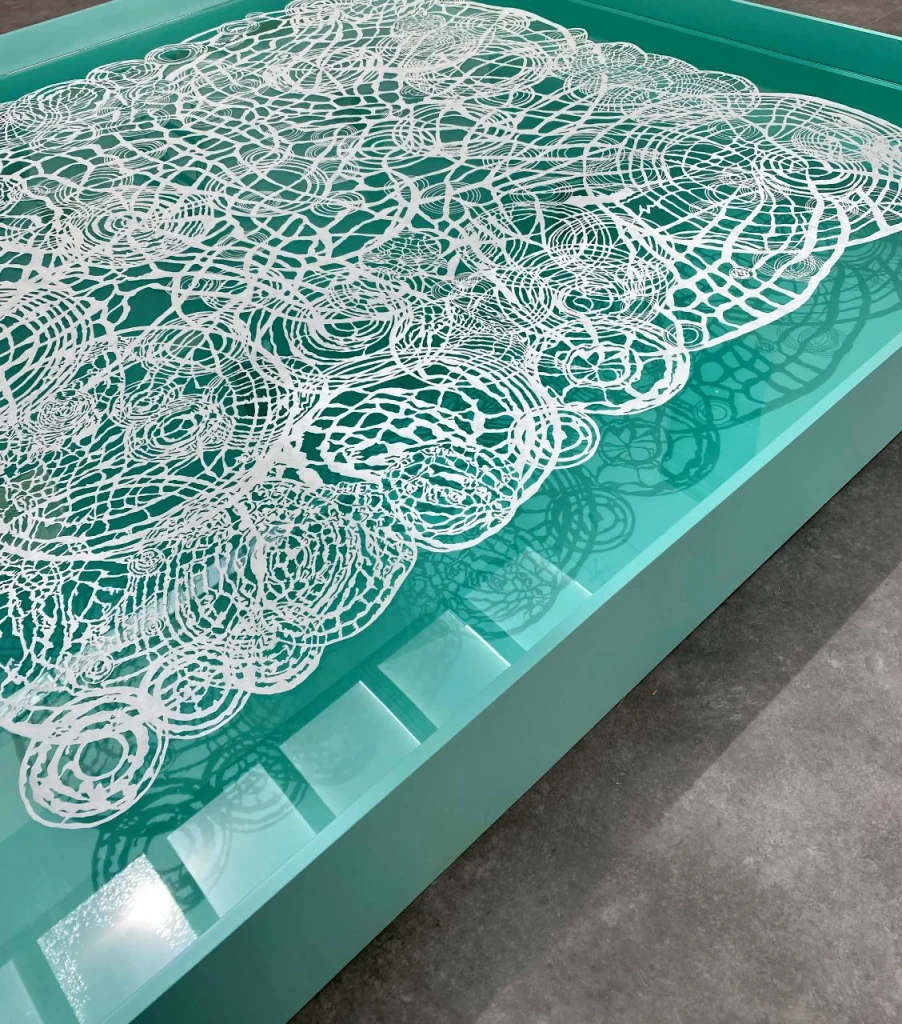
Cut installation on Tyvek
8×8 feet
2023
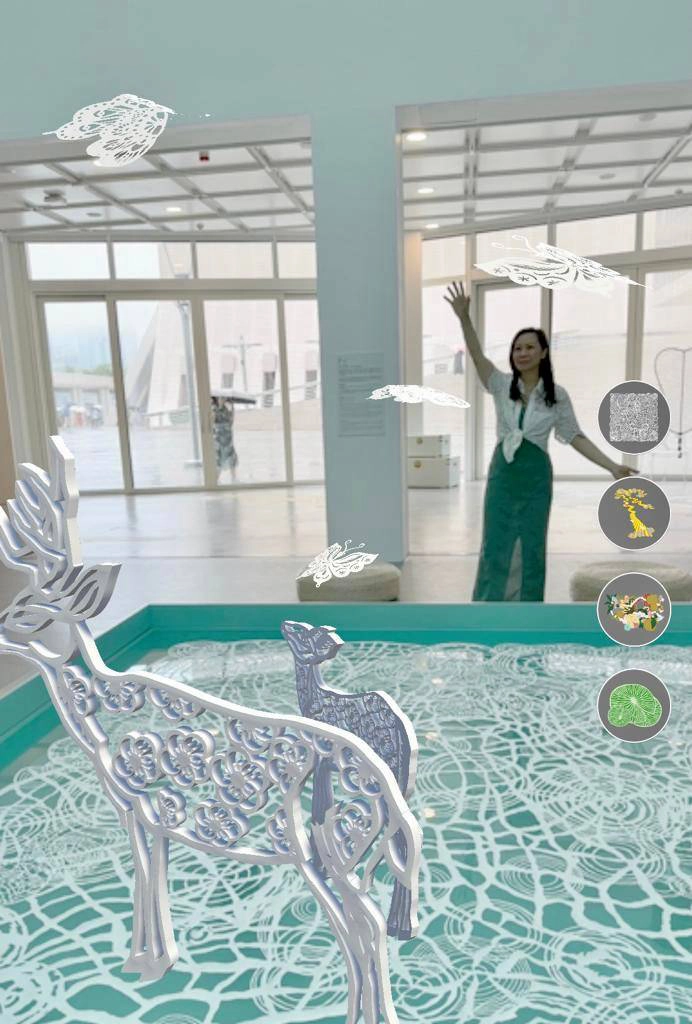
Cut installation on Tyvek
8×8 feet
2023
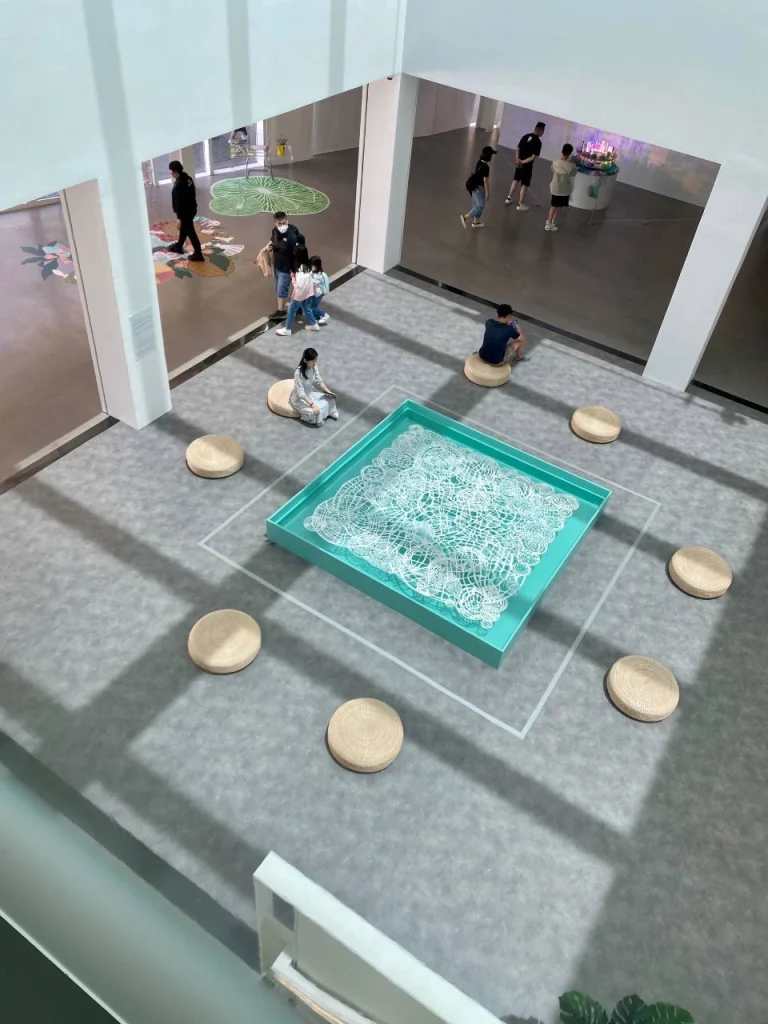
Cut installation on Tyvek
8×8 feet
2023
Cut installation on Tyvek
8×8 feet
2023
In your art pieces, you explore themes of migration and diaspora. How do you translate these complexities into visual form? Can you share with us your creative process?
Migration is movement, and cut paper is inherently about movement—removal, layering, absence, and presence. I translate these ideas visually through landscapes that shift and dissolve, silhouettes that intertwine and unravel, or structures that seem suspended in a moment of change. My creative process starts with research—reading, reflecting, and mapping out ideas. Then I sketch, test, and refine before making the first cut. I want each piece to hold the weight of history and thought but also the lightness of possibility and play.
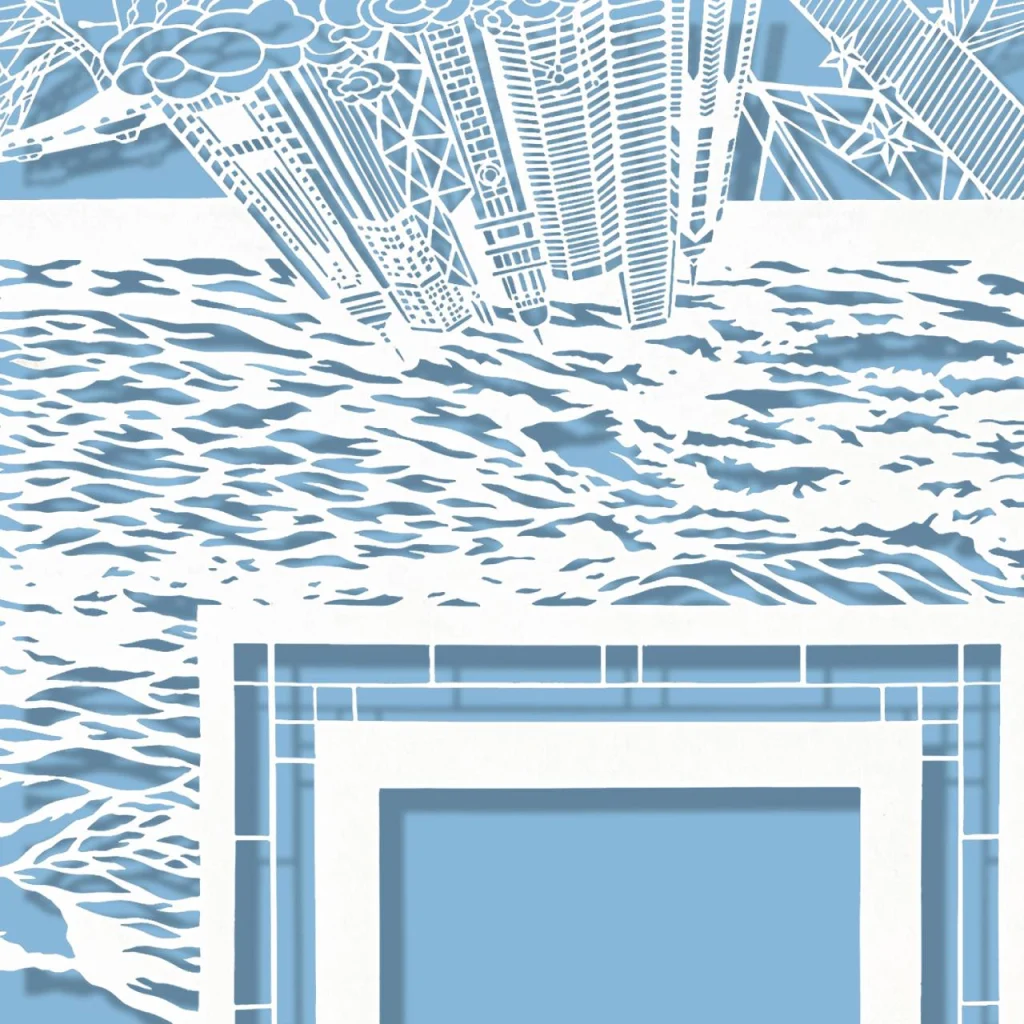
Cut Xuan paper on silk
33×33 inches
2021
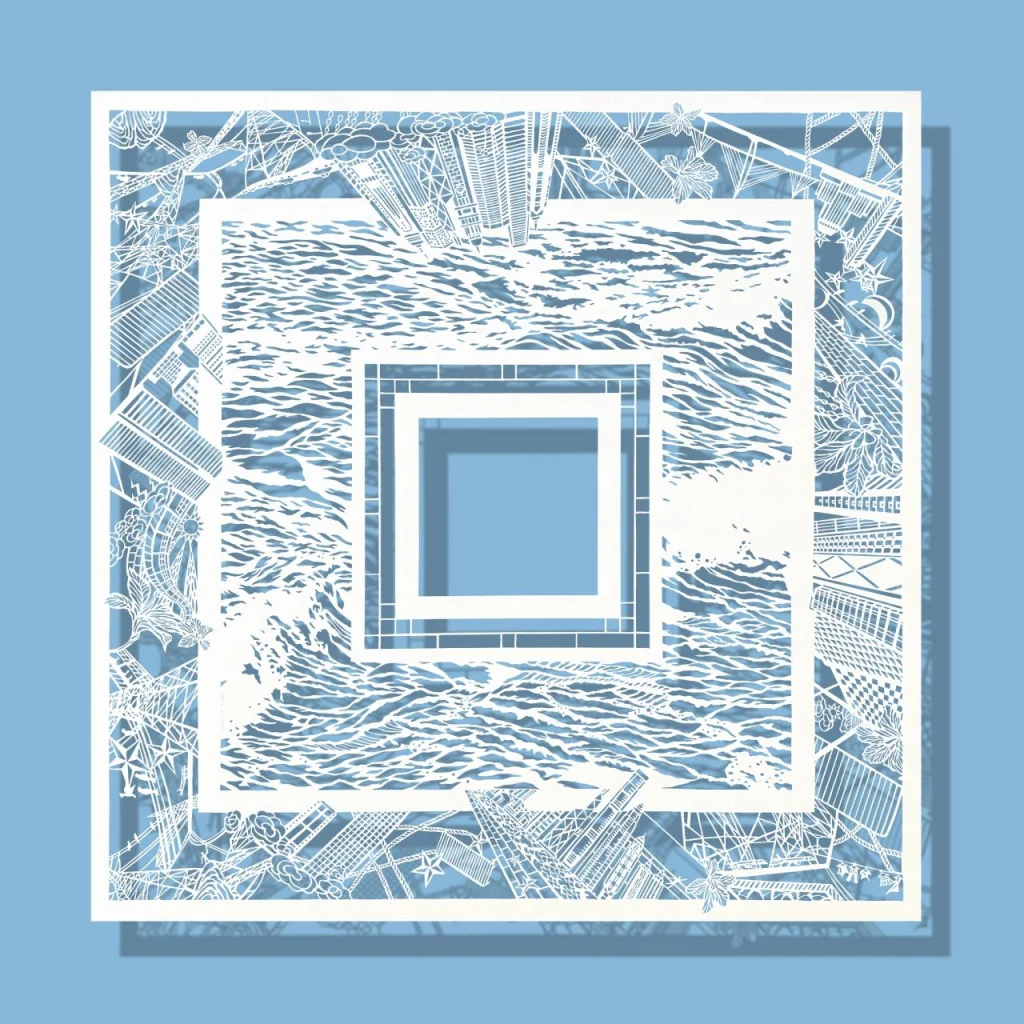
Cut Xuan paper on silk
33×33 inches
2021
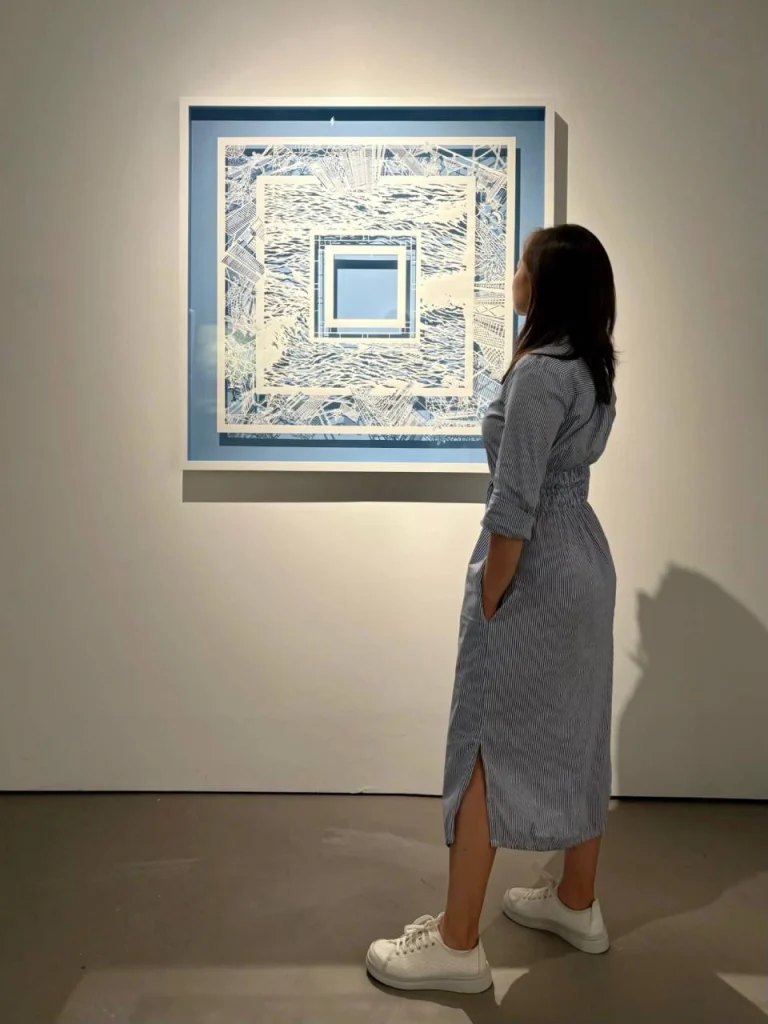
Cut Xuan paper on silk
33×33 inches
2021
How do you balance storytelling, abstraction, and the tension between personal narratives and broader socio-political issues of migration in your installations?
Balance comes from knowing when to reveal and when to withhold. I never want my work to dictate meaning too explicitly—it should invite interpretation. Personal narratives ground the work, but abstraction allows it to resonate beyond my own experiences. Migration isn’t just a political issue; it’s an emotional and existential one. I let the details—whether architectural, organic, or figurative—serve as entry points for viewers to bring their own histories into the piece.
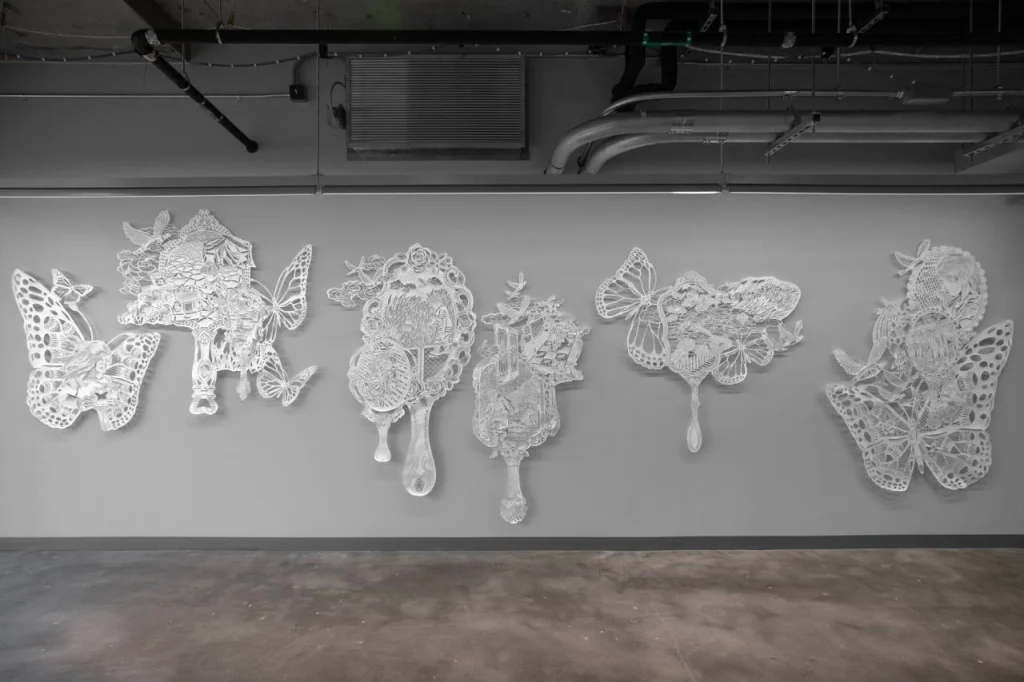
Migrant Mother and Her Children
Cut installation on Tyvek
7×27 feet, 2019
What’s been the most meaningful project you’ve ever worked on? Can you share the story behind it and why it holds a special connection with you?
One of the most meaningful projects I’ve ever worked on was my solo exhibition We Are All Mountaineers at Rena Bransten Gallery in 2019. This body of work explored themes of immigration, displacement, and resilience—ideas that are deeply personal to me but also universal.
The title itself is a metaphor for the struggles and aspirations of those who move, whether by choice or necessity, to build a life in a new place. Mountaineering is arduous, unpredictable, and requires endurance—just like the immigrant experience. Each piece in the exhibition was meticulously handcrafted from paper, layering intricate imagery that spoke to the challenges of identity, belonging, and the forces that shape our personal and collective histories.
This exhibition was particularly meaningful because it wasn’t just my story; it was a reflection of so many who have had to redefine home, carry their heritage forward, and persist despite uncertainty. Seeing audiences connect with the work, recognizing their own experiences within it, was a powerful affirmation of why I create. Art has the ability to bridge distances, to make the unseen visible, and to remind us that no matter where we come from, we are all climbing toward something greater.
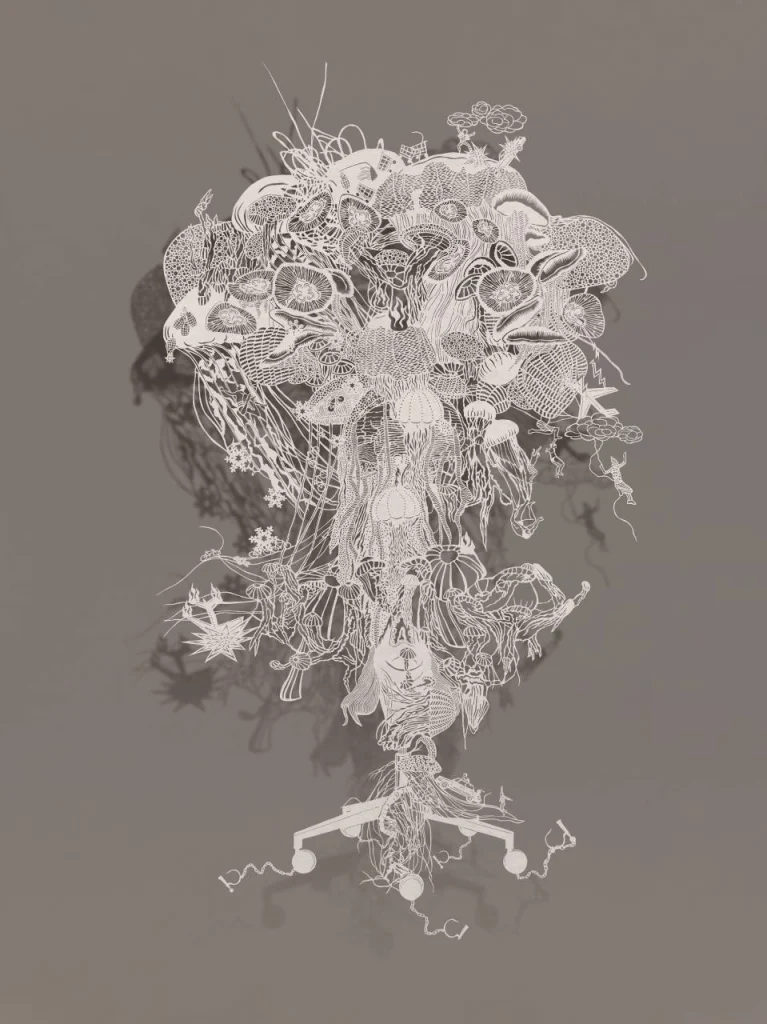
Cut Xuan paper on silk
27×42 inches, 2007
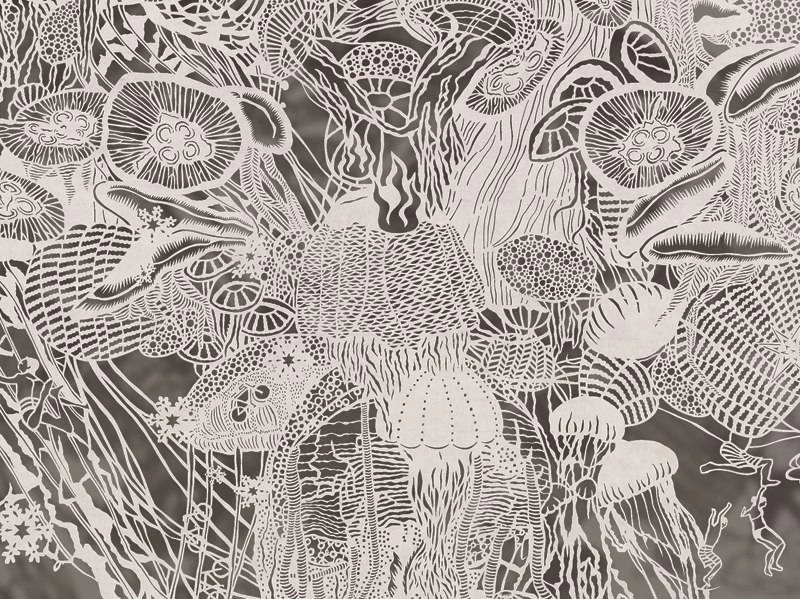
Cut Xuan paper on silk
27×42 inches, 2007
The International Women’s Day 2025 theme is “Accelerate Action.” Your art requires precision and patience, but in terms of equality, how can each of us be a catalyst for making it more immediate and impactful?
Precision and patience are necessary in art, but in life, waiting is often a luxury we can’t afford. Inequality persists because of hesitation, because change is treated as incremental rather than urgent. Acceleration happens when we stop asking for permission. It happens when we take up space, use our voices, and demand rather than request. In my field, that means pushing for more representation, more visibility, and refusing to be relegated to the margins. Change isn’t a passive process—it’s a cut, an incision. It reshapes what exists to make way for something stronger.
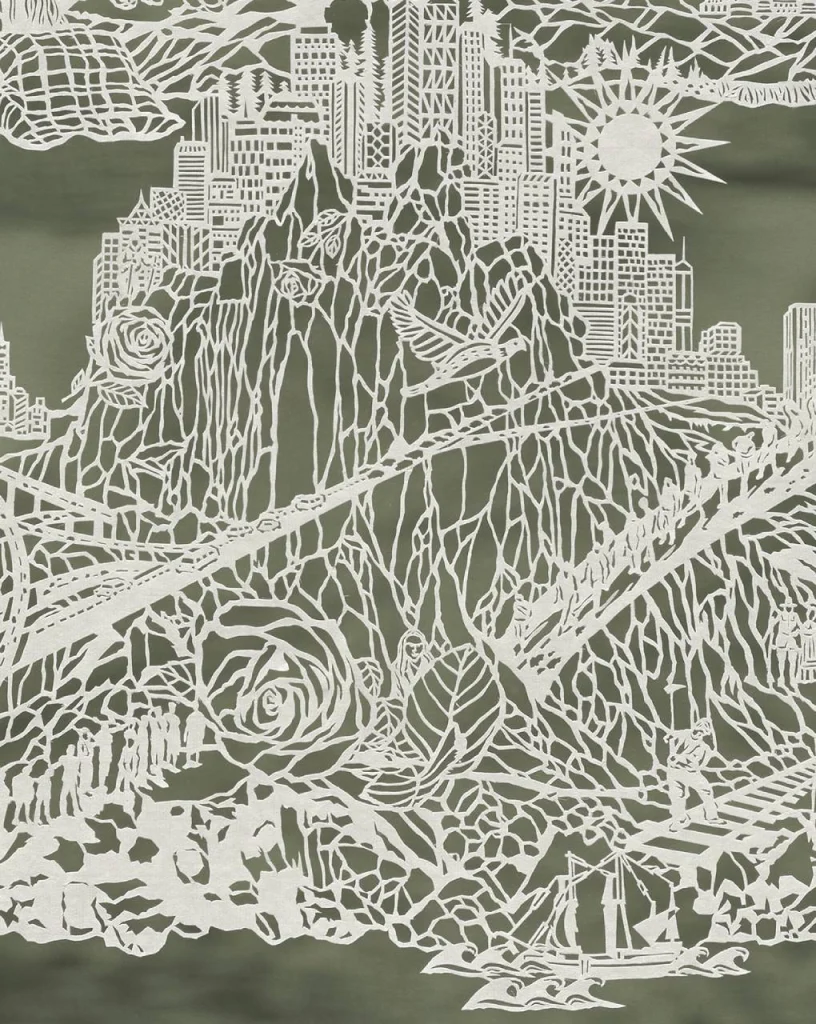
Cut Xuan paper
20×30 inches
2018
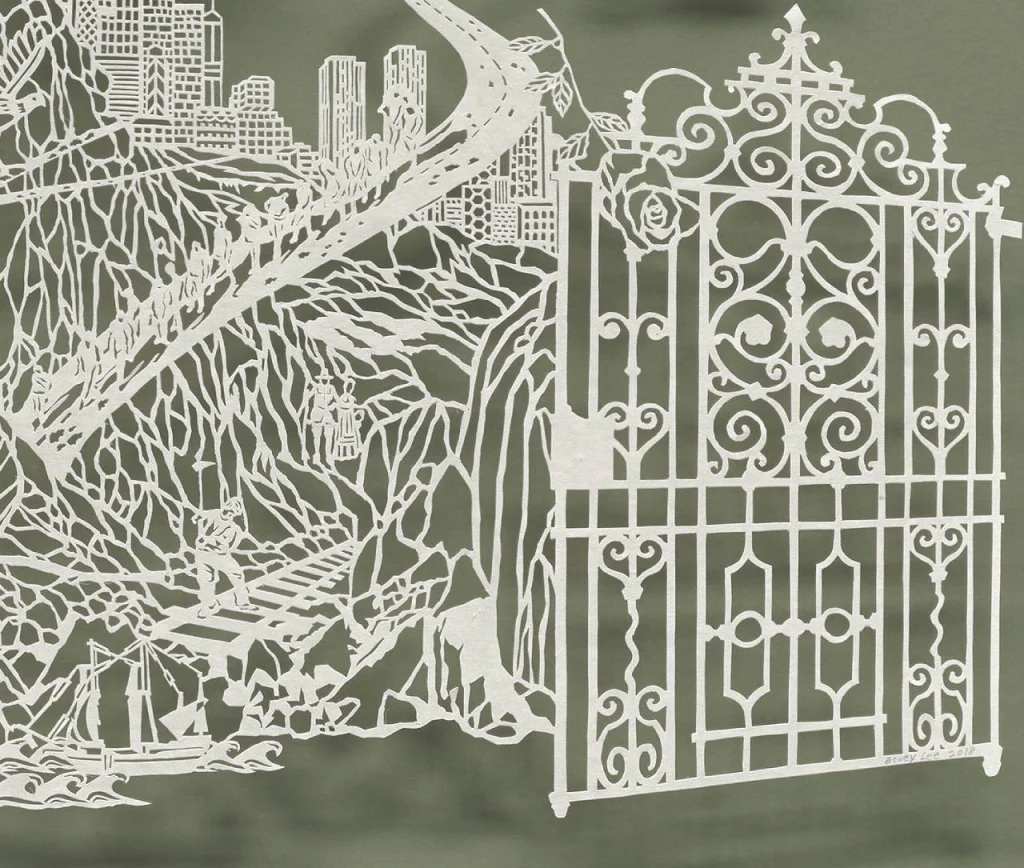
Cut Xuan paper
20×30 inches
2018
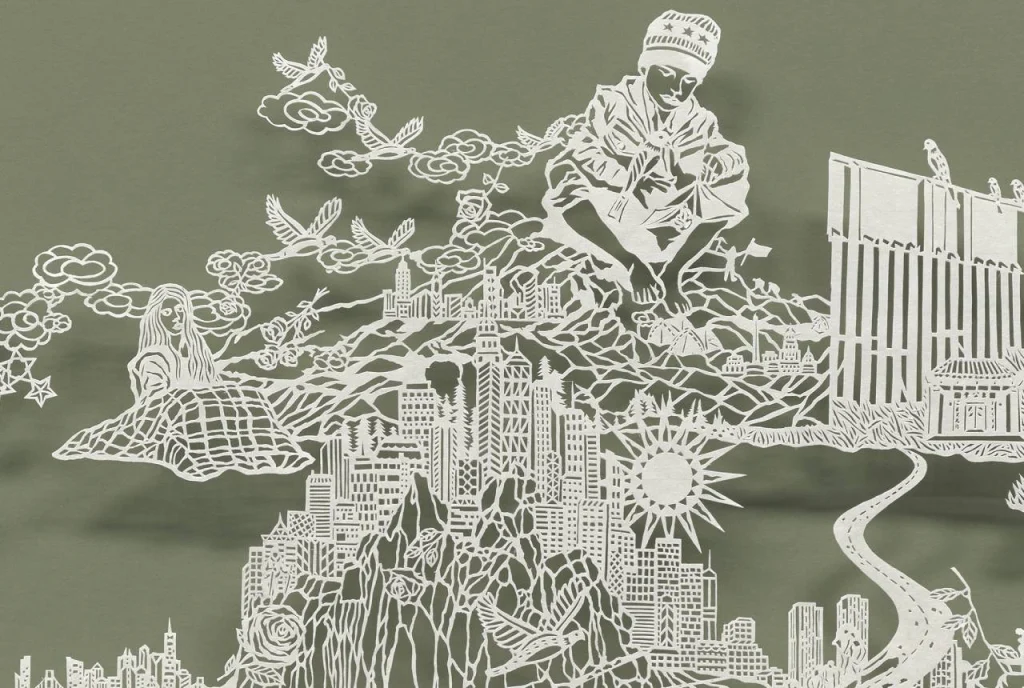
Cut Xuan paper
20×30 inches
2018
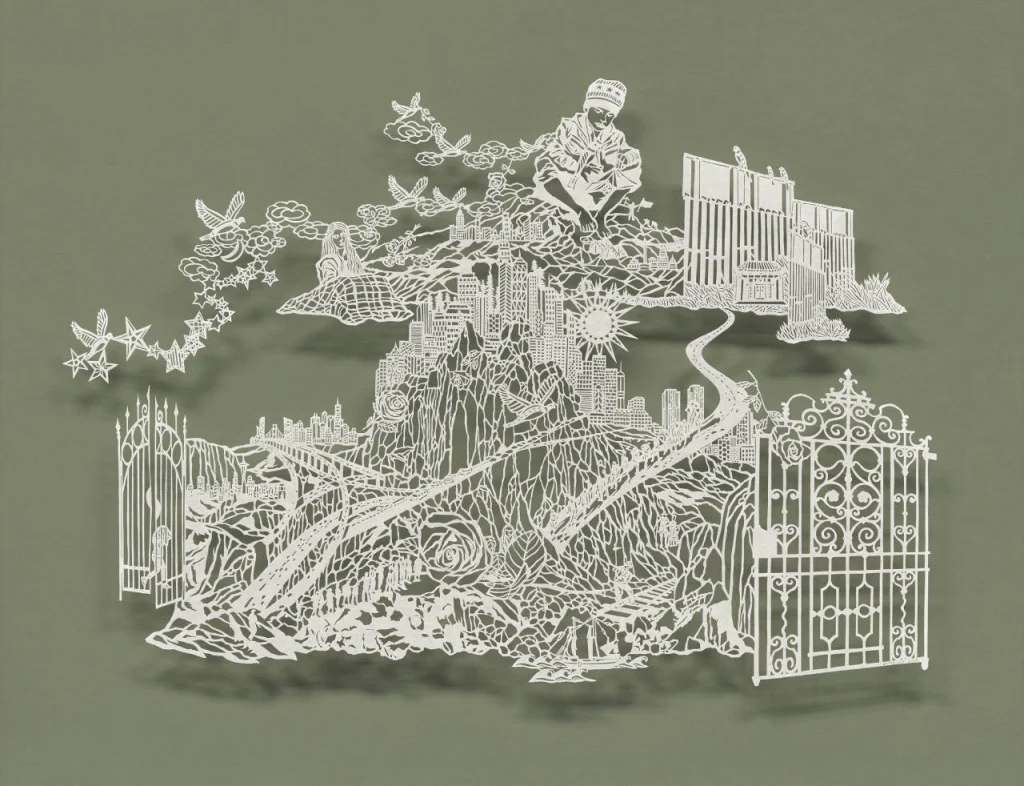
Cut Xuan paper
20×30 inches
2018
Photos and images courtesy of Bovey Lee
Post Author